Henwick (often pronounced by railway staff with the 'w' but by locals as 'Hen-ick' without the 'w') was the next visit. The signal box is equipped with an unfortunately rather modern outside lavatory but one which is of note. The signaller became locked inside one day in 2013 and was rescued by a train driver. The same fate, which made national headlines, thankfully did not befall any members of our group. The box was constructed by McKenzie & Holland (very appropriately, a Worcester-based company) for the Great Western Railway in 1875 and was extended in 1897.
The box is situated next to a busy level crossing and is mostly built in red brick with a few engineering bricks mainly towards the bottom. There are two mismatched finials on a slated roof but no ventilators. What appears to be an original cast iron nameplate sign is mounted on the side of the box. Inside is found a now very rare 25-lever, GWR double-twist frame (converted to 5-bar vertical tappet locking) with four spares and 5¼ inch lever spacing. The diagram indicates that acceptance lever working is in operation on both bidirectional Up lines to Worcester Tunnel Junction (line towards Birmingham) and Worcester Shrub Hill (North Cotswold Line and the line towards Cheltenham). There is a single 1947 vintage Tyers block instrument in a wooden case for working absolute block towards Newland East box.
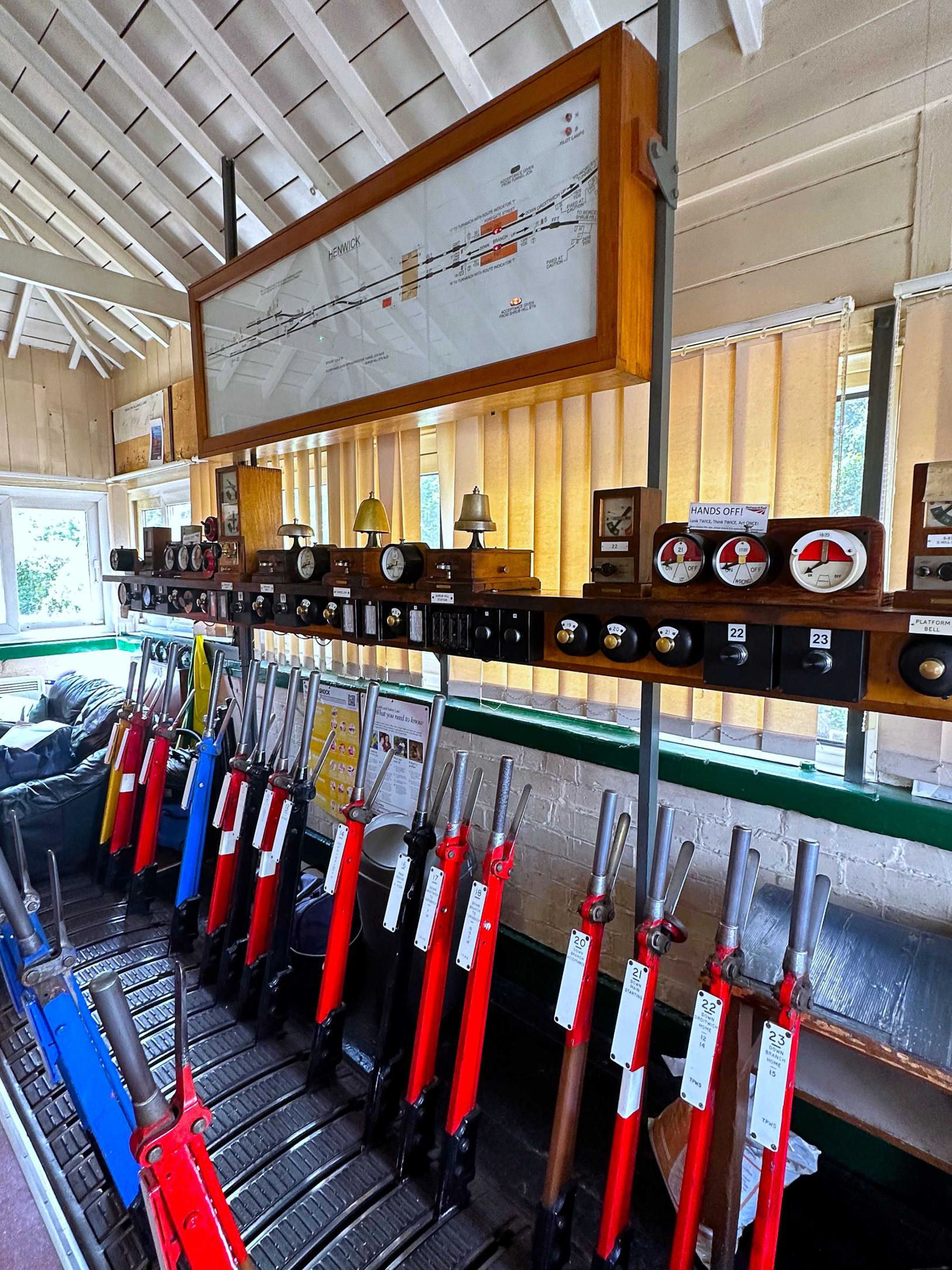
Henwick box; Worcester right and Newland (Malvern) left.
[© Mark Shinwell 2024]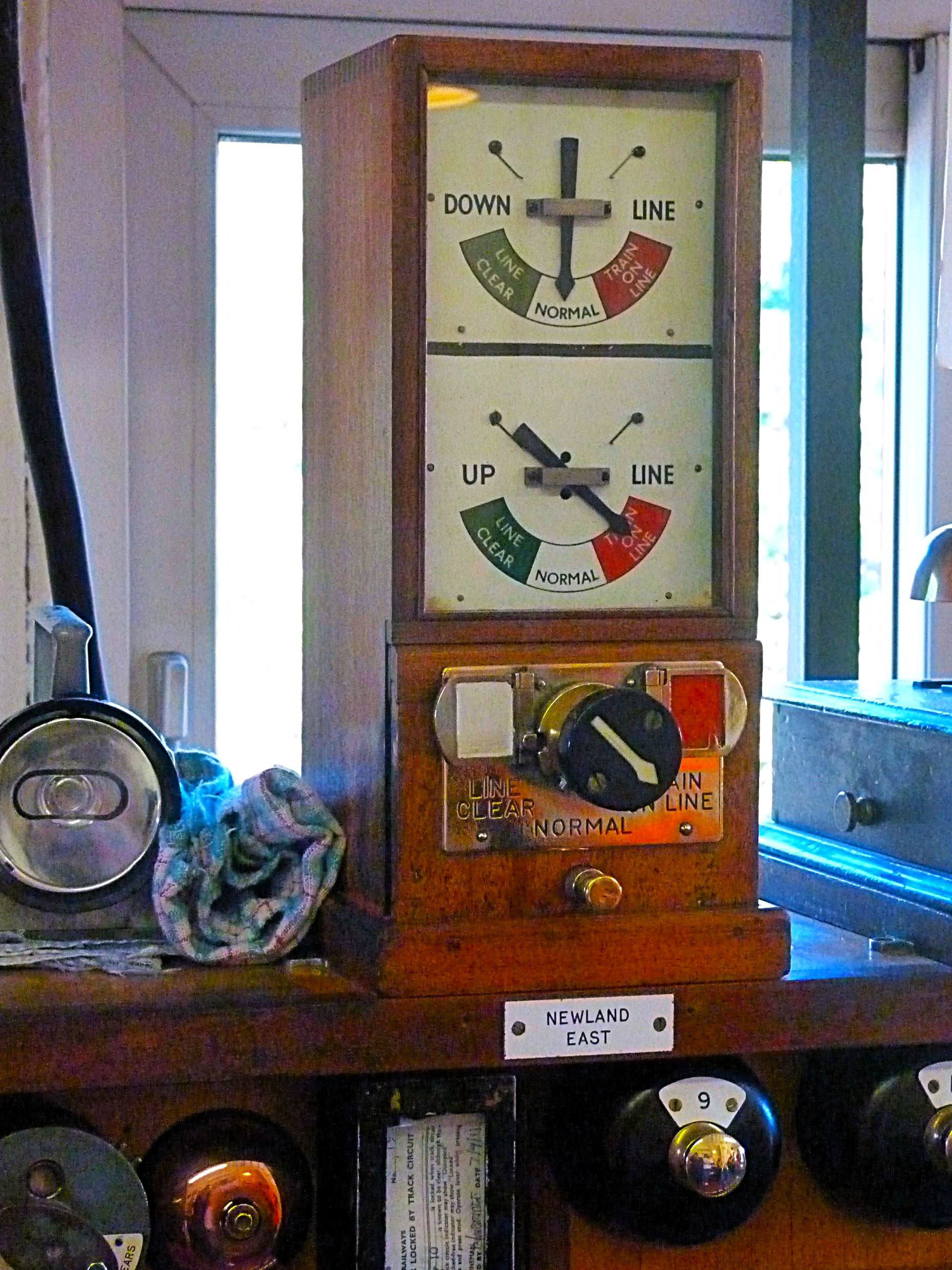
Block instrument to Newland (East), 3 Mar 2013 during a BLS visit.
[© Angus McDougall 2013]Henwick station opened 25 Jul 1859, originally as a terminus, until the line was extended above the River Severn to Foregate Street from 17 May 1860. Both platforms were on the Malvern side of the crossing and closed, along with other minor stations on the line to Hereford, in the 5 Apr 1965 cull. There was a significant goods yard behind the Down (to Hereford) platform, mainly dealing with inward domestic and industrial coal. Its site is mainly given over to housing, although there is also 'Henwick Halt' Medical Centre and 'The Halt' Pharmacy (could signallers obtain tablets there?), both misnomers as it was always a station. On the Down side of the line towards the river used to be a high level siding for coal deliveries to the 1902 built Worcester Corporation Electricity Generating Works (its successor at the site opened in 1945 and closed in 1976). An Up Refuge Siding trailed in on the Malvern side of the crossing; it fell out of use, then was refurbished as Henwick Turnback Line. Commissioned on 27 Nov 2017, the siding can accommodate a 10-car IET (but never has) and has been railtoured twice. It is now vital for the timetable, particularly the hourly Bristol trains and extra North Cotswold Line Worcester Foregate Street services.
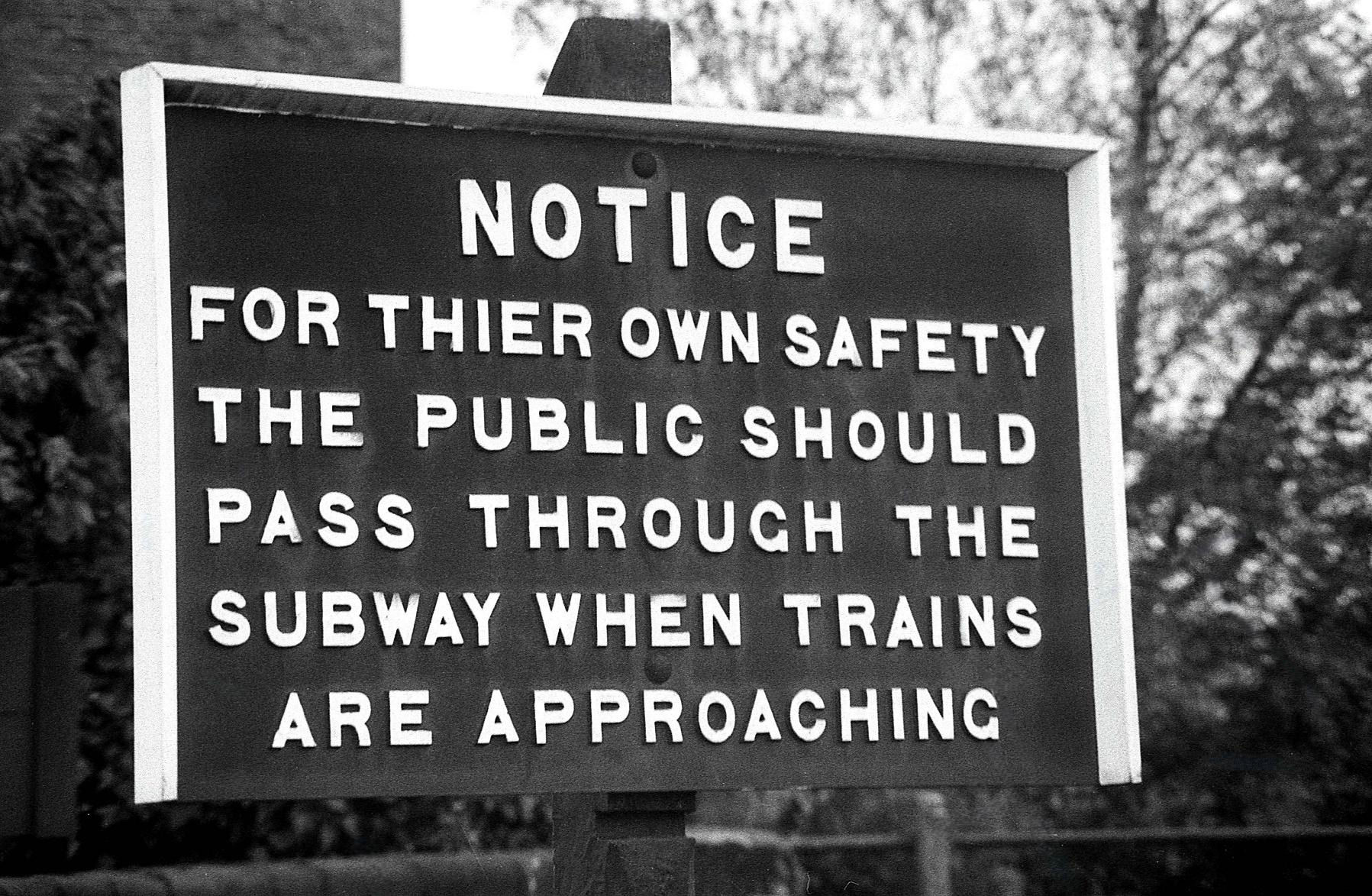
A sign of the times at Henwick Level Crossing adjacent to the box, 2 Nov 1969. The pedestrian subway, with steps, is still available now.
[© Ron Meredith 1969]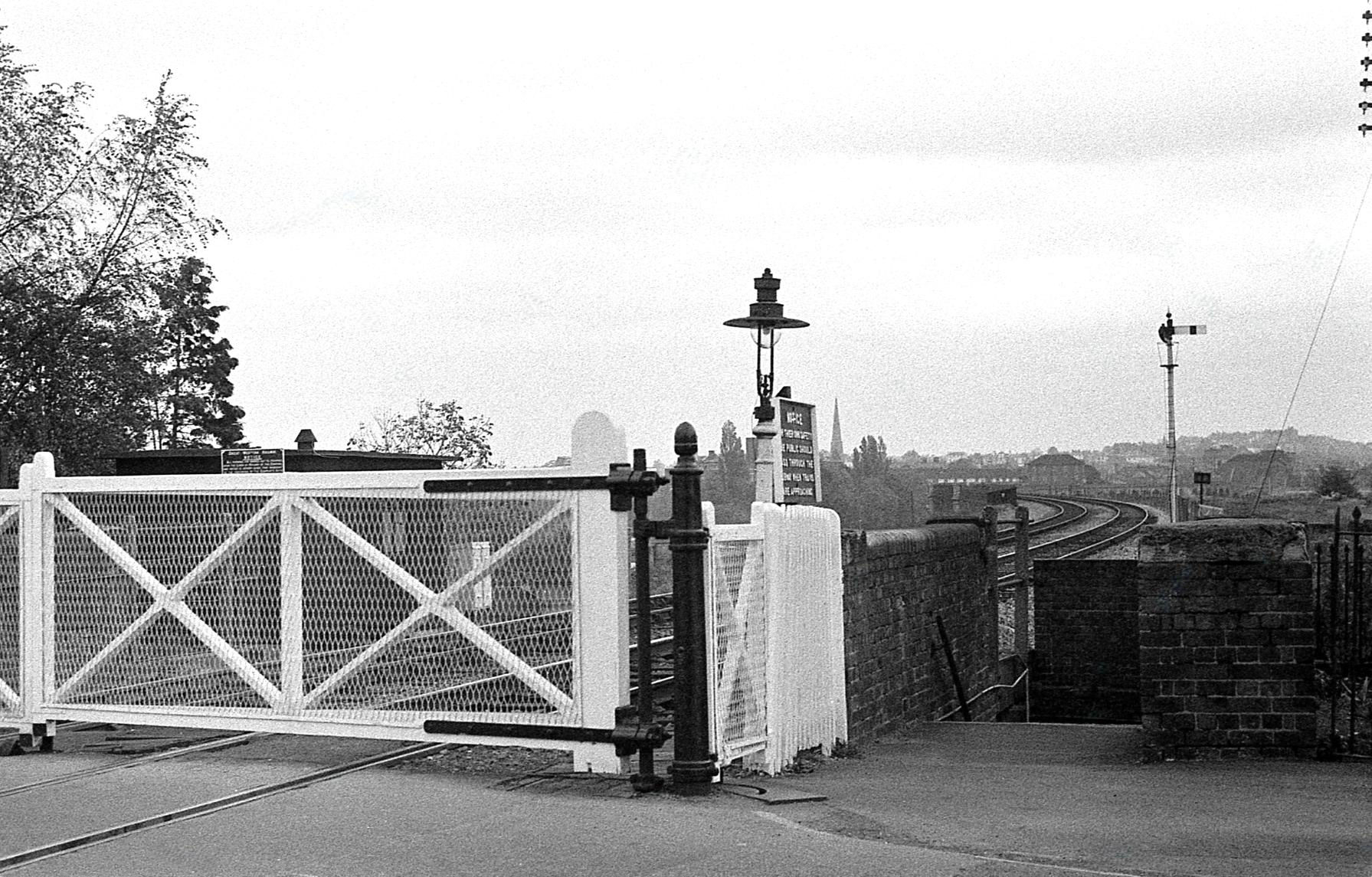
The gates and pedestrian subway entrance in 1969 (looking towards Worcester Foregate Street).
[© Ron Meredith 1969]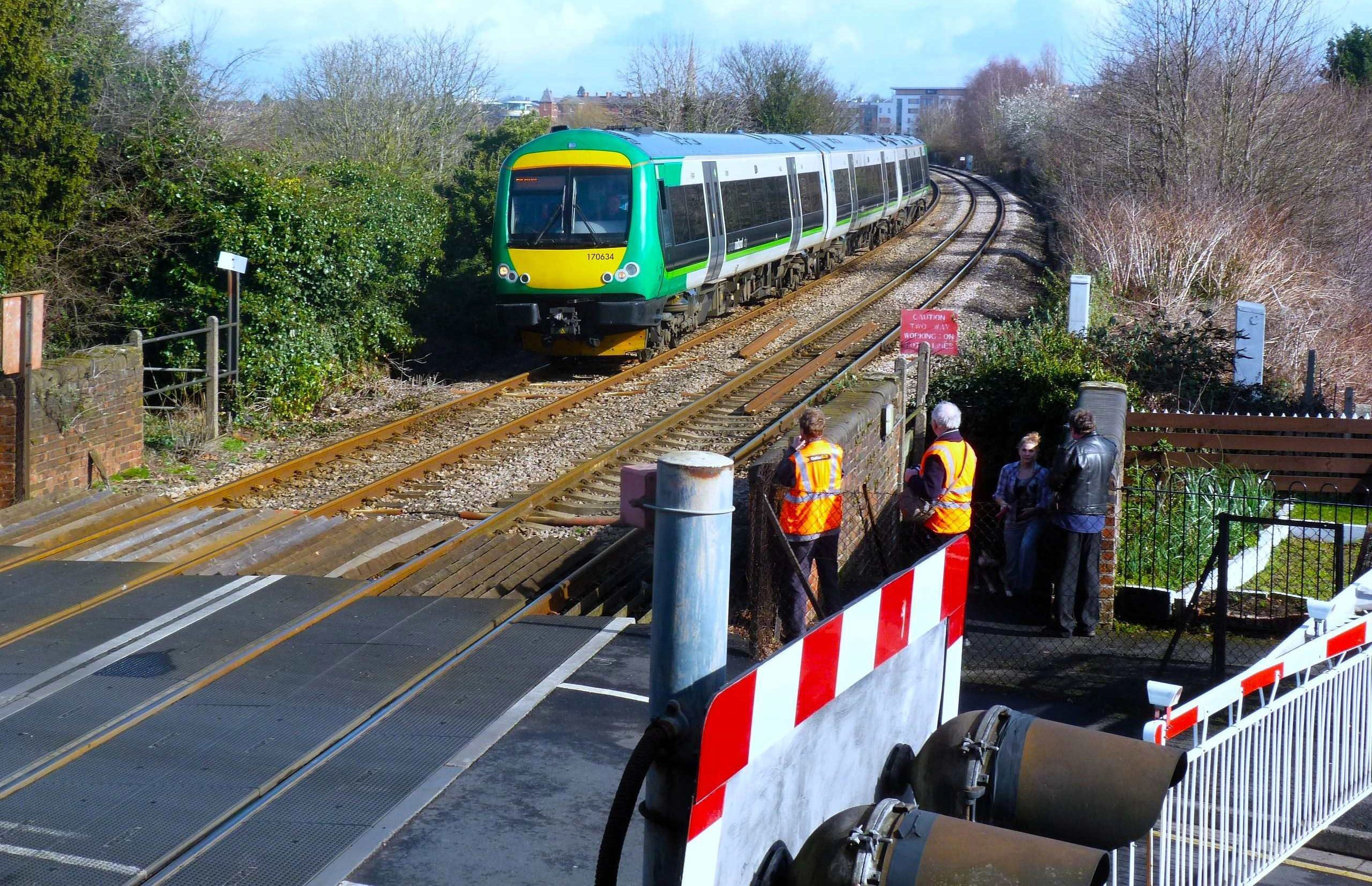
From Henwick signal box, a Hereford to Birmingham train heads for Worcester Foregate Street station.
[© Angus McDougall 2013]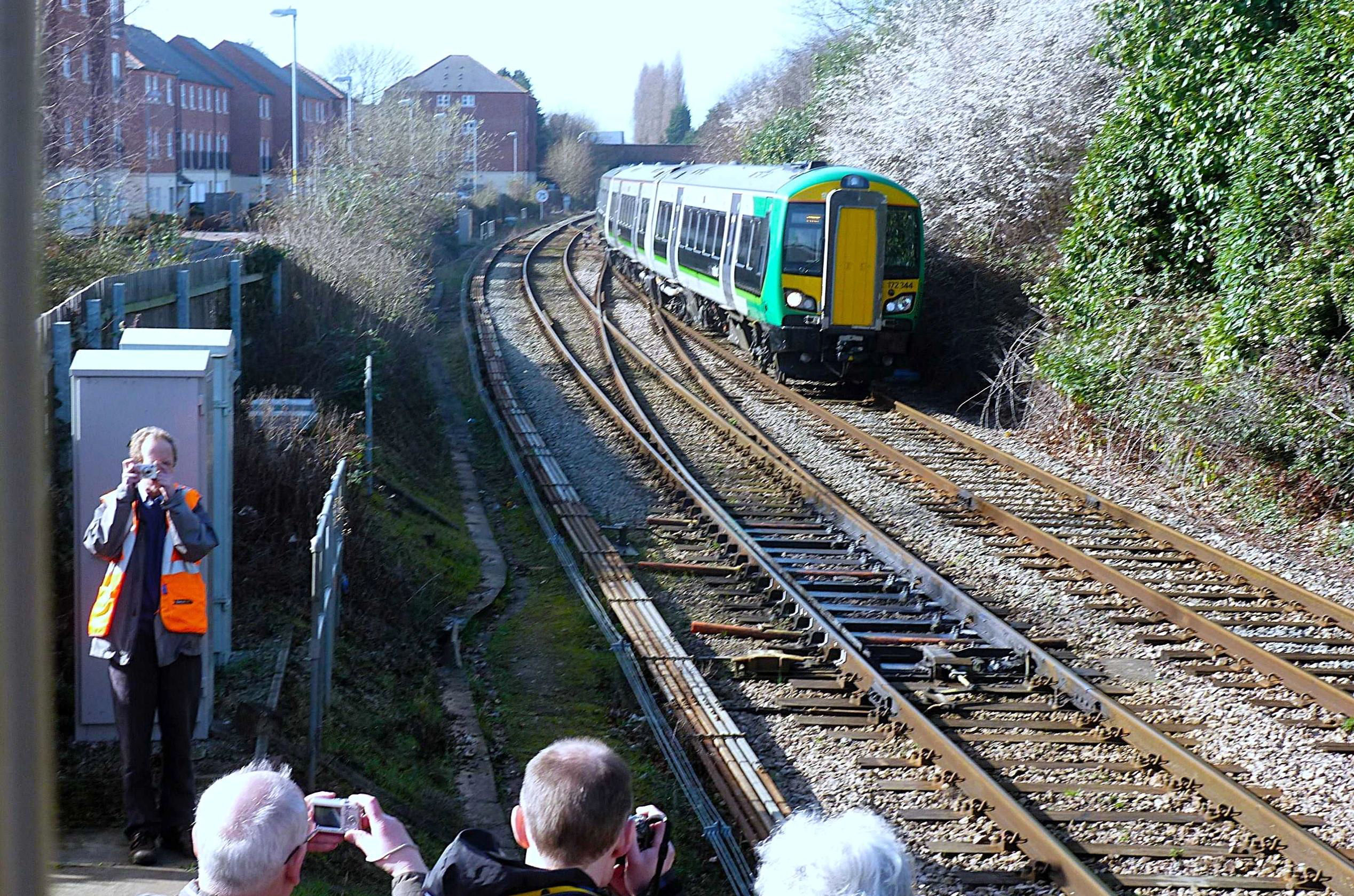
A Great Malvern to Whitlocks End service approaches the box; this used to run two hourly (SuX) but was a victim of the Pandemic.
[© Angus McDougall 2013]The group next arrived at Droitwich Spa station to admire the fine centre-pivoted lower quadrant semaphore signals (DS 8) at the northern end of Down Main P2. These signals, which appear similar to those seen the next day at Bewdley North box, are just two of the 14 semaphore main signals controlled by the box. The Down Goods Loop (towards Kidderminster) is well and truly out of use (but not abolished), so DS 8 left hand signal will never clear. The trailing crossover north of the station is operational again after a period of disuse. During engineering work, it can be used by passenger turnbacks from the north in Droitwich P1 and, separately (if Worcester Shrub Hill to Foregate Street is blocked), by ECS moves from Worcester Depot to Foregate Street P2, Great Malvern and even Hereford (!), as there is now no equivalent crossover north of Worcester Tunnel Jn.
To reach the box, we had to cross the Main lines (to Kidderminster) on the official walkway well north of the station, beyond the junction where the Droitwich Single line (the 'Branch') diverges east, for Bromsgrove. This was double track and may be again one day. Before 2012, there were only five trains each way between New Street and Hereford that way, and fewer years ago (some via Kidderminster). It is now hourly for most of the day, with peak extras and fewer on Sundays. Trackbed was constructed for a 'triangle' here, for a Birmingham to Kidderminster via Bromsgrove through passenger service which never happened.
On relevant OS maps until the 1920s, it is shown as 'sidings' accessed from the Bromsgrove end only. Bradshaw's timetable map showed it as a through line for some decades but was it actually completed at the Kidderminster end and, if so, was it ever used as a through route?
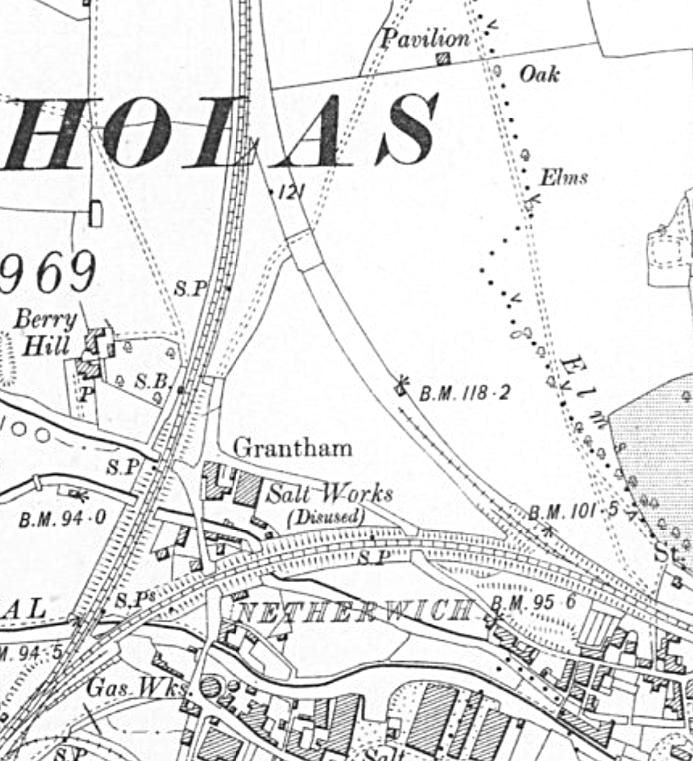
1901 map, Droitwich station and Worcester are off bottom left, Kidderminster is off the top and Bromsgrove is right. Note the 'Salt Works' and the third side of the triangle, shown with its sidings.The GWR type 7d Droitwich Spa signal box, built in 1907, is constructed from red brick with toothed and arched engineering brick details around the windows; a slated roof still holds two pointed ventilators. It is the largest box in the Worcester area, fringing Worcester Tunnel Junction to the south and Birmingham Rail Operating Centre to the north (on both the Main and the Single lines). From the spacious, high up operating floor, there is a fine view of the line. A BR 1947 Tyers block instrument in a wooden case works absolute block on the section to Worcester Tunnel Junction. It sits on the block shelf above a GWR 79-lever, 3-bar vertical tappet frame with 5¼ inch lever spacing, which has a gap in the middle below the diagram to allow the signaller access to the front windows. The diagram identifies 14 spares and 26 spaces. The usual Westinghouse train describer system is used to Birmingham ROC.
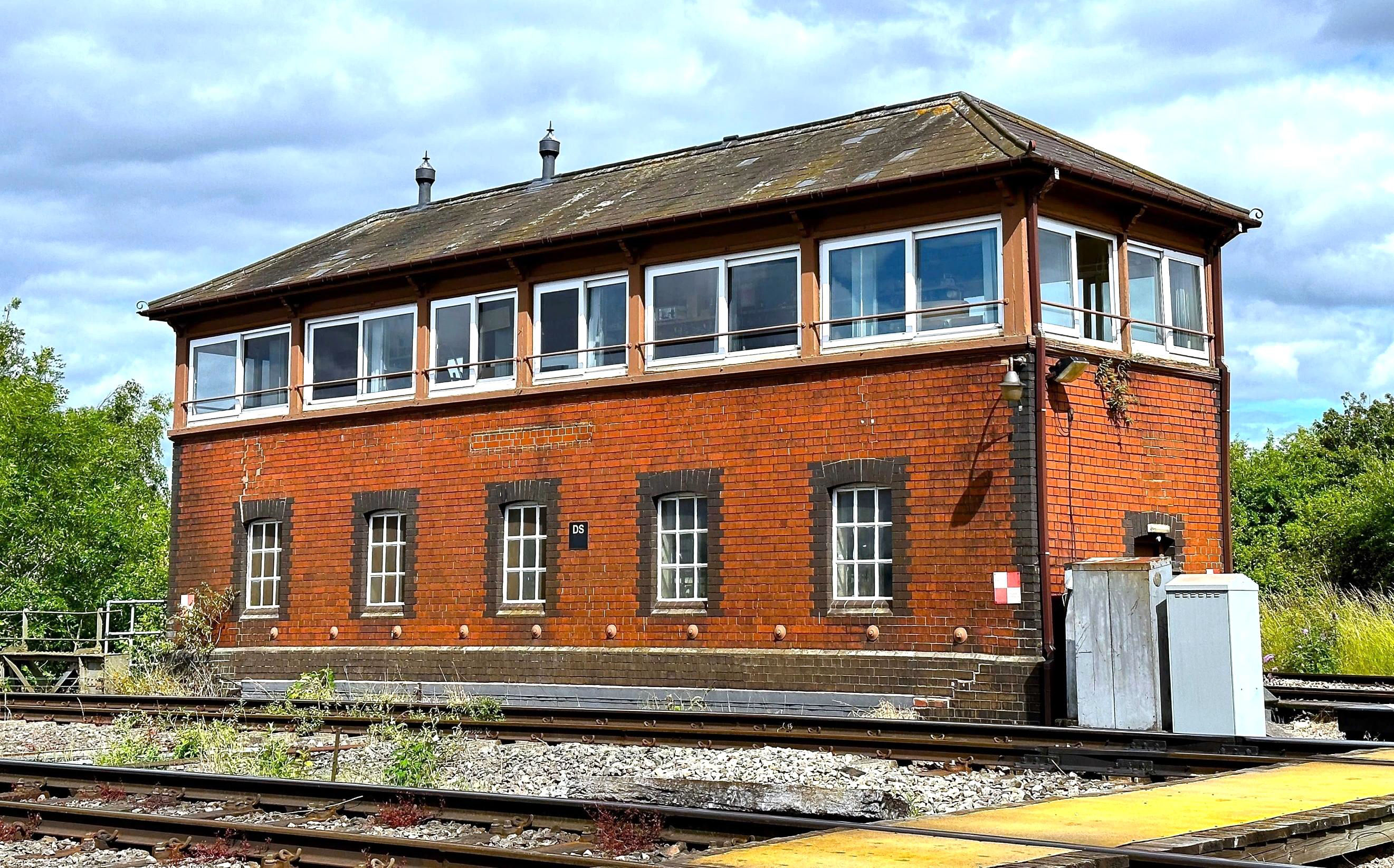
The Kidderminster side of Droitwich Spa signal box with the Bromsgrove line behind.
[© Mark Shinwell 2024]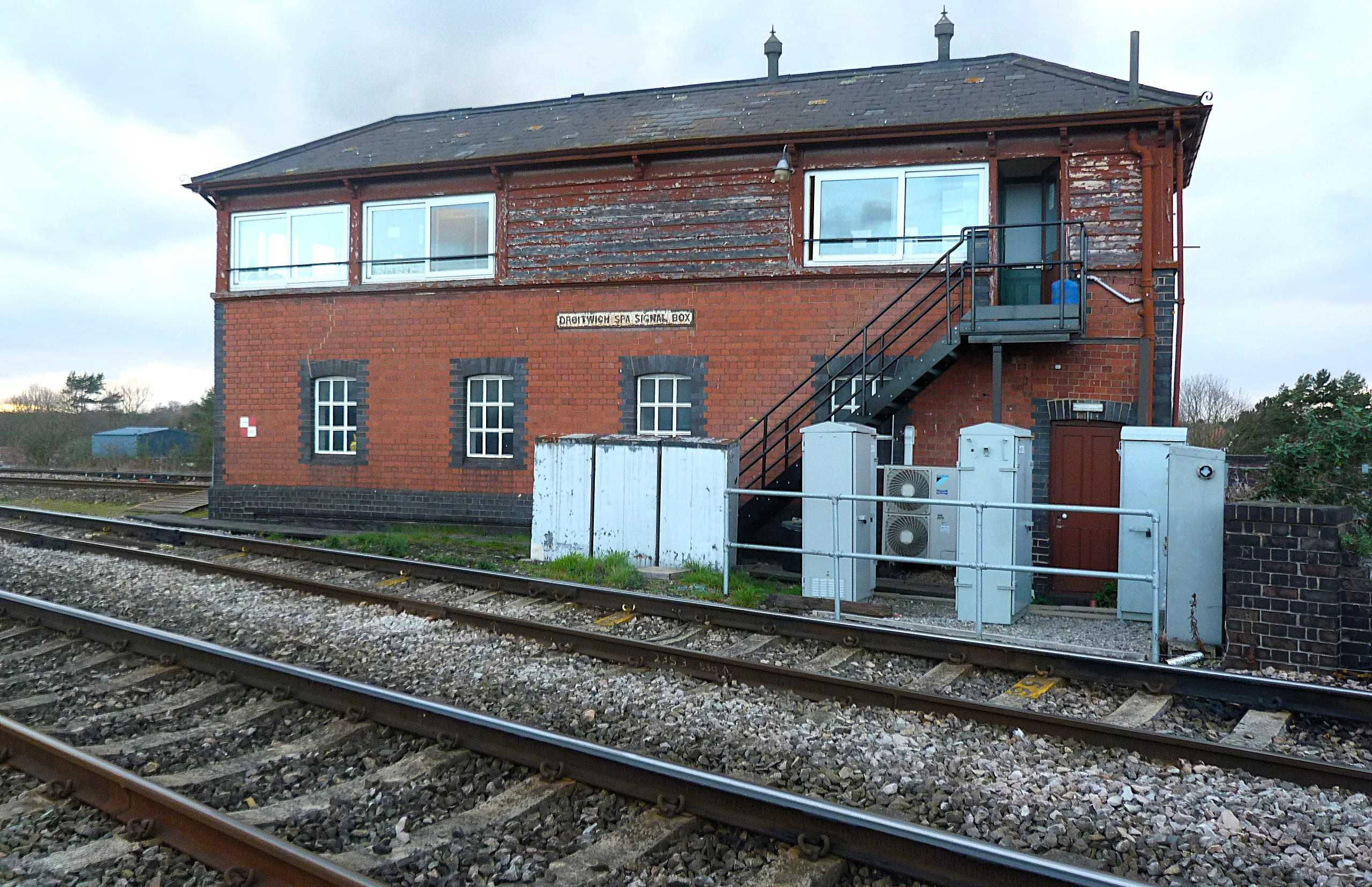
The poor state of Droitwich Spa box on our 3 Mar 2012 Society visit, Bromsgrove is to the right, Droitwich Spa station and Worcester are left. Close examination of the brickwork reveals evidence of subsidence from past brine pumping.
[© Angus McDougall 2012]Unfortunately, this signal box is suffering from subsidence at the Birmingham end, where the building sits precariously above the Droitwich Canal, and for this reason the box is on a list for possible closure in the relatively near future. Subsidence used to be very common in the Droitwich area due to pumping brine out of the ground, for example at Stoke Works in Stoke Prior (as in 'Stoke Works Jn' on the Down side at the Bromsgrove end of the Droitwich Single). Large 'evaporation pans' around the works used to be visible from passing trains. There used to be a salt works right next to the box. The last large scale works on the Droitwich Saltfield closed in the 1970s, due to worsening subsidence in the area.
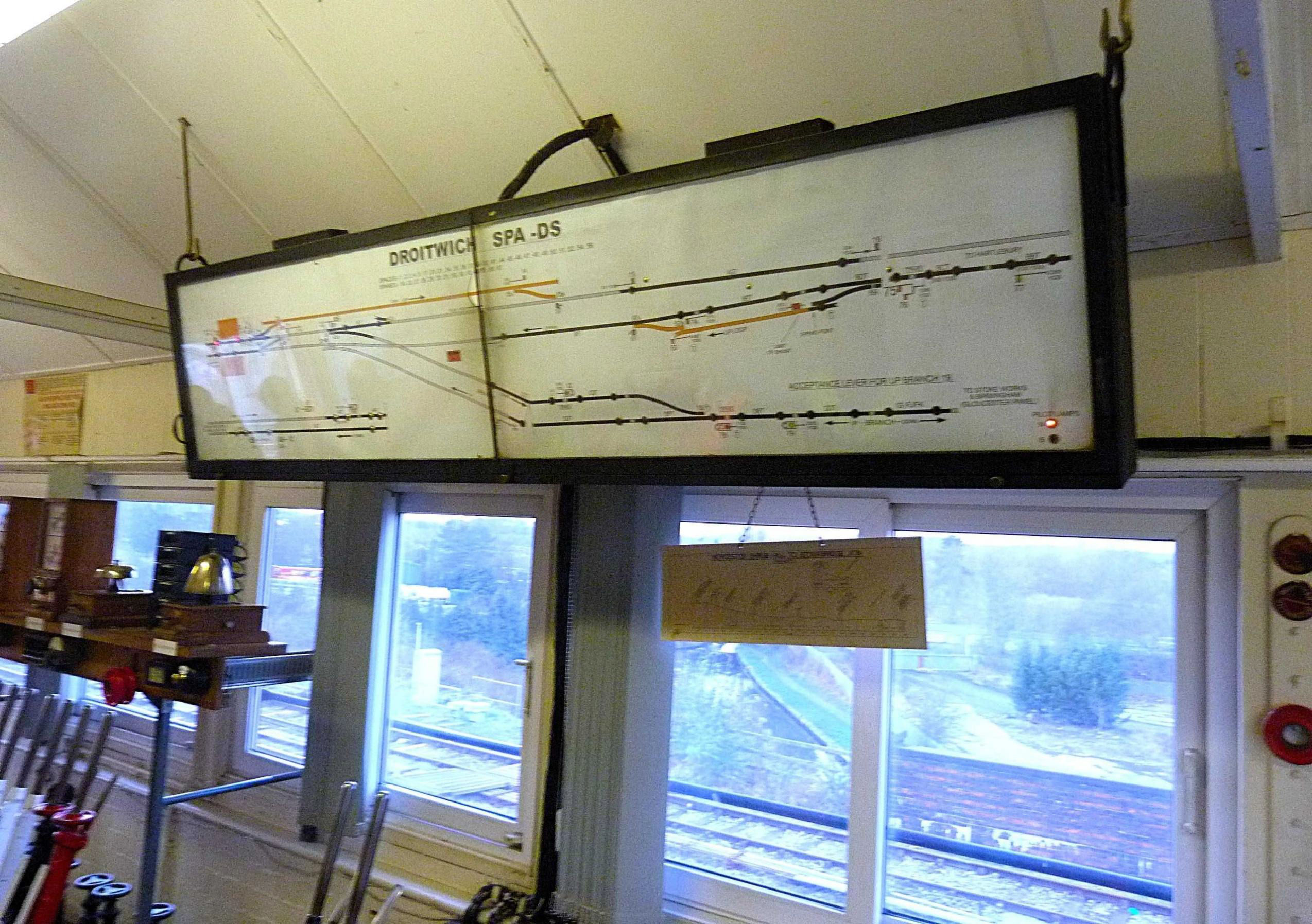
Droitwich Spa signal box diagram,
[© Angus McDougall 2012]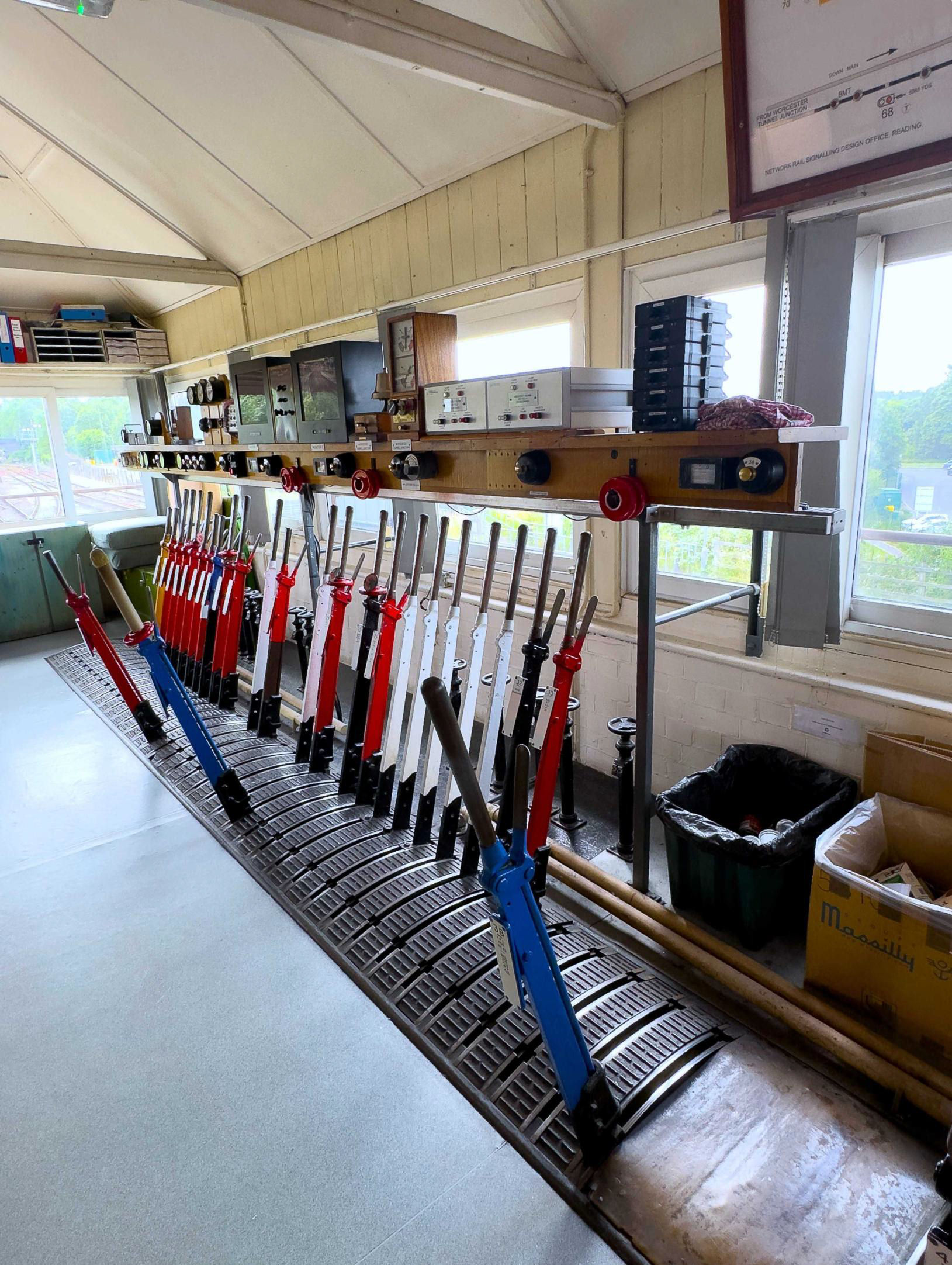
Droitwich Spa signal box lever frame and block instruments. Droitwich Spa station and Worcester are off to the left and Kidderminster is to the right.
[© Mark Shinwell 2024]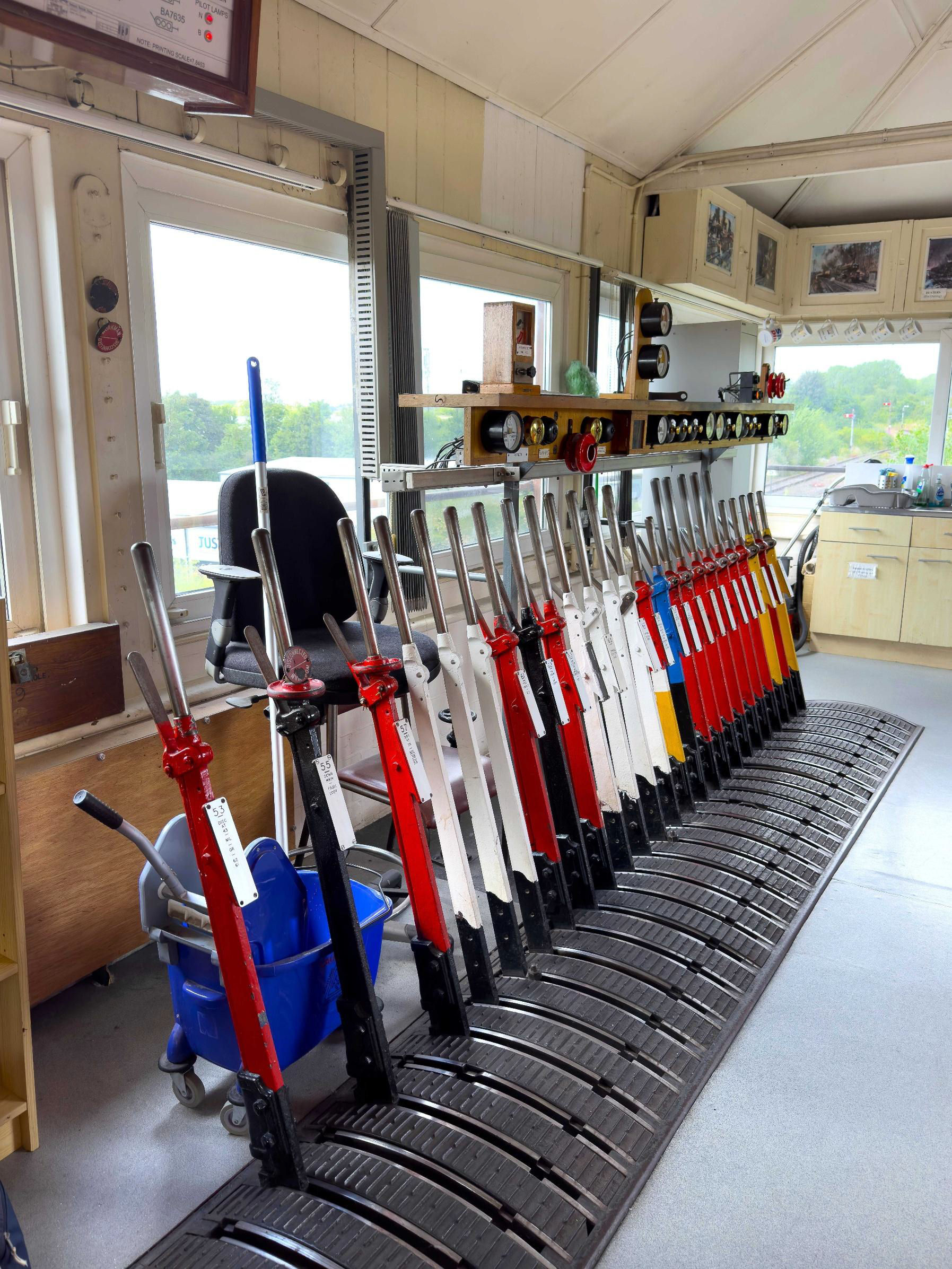
The other half of the large Droitwich Spa signal box lever frame and block instruments. Kidderminster is to the right and Worcester left.
[© Mark Shinwell 2024]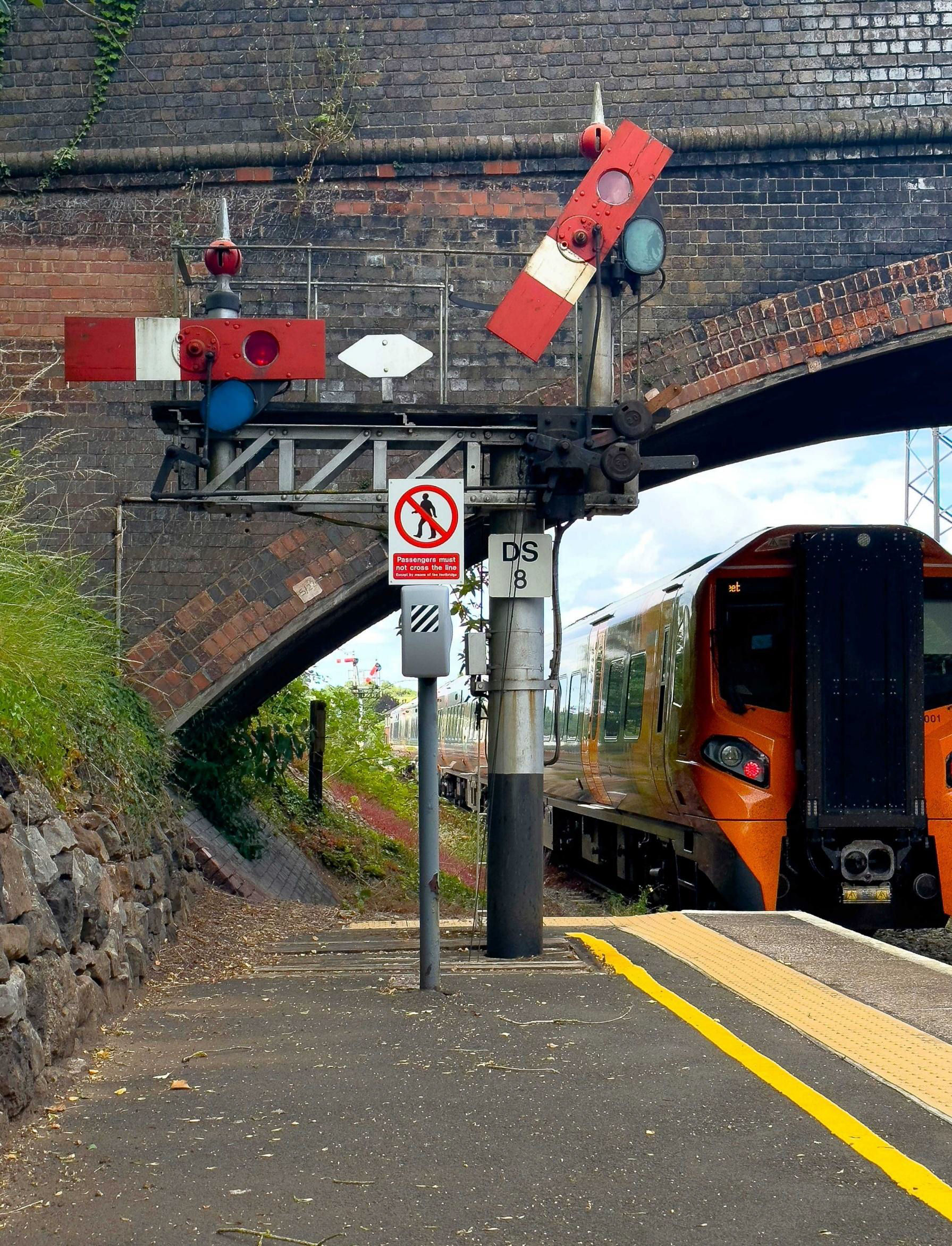
The splendid two centre pivot signals, a train departs for Birmingham New Street. The left signal arm is for the Down Goods Loop beyond the bridge which is well out of use now.
[© Mark Shinwell 2024]The final box of the first day was Worcester Tunnel Junction, reached via an access road that also serves the Worcester Light Maintenance Depot. [That's the lights sorted but begs the question as to where the other parts of the trains are maintained.] This only maintains trains operated by West Midlands Railway, although the Depot Licence from the Office of Rail & Road was held by West Midlands Trains in 2024, the parent company of both West Midlands Railway and London Northwestern Railway train operators. They have since both been 'nationalised', of course.
The box, which is to the GWR Type 7 design, built in 1907, has an engineering brick base, followed by red brick, then a pitched slated roof. The south end of the box was partly rebuilt in the 1970s after being hit by a derailed train and damaged. It looks directly at the southern portal of the 212 yard Rainbow Hill Tunnel, through which the lines continue north towards Droitwich Spa. The layout of the 'Worcester triangle' (Foregate Street to the west, Shrub Hill to the south and the tunnel to the northeast) has been rationalised over the years. In Nov 1973, Worcester Shrub Hill Junction and Rainbow Hill Junction boxes were abolished with the introduction of bidirectional working at Foregate Street. The route of the old Tunnel Loop Line from Rainbow Hill Jn (near Foregate Street) passing to the north of the box on the way to the tunnel could be seen. Our group had parked on what was presumably one of the old goods depots.
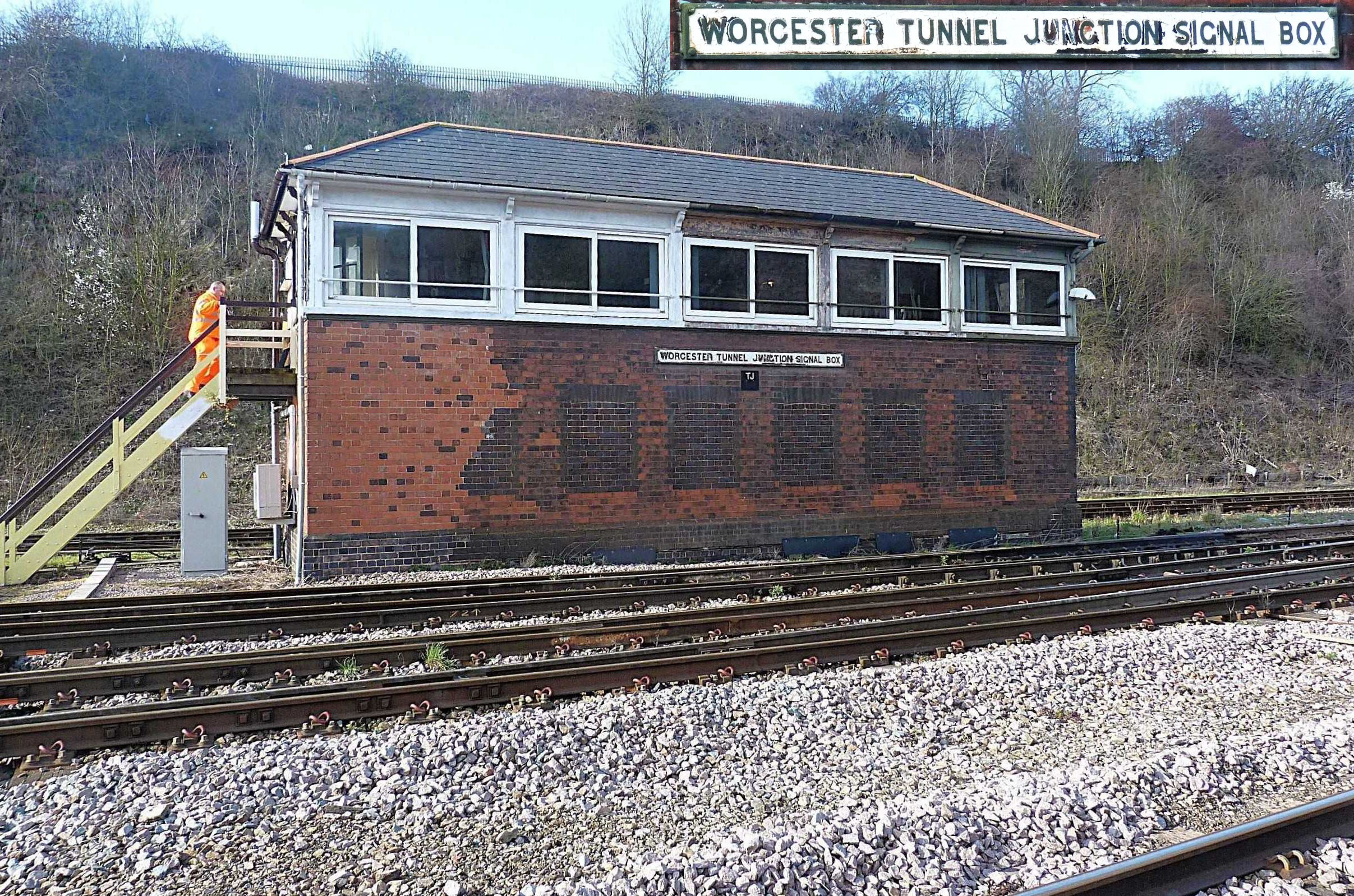
The box during our 3 Mar 2012 Society visit, Droitwich to the right and Shrub Hill left.
[© Angus McDougall 2012]Inside the box, it was pleasing to see the exposed roof joists and timbers, painted white, rather than a false ceiling. The British Railways (BR) 5-bar vertical tappet, 4 inch spaced lever frame itself only has room for 58 levers (with 7 spares) but the diagram actually mentions up to 77. We conjectured that the locking room downstairs still has an empty frame for these. The frame was installed by BR in 1960, replacing the original 65 lever double twist frame. Another interesting feature was the presence of no fewer than five different shapes of GWR bells, for working to Shrub Hill station, Up Main Shrub Hill, Through Siding, Henwick and Droitwich Spa. (There was a claim on the day that all shapes of GWR bells were represented in this box.) The majority of the signalling is semaphore with absolute block, worked by two 1947 Tyers instruments, but there is a short section of track circuit block with a colour light between the box and Shrub Hill and acceptance lever working on the bidirectional track to Henwick.
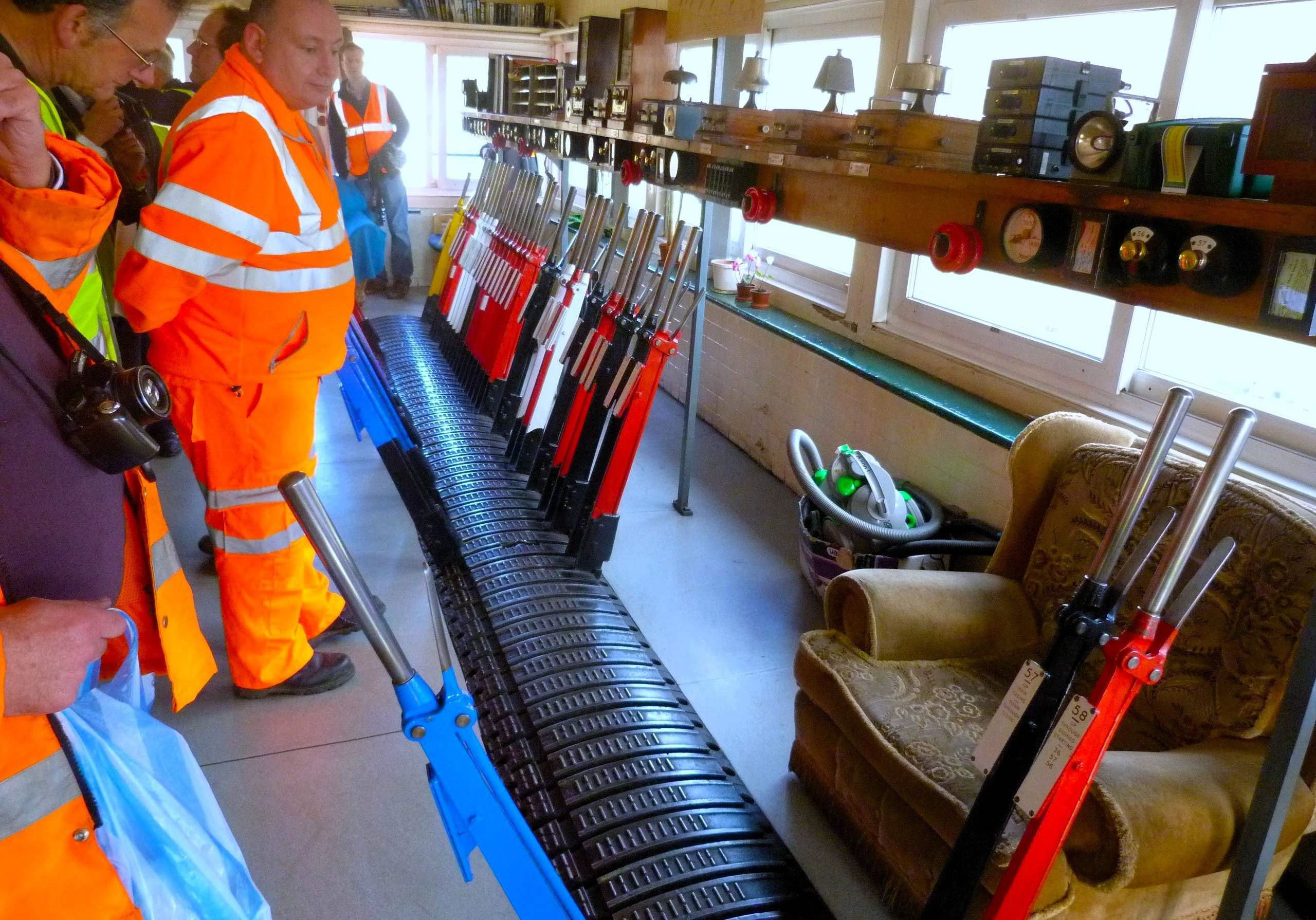
Worcester Tunnel Junction signal box lever frame and block instruments.during our 3 Mar 2012 Society visit.
[© Angus McDougall 2012]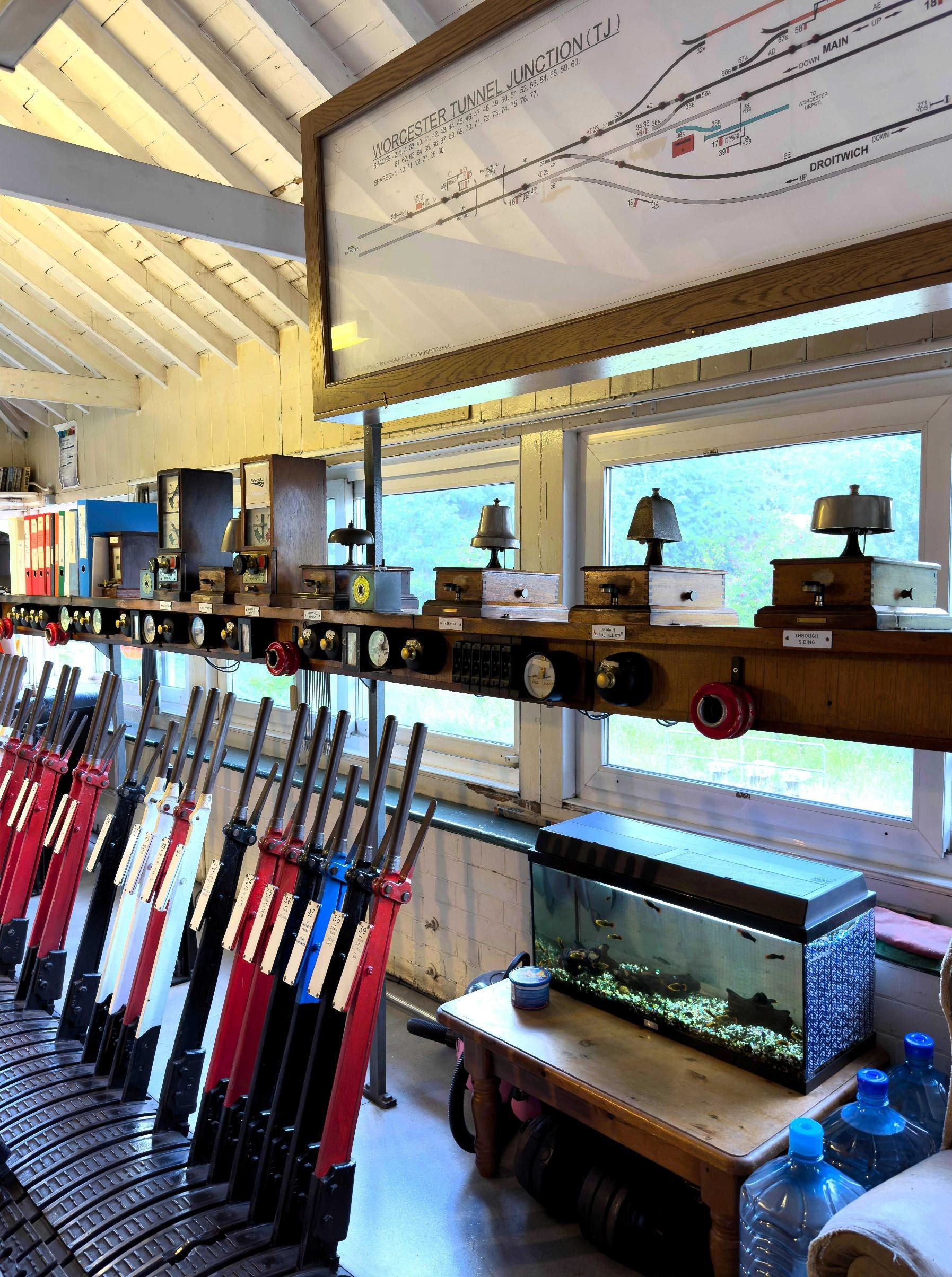
Worcester Tunnel Junction signal box. The bells! The bells! ...and those fish certainly drink a lot of water.
[© Mark Shinwell 2024]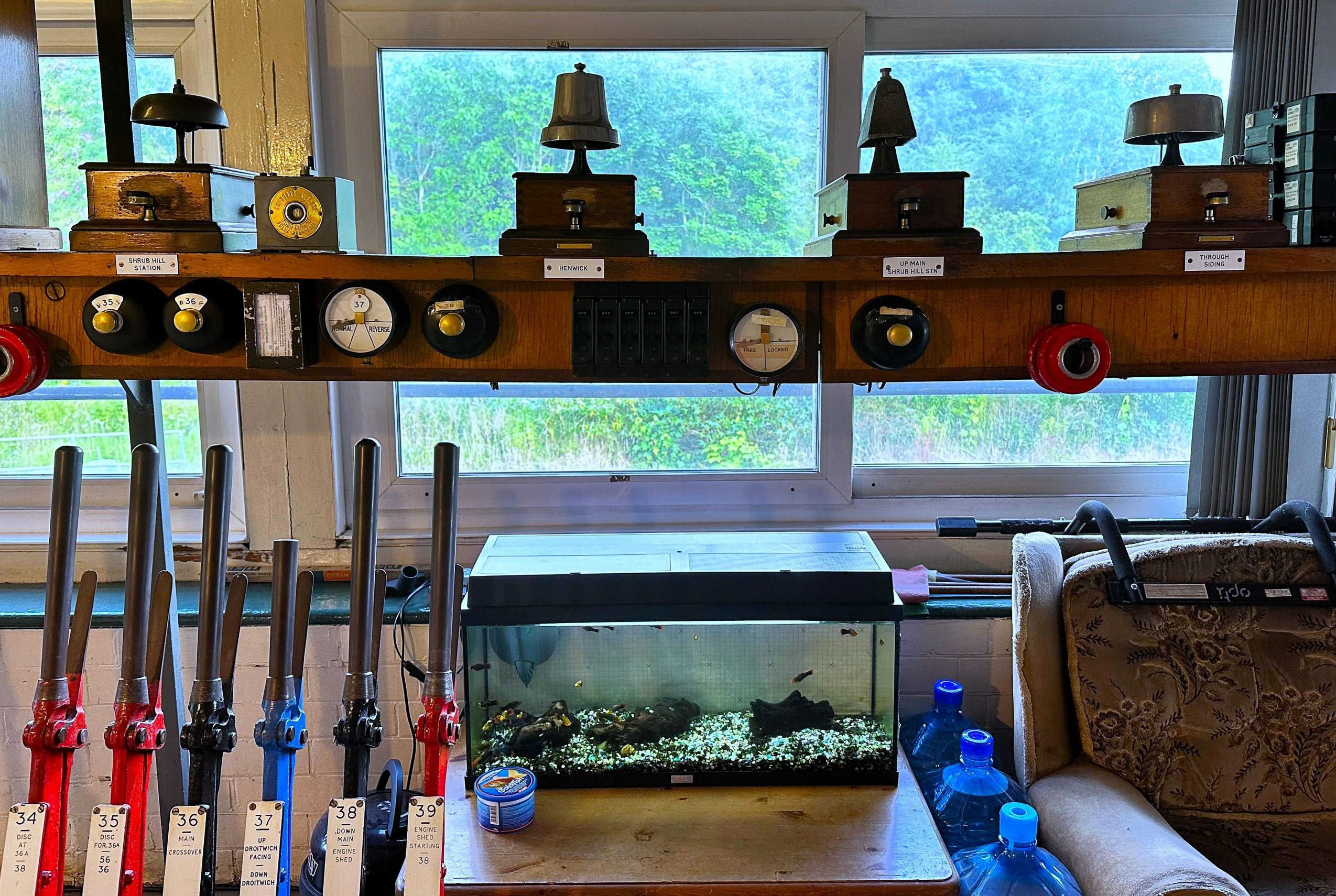
The bells again. Left is towards Droitwich and Birmingham; right is towards Worcester Shrub Hill.
[© Mark Shinwell 2024]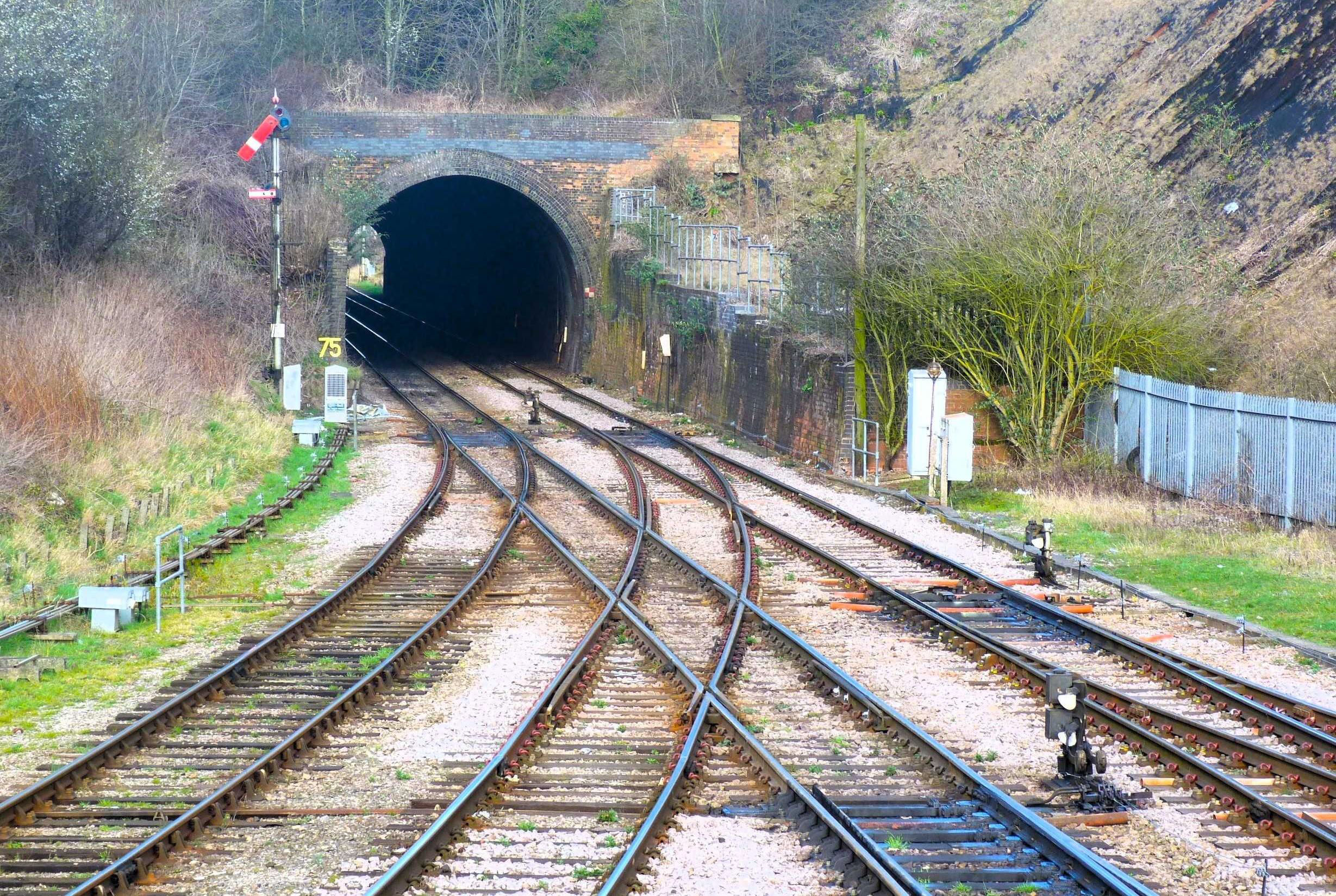
Rainbow Hill Tunnel from the box, towards Droitwich with Shrub Hill to the right and Foregate Street left.
[© Angus McDougall 2012]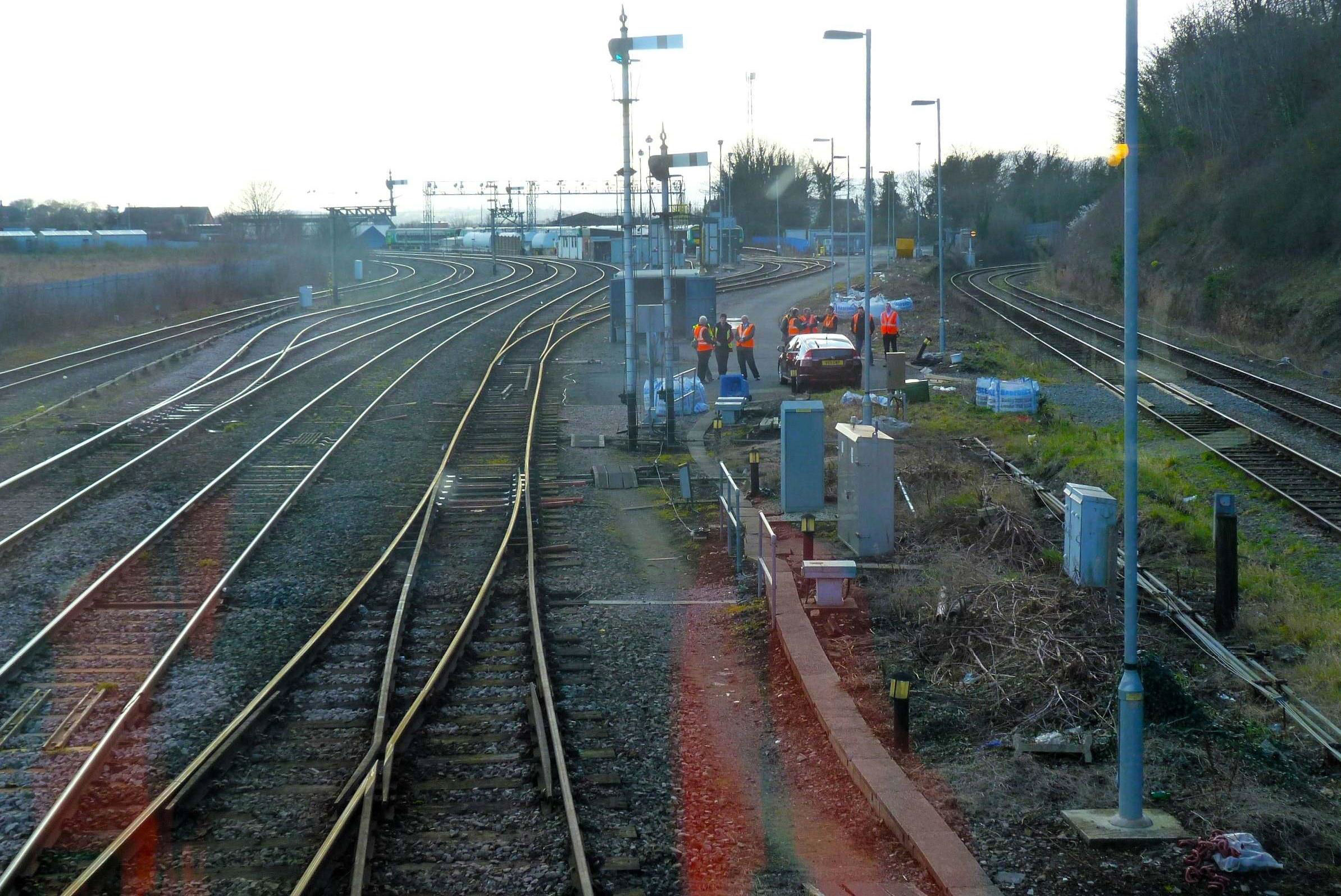
In the other direction, through glass. Foregate Street is off right and Shrub Hill left, the Goods Lines are far left and the Worcester Depot is ahead.
[© Angus McDougall 2012]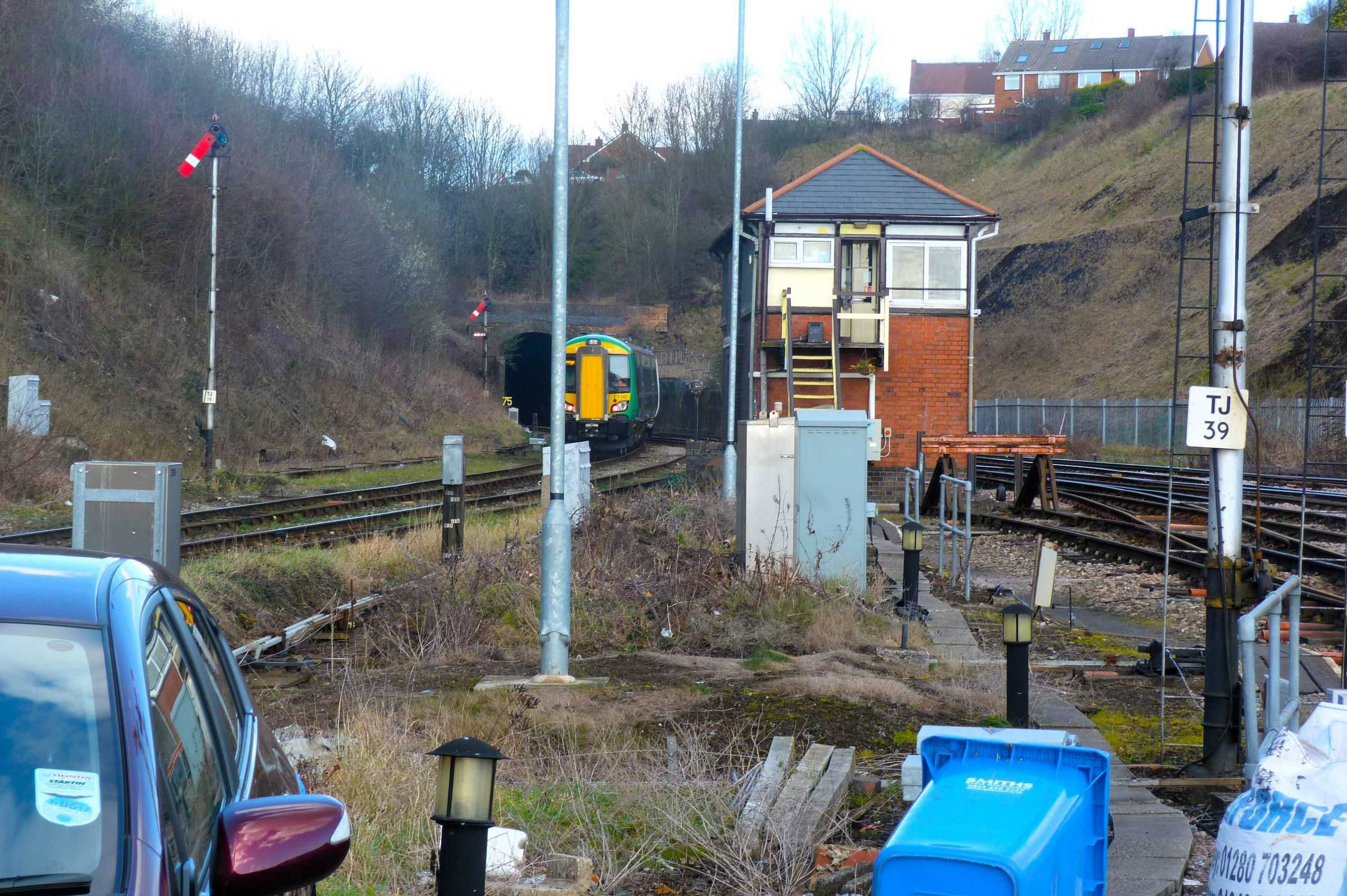
On 3 Mar 2012, when this was taken, these Class 172 DMUs (on the Snow Hill lines) had been in service less than 12 months and were still smart.
[© Angus McDougall 2012]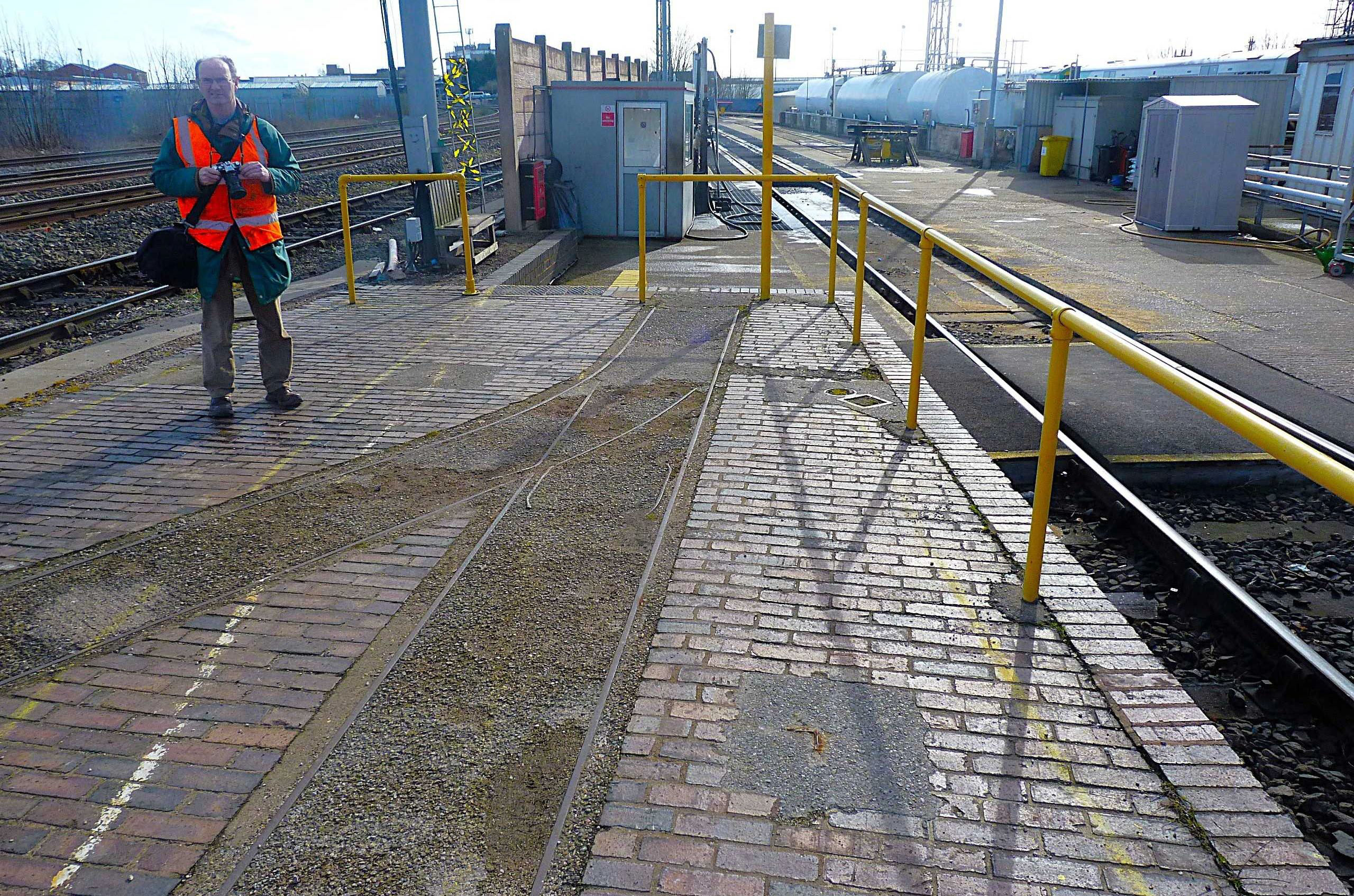
Narrow gauge track at Worcester Depot in 2012 (once for moving coal and ash), it has all gone with redevelopment; looking towards Shrub Hill.
[© Angus McDougall 2012]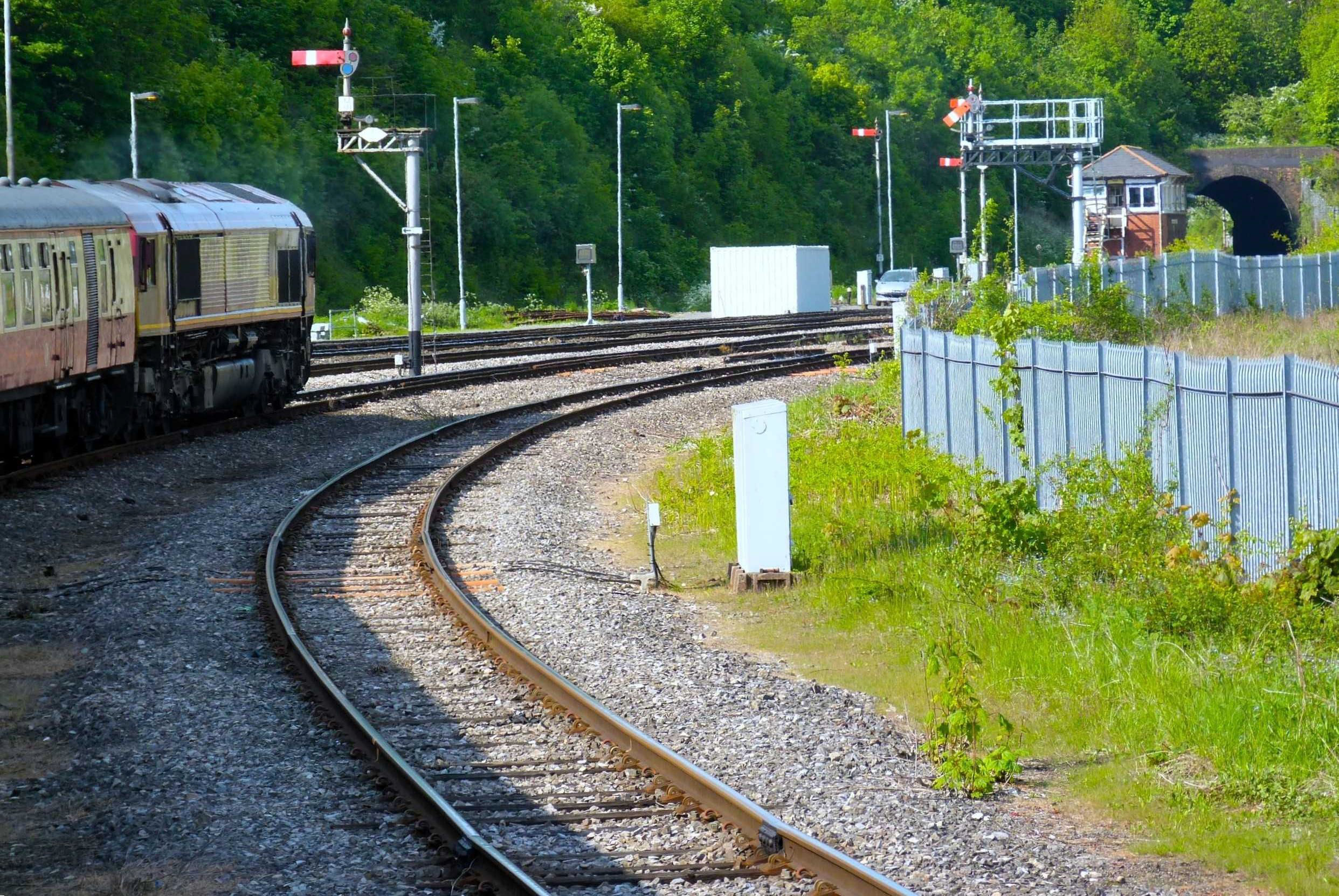
The 25 May 2013 UKRT 'Whitehouse Wanderer' railtour on the Up Through Siding (a Goods Line) heading for the signal box and tunnel.
[© Angus McDougall 2013]Worcester area routing bell codes sent from signal boxes:
Droitwich Spa: To Tunnel Junction: Suffix 1-5 for trains to Foregate Street.
To Tunnel Junction: Suffix 3-4 for trains to the Through Sidings (Goods Line avoiding the station).
Tunnel Junction: To Droitwich Spa: Suffix 1-5 for trains to Stoke Works Jn.
To Henwick: 5-2 for trains terminating in Foregate Street P2 (followed by 2-5 when they are withdrawn).
Henwick: 5-2 may be used for a train to reverse in Foregate Street P2, from and back to, Tunnel Jn.
Worcester Foregate Street platform bell codes:
1: Call attention / attend telephone.
2: Down train from Shrub Hill.
3: Down train from Tunnel Jn.
4: Up Train for Shrub Hill.
5: Up Train for Tunnel Jn.
Shrub Hill Station: To Henwick: Suffix 5-2 for trains terminating in Foregate Street P1 (3-1-3 sent by Henwick when train is complete and to be returned. This allows Henwick to normalise the acceptance lever and immediately offer the return working). To Norton Junction: Suffix 3-4 for trains to Evesham.
Norton Junction: To Shrub Hill: Suffix 3-4 for trains to Foregate Street (Hereford line).
Suffix 1-5 for trains to the Through Sidings (Goods Line avoiding station).
Newland East: to Henwick: Suffix 3-4 for trains to Foregate Street P2 (Droitwich Loop / Tunnel Jn).
Continued in Part 3