Twelve members met at Littleport to visit the four signal boxes between there and King's Lynn. Our rendezvous was affected by train service disruption following problems with the overhead wires near Alexandra Palace. Trains had come via the Hertford Loop with the inevitable delays. When the Ely to King's Lynn line was built, traffic was centred around agriculture and bulk goods to and from King's Lynn docks. Latterly King's Lynn was served by Speedlink trains carrying chemicals, grain and Campbell's soups. Later still, coal was imported for Barrington Cement Works. There was extensive traffic to Hunstanton, a popular holiday resort. Nowadays the traffic is an hourly service to and from King's Cross, enhanced to half-hourly in the peaks, as well as sand trains from Middleton Towers carrying sand for glass making.
Littleport signal box is an 1882 Great Eastern Railway GE2 type, with a Saxby & Farmer Rocker frame dating from that year. It had recently been heavily but very sympathetically refurbished and repainted externally in green and cream; both end walls were said to have been replaced and it looked very smart. The three low-level windows in the locking room, present until recently, had been boarded over during refurbishment. As installed, the frame had 25 levers, No25 has been removed. Of the remaining 24, just 9 are in use, with 15 unused and painted white. All signals are colour light; Levers 4 and 24 operate the combined Up and Down home and distant signals respectively, so are painted red and yellow.
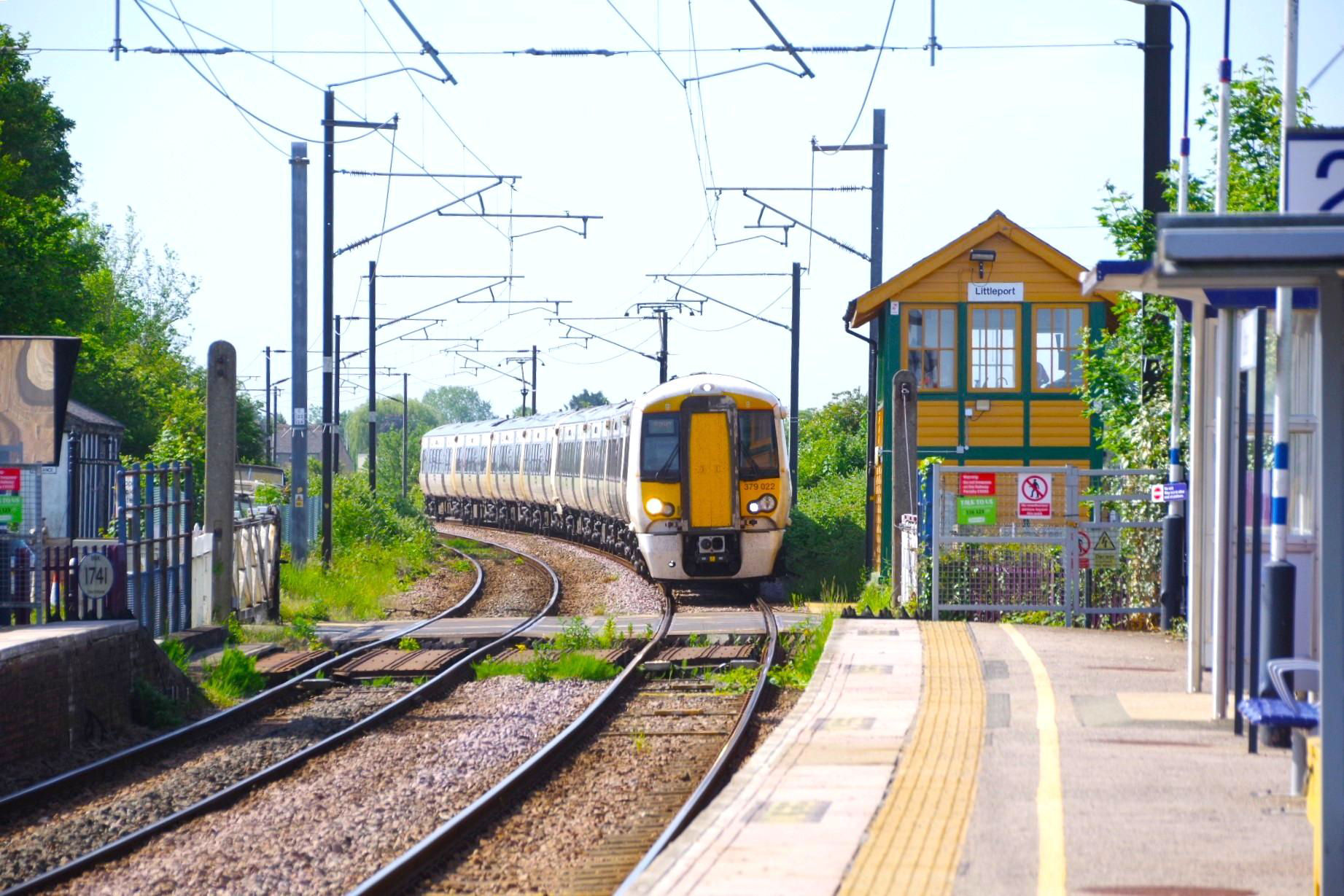
A King's Cross to King's Lynn train approaches Littleport from Ely (it didn't come via Seven Kings or Kings Heath).
[© Nick Garnham 2026]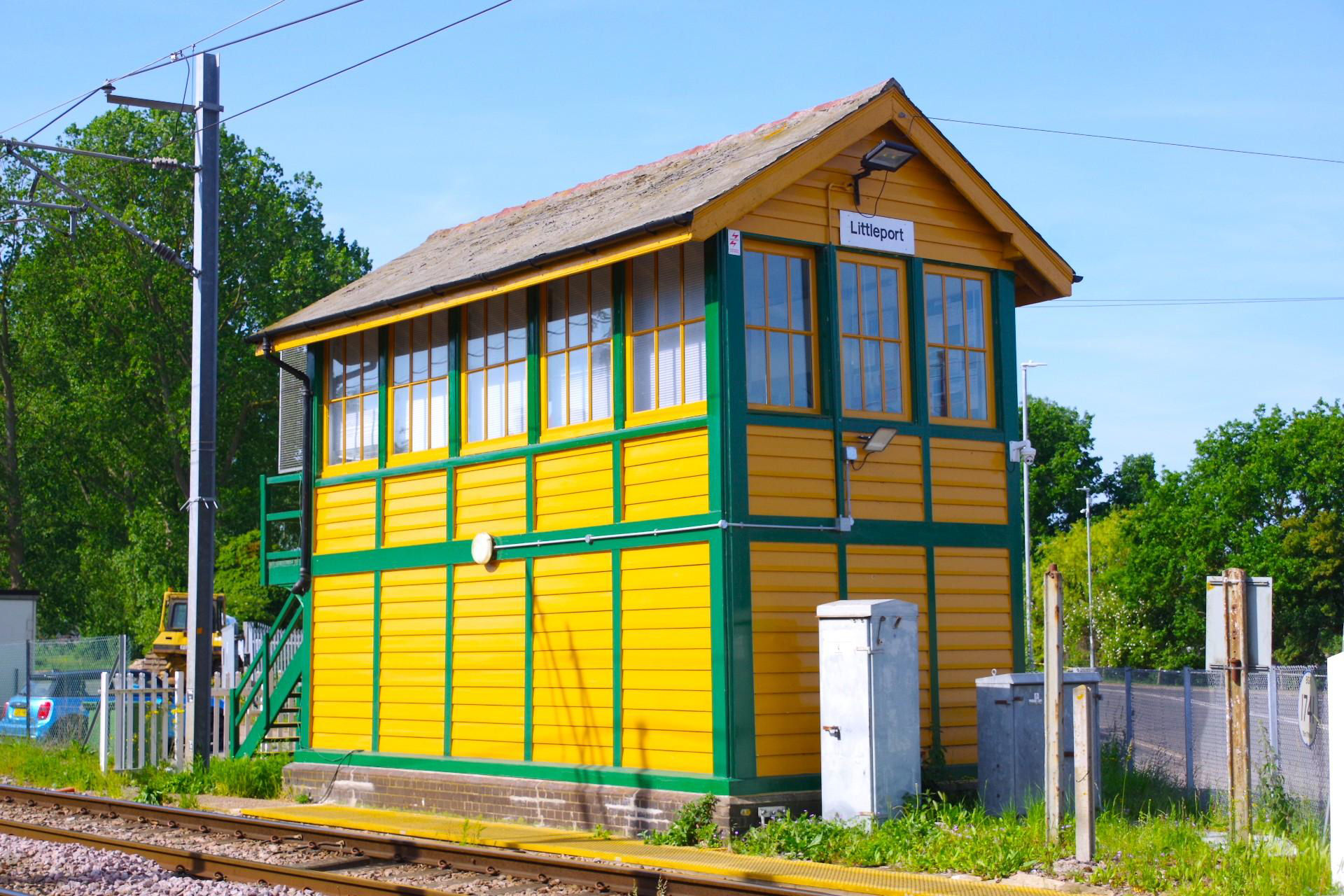
Littleport signal box; Ely is to the left and King's Lynn right.
[© Nick Garnham 2026]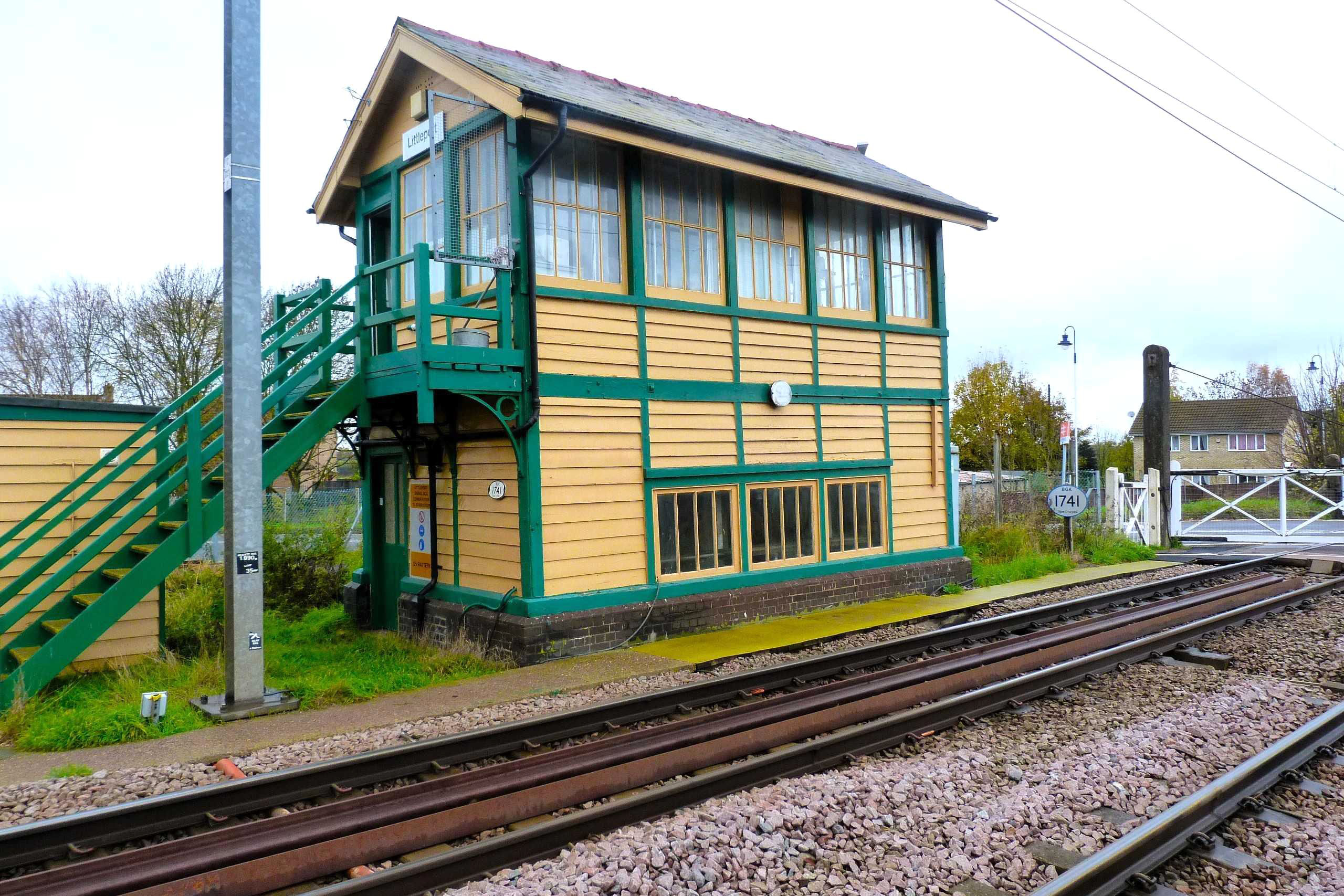
Littleport signal box; during our 10 Nov 2012 Society visit.
[© Angus McDougall 2012]The adjacent gate level crossing is operated on foot by the signaller; the main road here is unclassified now but, before construction of Littleport Bypass, was part of the A10 trunk road. The signaller's walk to operate the gates is made longer as the steps are at the opposite end of the box to the crossing itself. It is one of a small and diminishing number of typical East Anglian crossings with large hand-operated wooden gates, one gate of which had recently been renewed. In this case, the gates are mechanically interlocked with the signals, using channel-rodding runs operated by Lever 2. There are also working pedestrian wicket gates on the box side of the crossing operated by Lever 1. The box also supervises two automatic half barrier (AHB) and three user-worked crossings, reflecting the flat countryside of the area.
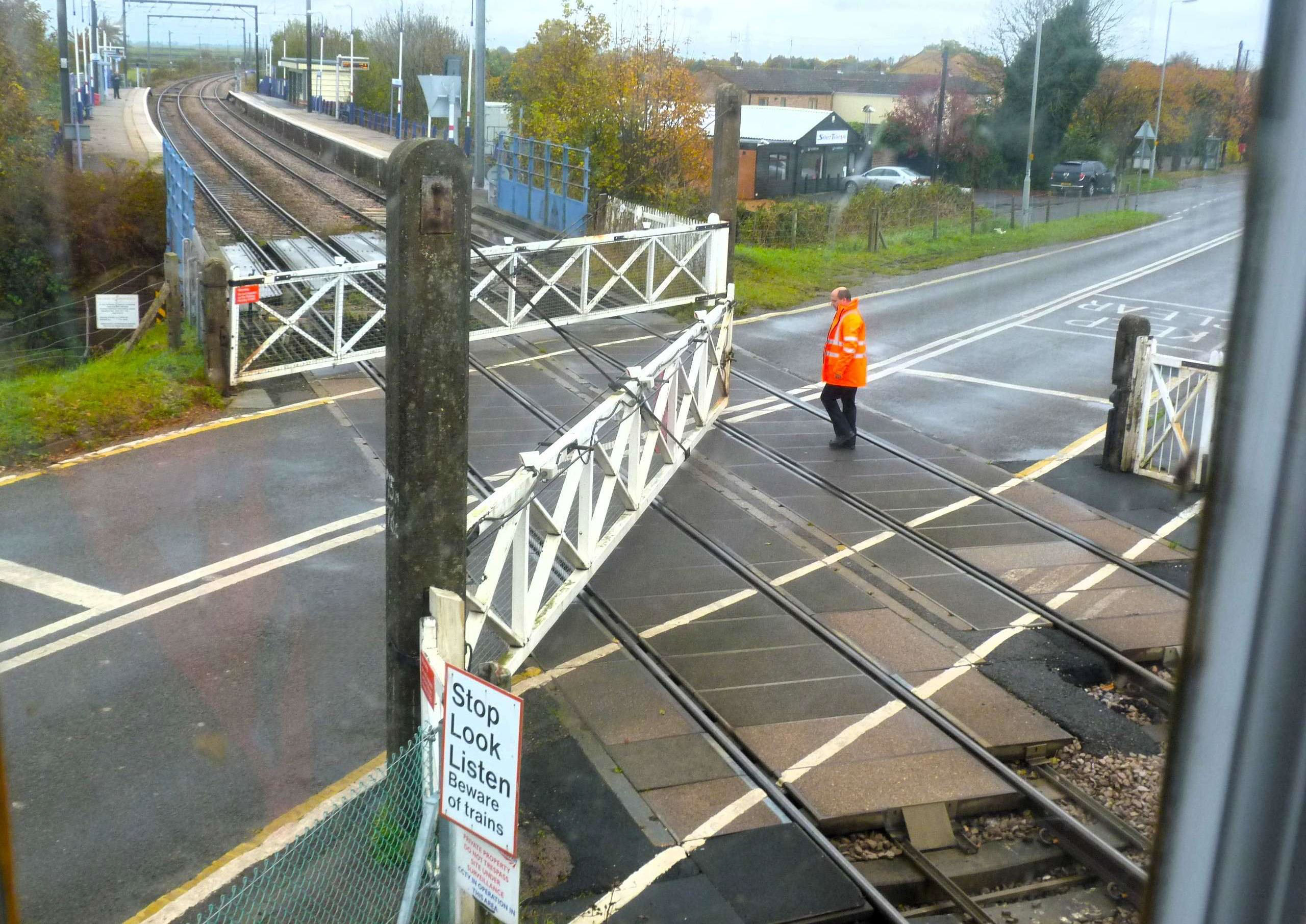
Taken through glass from the box on a wet day.
[© Angus McDougall 2012]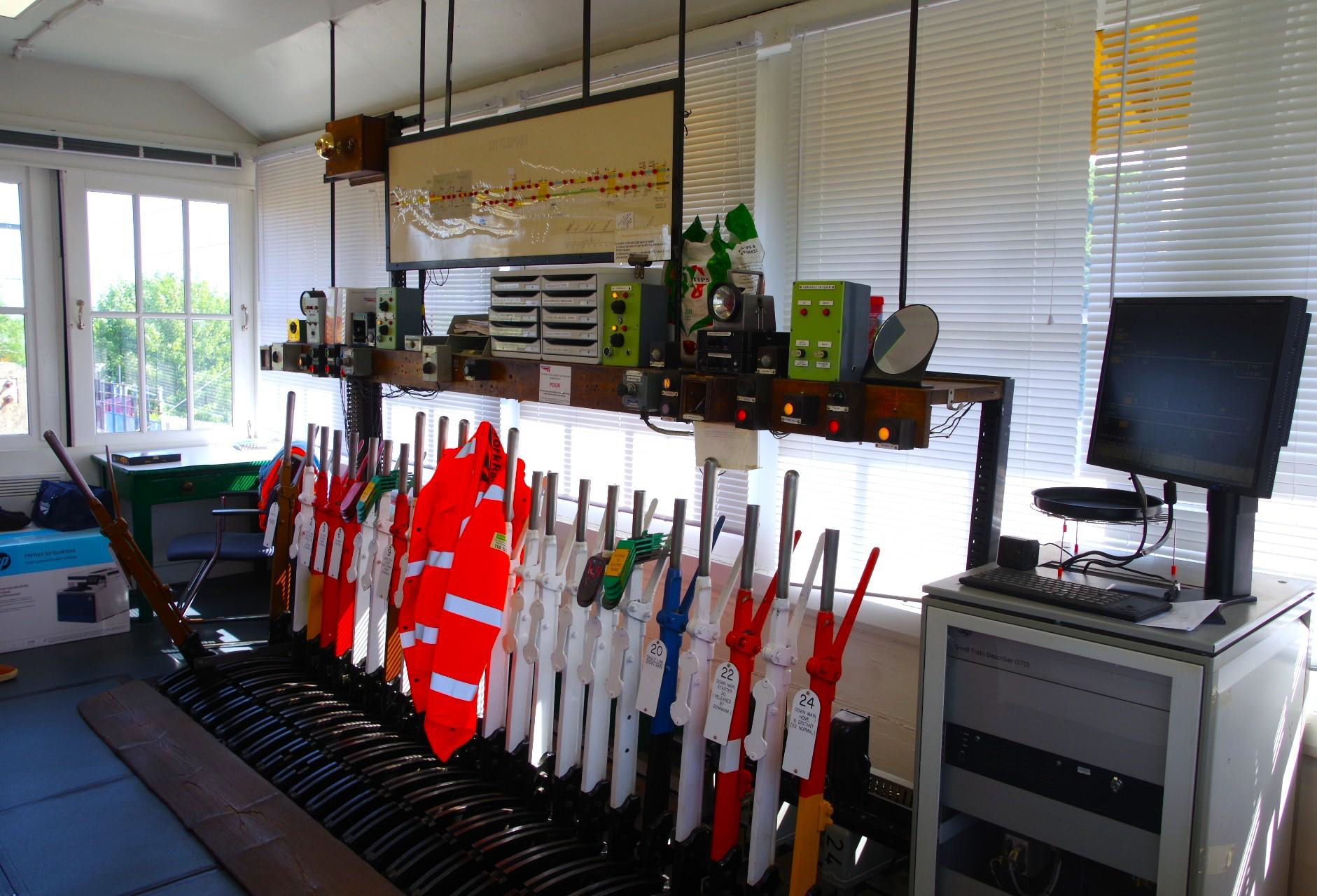
The inside of Littleport signal box.
[© Nick Garnham 2026]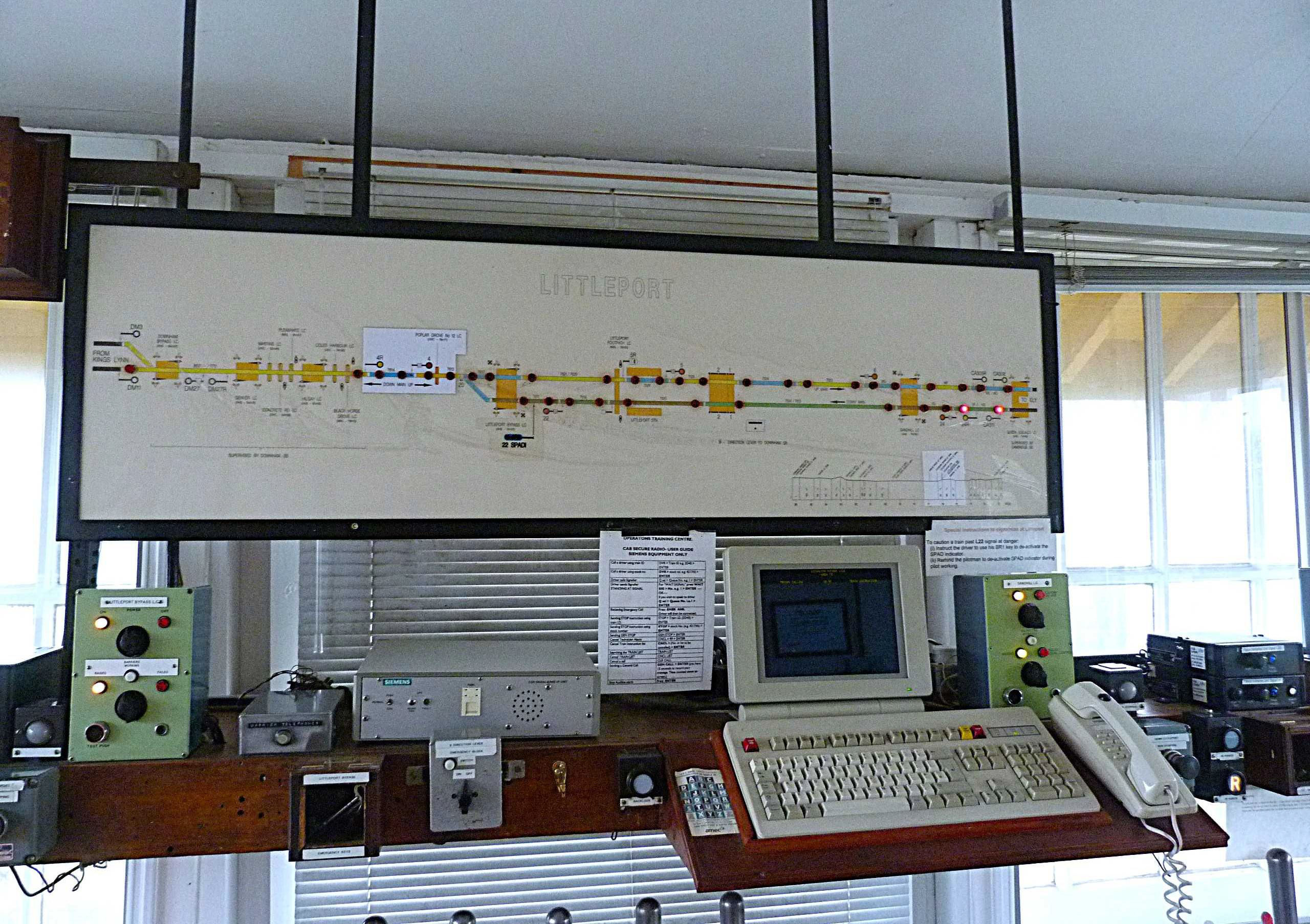
The signal box diagram and block during our 10 Nov 2012 visit.
[© Angus McDougall 2012]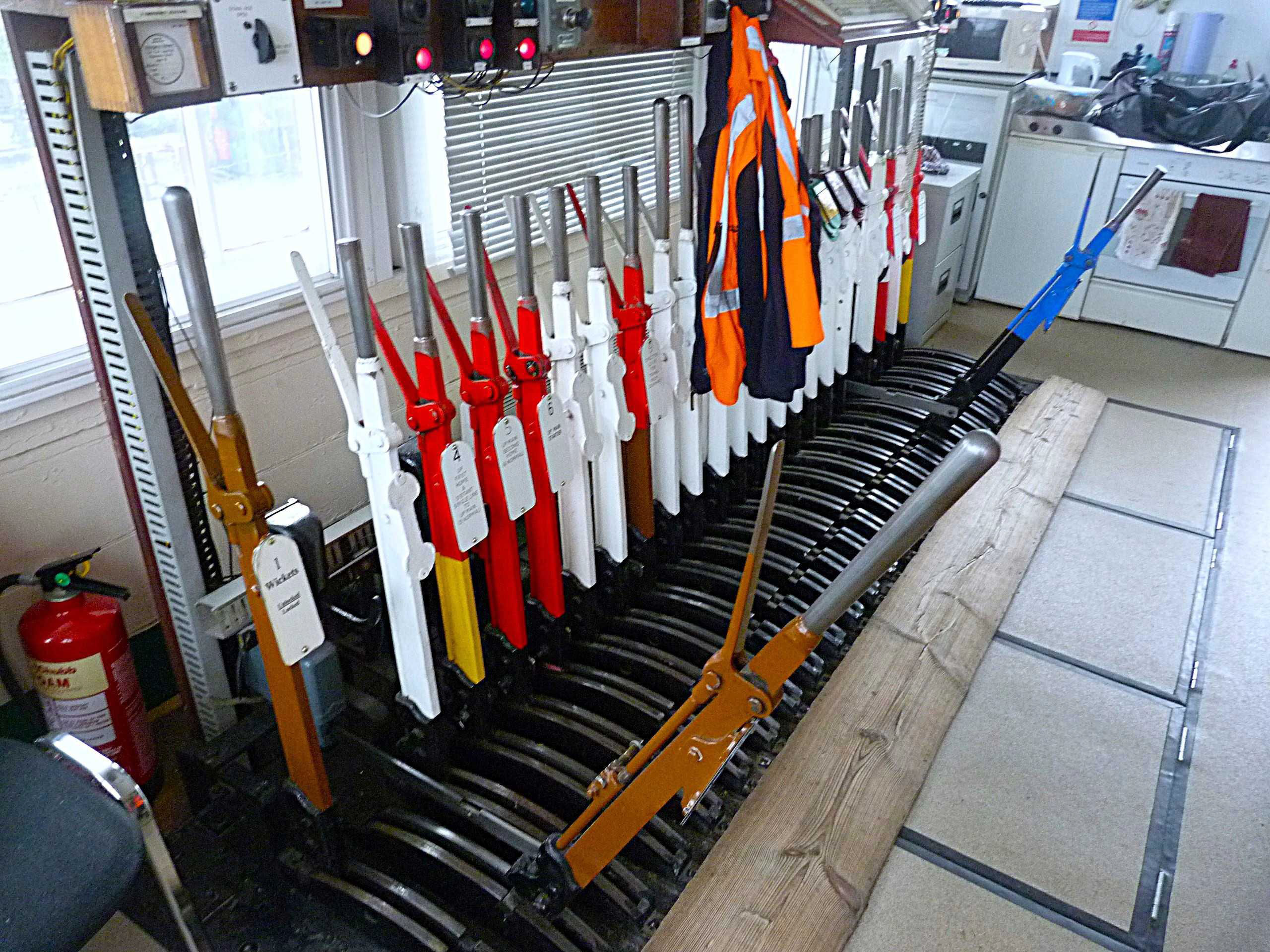
The lever frame looking towards Ely during our 10 Nov 2012 visit.
[© Angus McDougall 2012]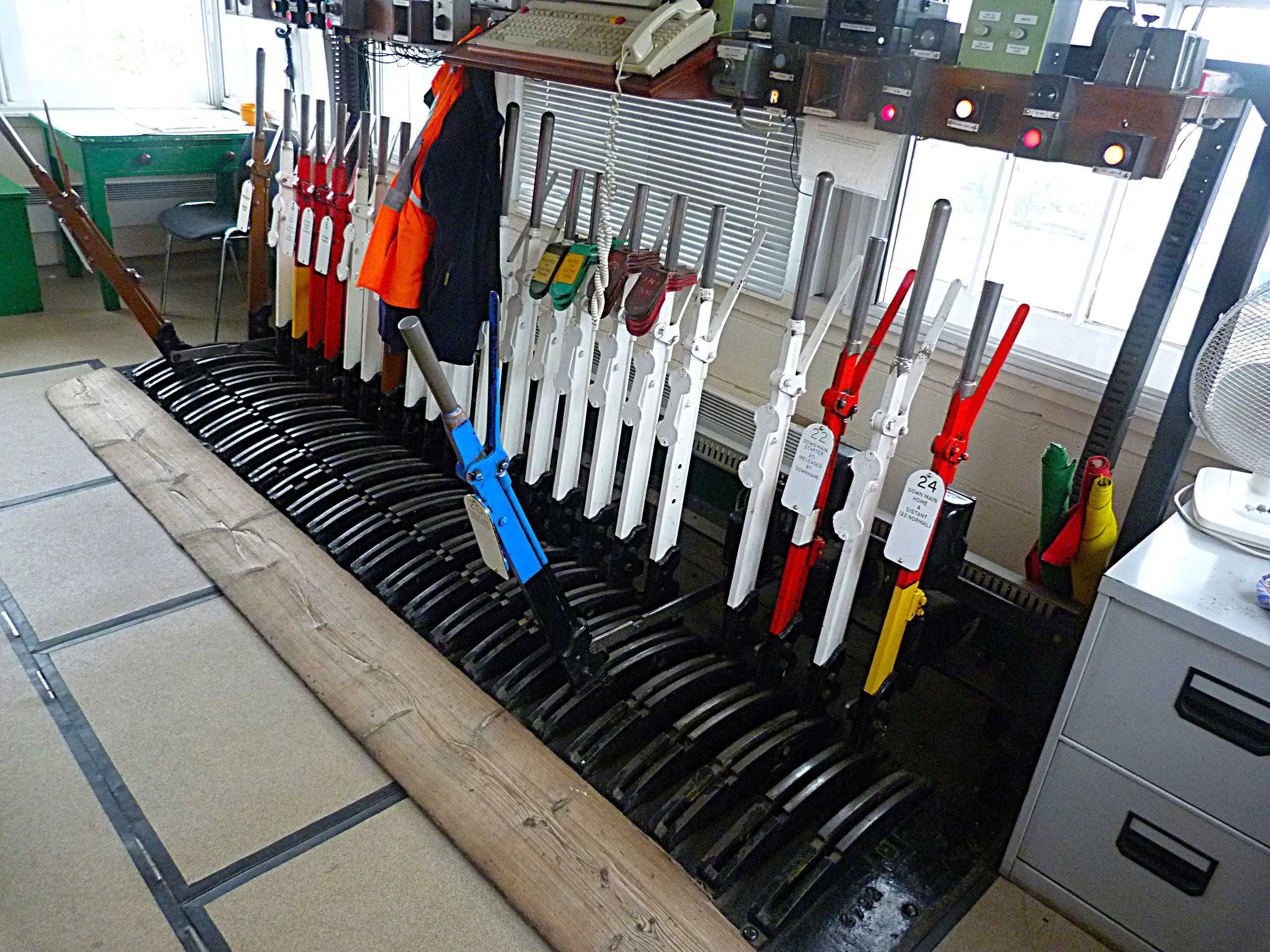
The lever frame looking towards Kings Lynn during our 10 Nov 2012 visit.
[© Angus McDougall 2012]The adjacent very low crossing 'bypass' underbridge closed to road traffic in recent years, so all traffic must now use the level crossing. Part of the roadway under the bridge has been utilized to create a level access ramp to the Up platform. This level crossing 'bypass bridge' was one of three locally; those at Ely and Stonea remain and are often subject to bridge strikes by road vehicles, as mentioned in BLN.
The railway is double track south to Ely North Jn where it singles to join the Norwich line, also single then. This 16ch single track, now a major bottleneck, in turn joins the Up Peterborough line, becoming the Up Main of the double track on to Ely. South of Littleport, the line is operated under Track Circuit Block (TCB) rules, using a Train Describer (TD) fringing with Cambridge signal box. North of Littleport, following rationalisation in 1984, the track towards Downham Market singles. This is also fully track circuited but communication is by single stroke bell and the single line section is controlled by direction levers here and in Downham Market box.
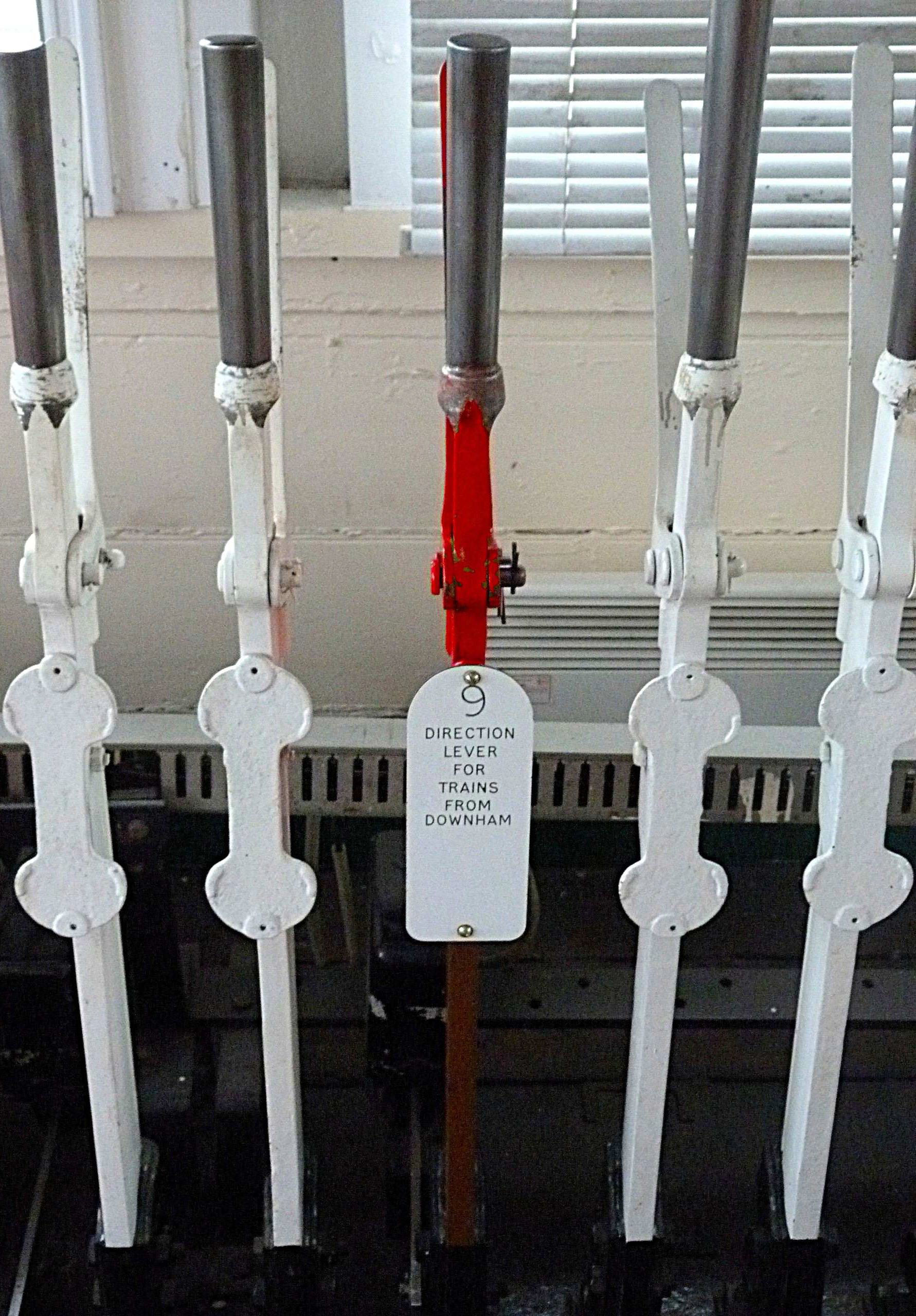
Lever No 9, the direction lever, during our 10 Nov 2012 visit.
[© Angus McDougall 2012]The method of operation on each single line over the whole route is the same. When a signaller wants to send a train, they describe it on the bell to the far end signaller and, if the far end signaller is happy to receive it, assuming the line is clear, the signaller at the far end will reverse the direction lever (or acceptance switch), then repeat the bell code described.
The signaller explained that it was important to use this procedure as it is possible for both signallers to reverse their direction levers simultaneously! It is understood that, if this happened, neither route would clear and S&T would have to come out to fix the system! He did point out that he hadn't done it himself…
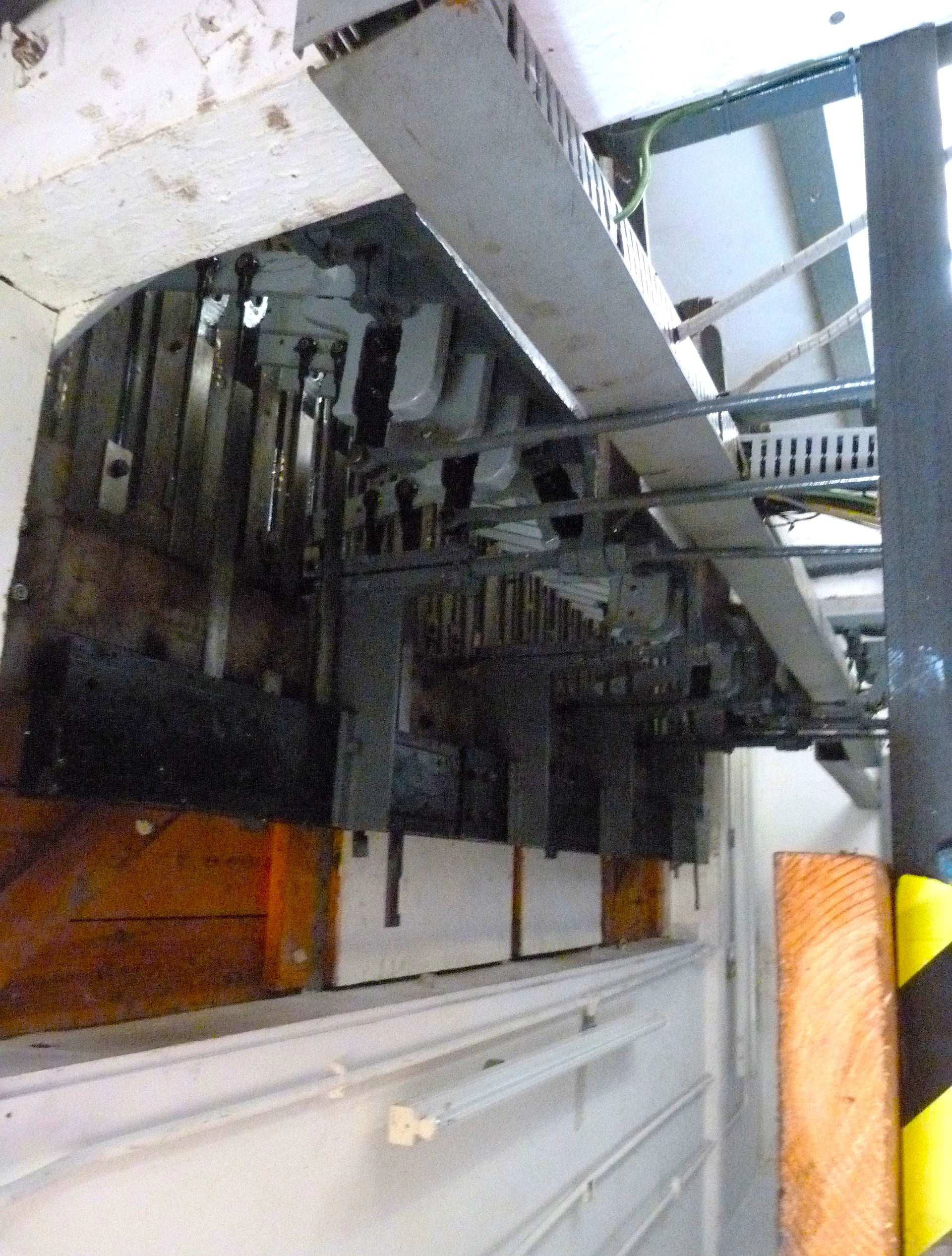
The locking room beneath the signaller's operating floor.during our 10 Nov 2012 visit.
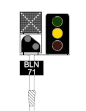
[© Angus McDougall 2012]Entry to the single line is protected by Signal 22 with an associated blue-backed (Signal Passed At Danger) SPAD indicator, an increasingly endangered species as the function has been largely taken over by the Train Protection & Warning System. Littleport Bypass AHB Crossing has 'non-stopping controls' (for sand trains, ECS etc). Despite this, the signallers hold Signal 22 at danger until a northbound train sets off from the platform (it isn't a starting signal), as otherwise, even without a non-stopping selection, the crossing would activate too early and 'time out' (show as failed) before arrival of the train at the crossing. Southbound trains enter the platform on a left-hand bend, so a banner repeater is provided at the north end of the platform. There is also a 'non stopping' control for Sandhills AHB south of the box.
to be continued.