Highley box has four Tyer's No9 token instruments, two for each direction. The box was recommissioned 2 Mar 1974 with Electric Train Token (ETT) working to Hampton Loade. Long section ETT to Bridgnorth (when Hampton Loade is switched out) began in 1975. The long section token unlocks the 2-lever ground frame at Eardington to access the sidings. ETT to Arley and (when Arley is switched out) to Bewdley North was commissioned 10 Apr 1976. That long section token unlocks the box at Arley so it can be used as a ground frame to access the yard. An intermediate token instrument allows trains to be locked in. With only one platform, passenger trains do not cross at Highley but it cannot be switched out. The loop sidings are used to stable ECS for terminating and originating short workings such as during galas.
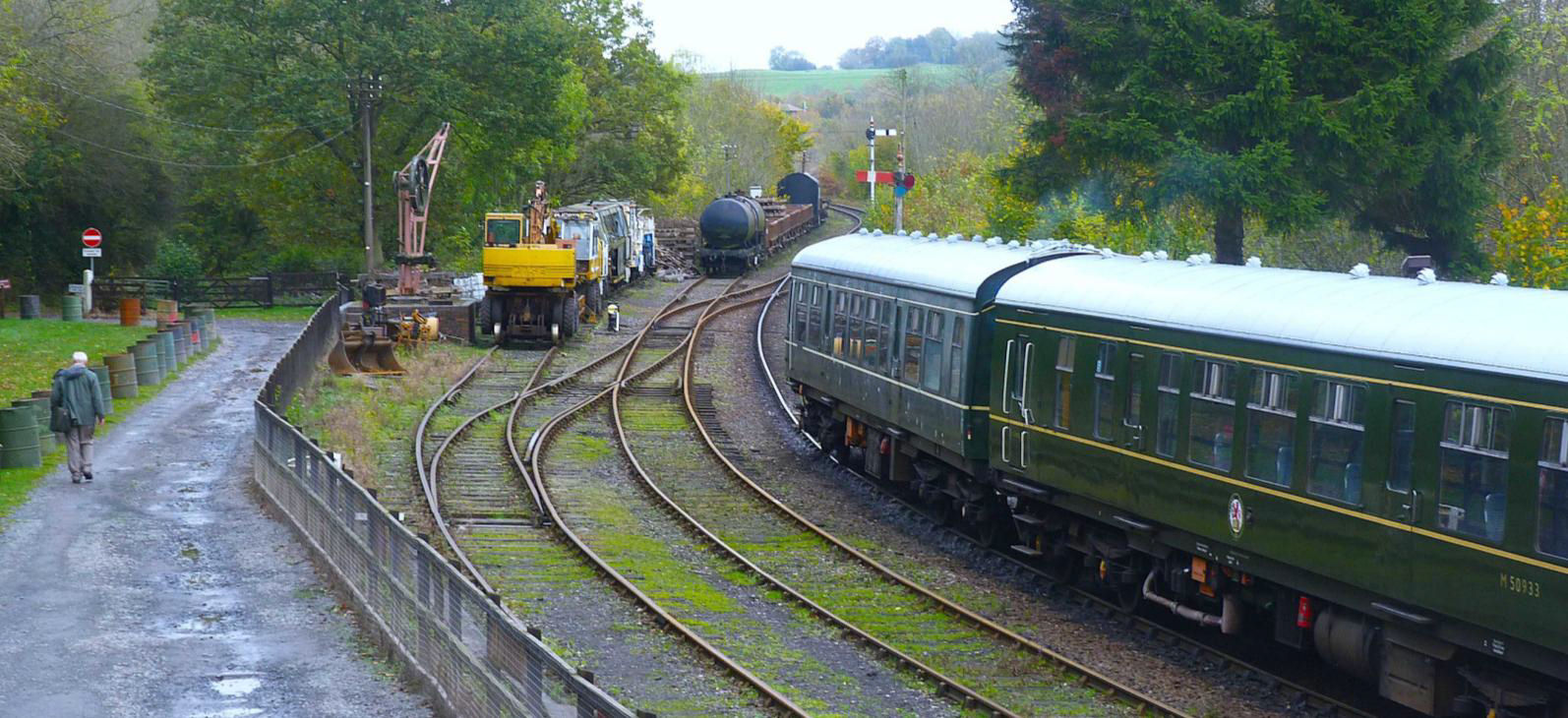
On the same visit, the view from Highley box towards Hampton Loade and Bridgnorth. Returning from Bridgnorth to Kidderminster, some members enjoyed cream teas in the observation car. (Lots of cakes and scones needed eating up as it was the final day of cream teas in 2014, we were very happy to help!).
[© Angus McDougall 2014]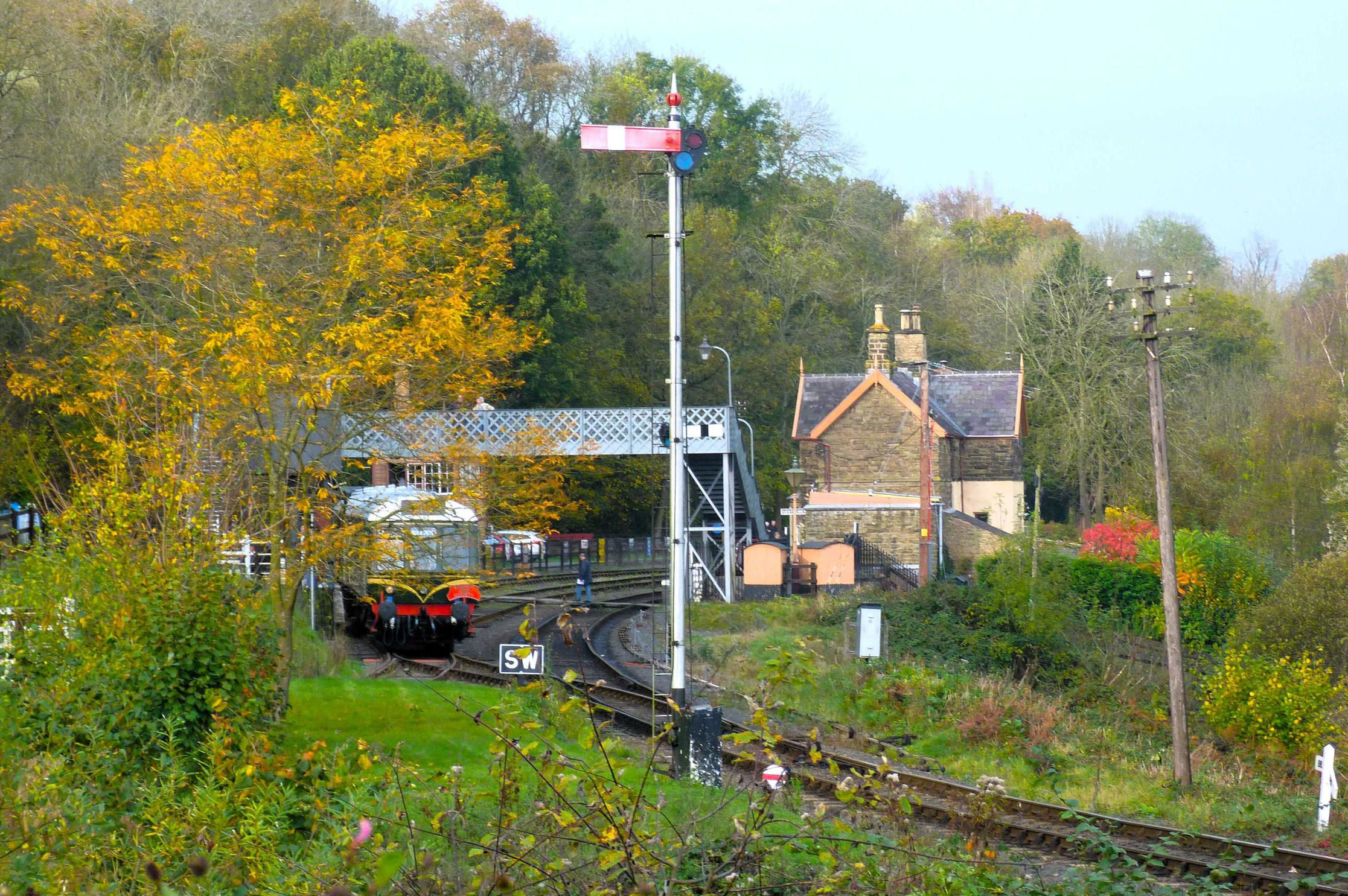
The next day, our SVR rare track DMU tour, alighting was at Highley cattle pen for the lunchbreak and the autumn colours.
[© Angus McDougall 2014]The penultimate box of the day was Hampton Loade, a weatherboarded structure at the south end of Down P1 built by the SVR in 1973, with a pleasant view of the countryside from the operating floor. The box is not original but was reconstructed from parts sourced from other boxes. However, it does replicate the original box which was commissioned with the loop on 25 Jun 1883 and abolished by British Railways after the line closed in Sep 1963.
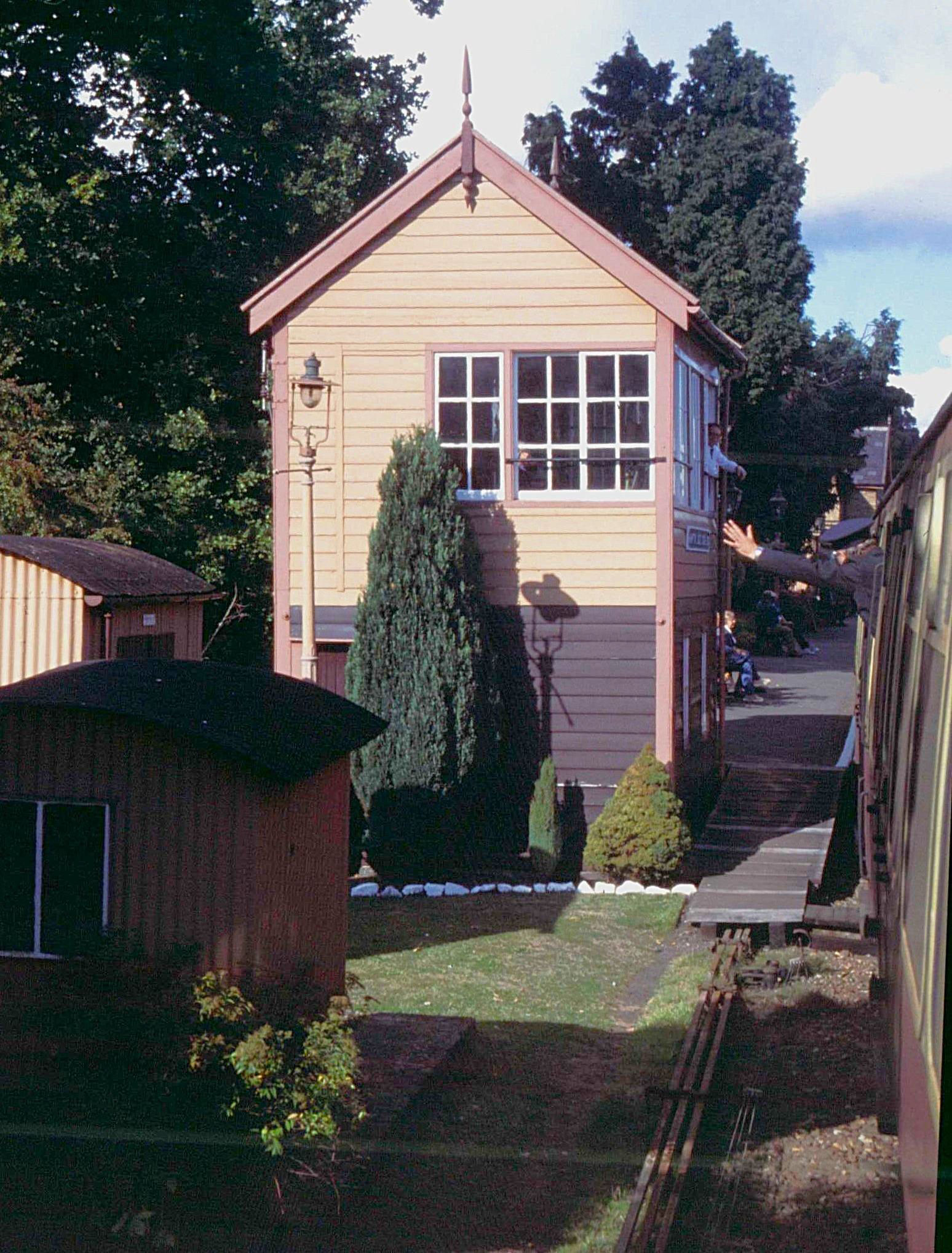
A Kidderminster to Bridgnorth train approaches Hampton Loade with the signal box as it was on 28 Sep 2003
[© Angus McDougall 2003]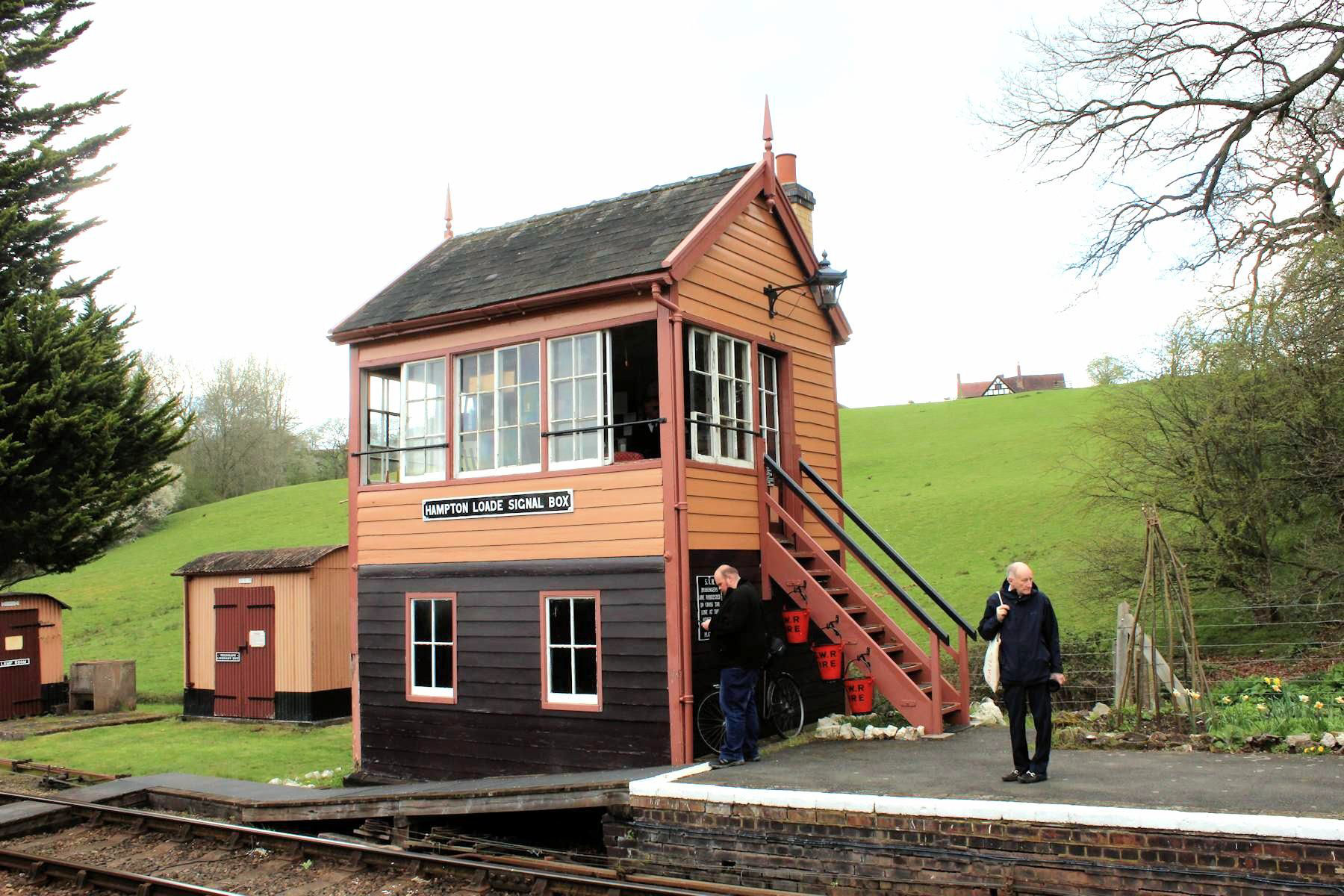
The box on 15 Apr 2023, looking very smart after refurbishment with authentic features; Bridgnorth is to the right.
[© Martin Tester 2023]That box was largely dismantled, parts were reportedly used to build a chicken coop in the garden of station house. For SVR passenger reopening from Bridgnorth to Hampton Loade on 23 May 1970, a three-lever ground frame was provided at the north end of the station for the loop. The SVR ran Saturday 'shoppers' specials' to Bridgnorth at first with a GWR railcar but they were poorly patronised.
The upper part of Pensnett box (on southern Kingswinford Jn end of the GWR Wombourn loop) was moved to Bridgnorth signal box in Nov 1968 and the wooden ground floor sections were left in situ. These were disassembled in Jan 1970, then moved to Hampton Loade. Rebuilding of the box there began in early 1971, using parts from the original Hampton Loade box, Abercynon, Montgomery, Pensnett and Stourport North, incorporating the lever frame from Ledbury North End (where it dated from 1937)! The McKenzie & Holland appearance was replicated. The external structure was largely completed in 1971, with painting and roof slating finished in 1972. Signal post provision concluded with the erection of the Down Distant just after Christmas 1971. In 1972, the signals were connected by wires to the box and rodding runs / point connections finished. By the end of that year, the block shelf was in position, the lever frame cleaned and oiled. The 'switching out' contact box was fitted below the frame for long section token working between Bridgnorth and Highley and the locking assembled. The new box and signalling were commissioned on 19 May 1973, after the last train that day had returned to Bridgnorth.
The box worked to Bridgnorth One Engine in Steam then, after commissioning of the token instruments a few weeks later, by Electric Token Block. The Electric Token Block to Highley was signed into use on 2 Mar 1974; this token released Alveley Sidings (South) ground frame (see BLN 1500.1727).
By mid-May 1975, Hampton Loade box could be switched out; the intermediate siding at Eardington can only be accessed using the long section token. The Down and Up distant signals were brought into use in 1981 and 1982. Several overhauls have been carried out, including point rodding in 1982, rewiring in 1983, mechanical interlocking in 1992 and a second rewiring in 2012-13. The latter was for resiting of the two Tyer's No9 token instruments, which had previously been on the fireplace brick support. A replacement fireplace and chimney were brought into use on 27 Dec 2014. Refurbishment in 2019 saw the box have new steps, shiplap boarding and locking room windows all in the correct original style.
A small hob grate provides heat when working at the 16-lever, 5-bar vertical tappet frame with 4 inch lever spacing. The frame has 15 working levers, no spares and one space. There are two fine GWR Tyers wooden-cased distant signal repeaters in this box, with arms. Electric Train Tablet working is used to Highley to the south and north to Bridgnorth. The locking room underneath the operating floor has a brick floor. Hampton Loade box can be switched out, in which case all trains use bidirectional Down P1. Apart from the passing loop (which is longer than the platforms), there is a siding behind Down P2 which trails into that side of the loop giving the appearance of a bay.
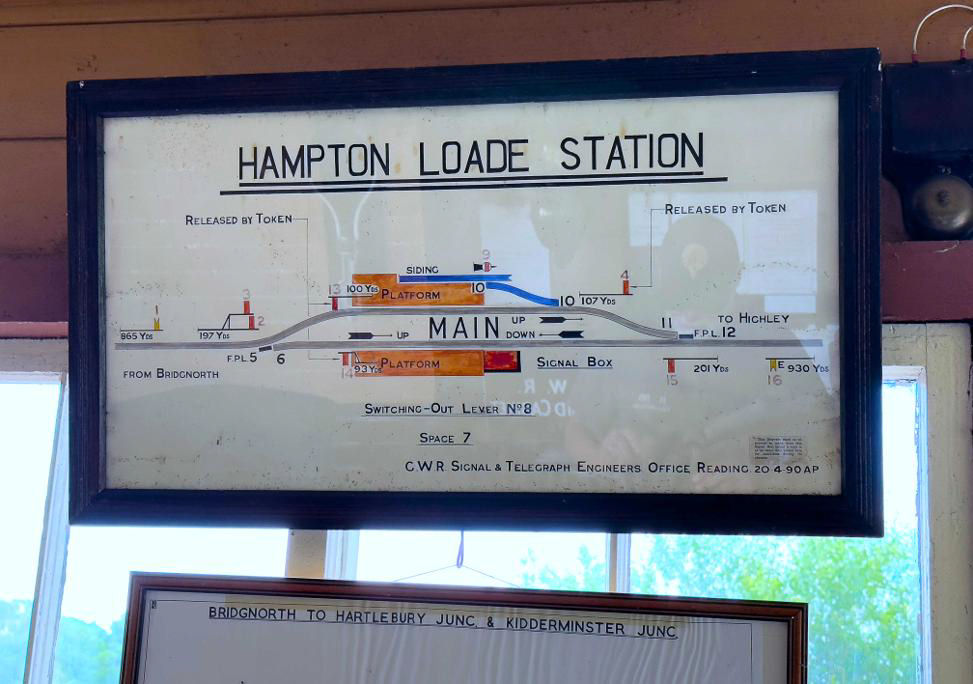
Hampton Loade signal box diagram during our 29 Jun 2024 visits.
[© Mark Shinwell 2024]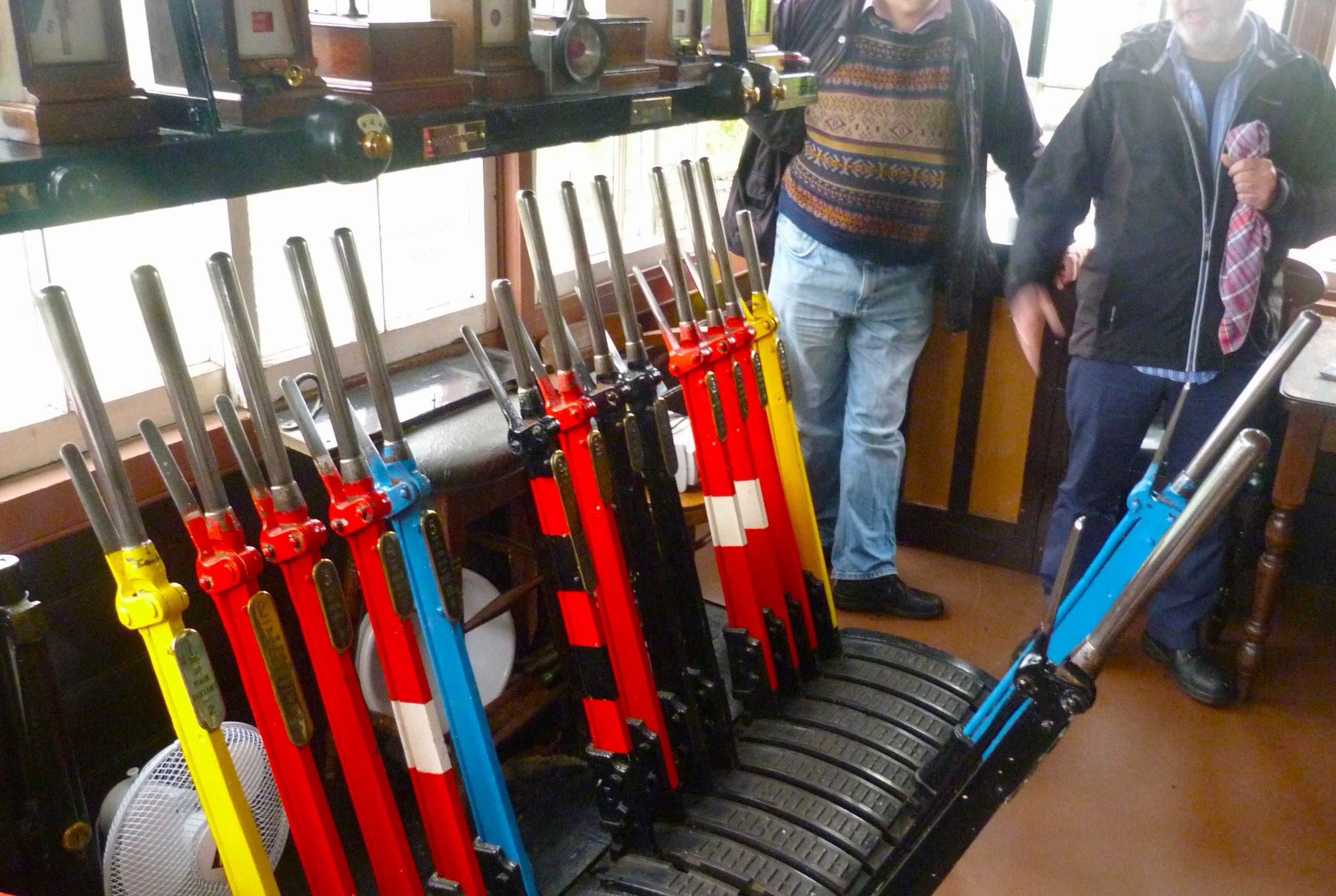
The 16-lever frame has 15 levers and one space.
[© Angus McDougall 2014]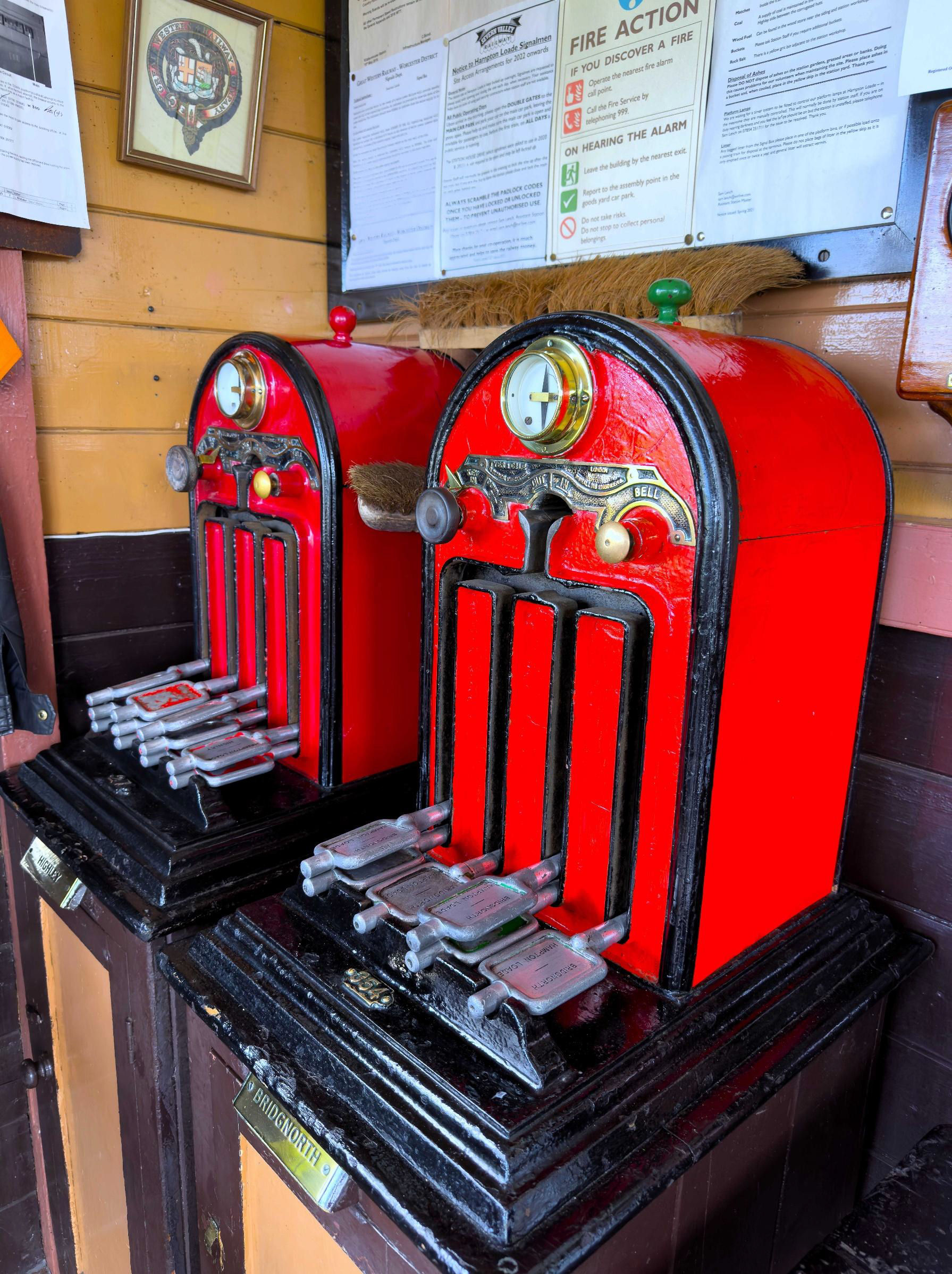
The token machines not to 'Broom' Junctions, despite appearances, but to Highley (left) and Bridgnorth (right).
[© Mark Shinwell 2024]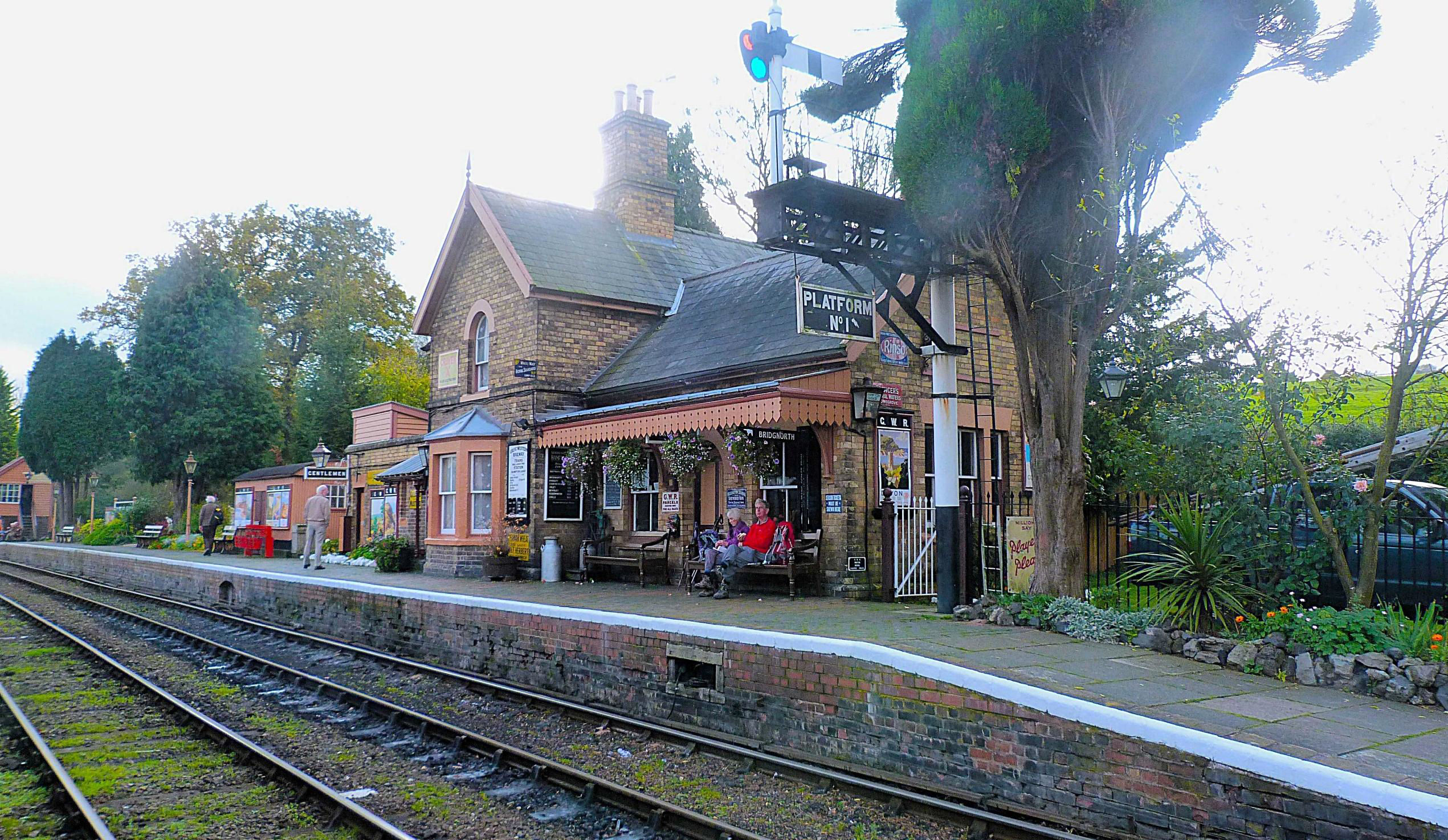
Into the sun at Hampton Loade during our Fri 30 Oct 2014 AGM Severn Valley Railway signal box visits. Bidirectional Down P1; the signal box is far left at the Kidderminster end with Bridgnorth to the right.
[© Angus McDougall 2014]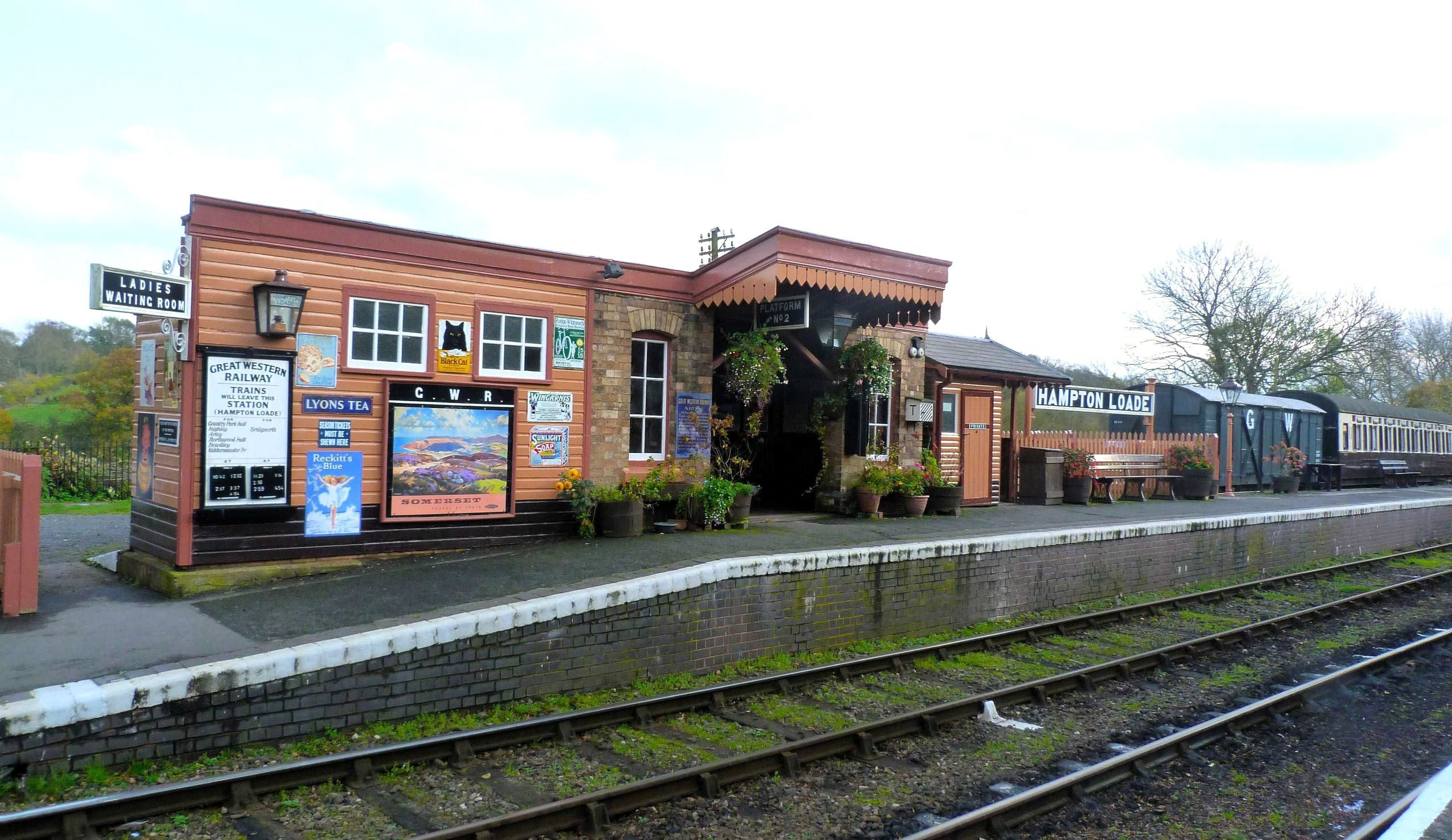
Up P2 (the loop) on the same occasion, Bridgnorth left, Kidderminster right.
[© Angus McDougall 2014]The unusual current-operated (but not currently operational) Hampton Loade ferry is a 'reaction (cable) ferry' over the River Severn to Hampton on the west bank. It gave the hamlet its name, as 'Loade' is derived from lode, an old English word for ferry. However, the ferry has not operated since 2016.
Our visits concluded at Bridgnorth, the northern terminus of the heritage Severn Valley Railway. The 30-lever box is situated some way to the north along Up Platform 1, meaning that fewer train movements can be seen than maybe one might expect!
Originally there were two boxes but they were consolidated into a single one in 1923 with 54 levers, far more than were needed, with many spare in anticipation of the GWR's new line to Wombourn which was authorised but never completed. (It would have had a triangle each end and run parallel to the SVR heading south, then across the River Severn to serve new coal reserves that were never exploited.)
The signal box construction is of a brick base and wood above, including a stove pipe chimney for the Romesse stove and a ventilator. The brick base is shorter than it was originally; the top part of the box was sadly lost due to BR demolition work after the line closed. When the embryonic preservationists found that demolition of the line from Shrewsbury had reached Bridgnorth, an urgent telegram (remember them?) on 26 Jul 1965 successfully halted track lifting and further demolition at the station.
The rest is history as they say. The top of the box was replaced by the upper parts from the GWR Type 28a box at Pensnett South, dating from 1925 there. This wasn't as long, hence the need for the modification of the Bridgnorth base; the brickwork was shortened by 9ft at its north end and the end wall rebuilt. Thus, the locking room has two windows rather than three. A GWR 30 lever (three spaces), 3-bar vertical tappet frame (from Windmill End Junction box) faces the lines, with token working to Hampton Loade, although Hampton Loade can be switched out, in which case working is to Highley.
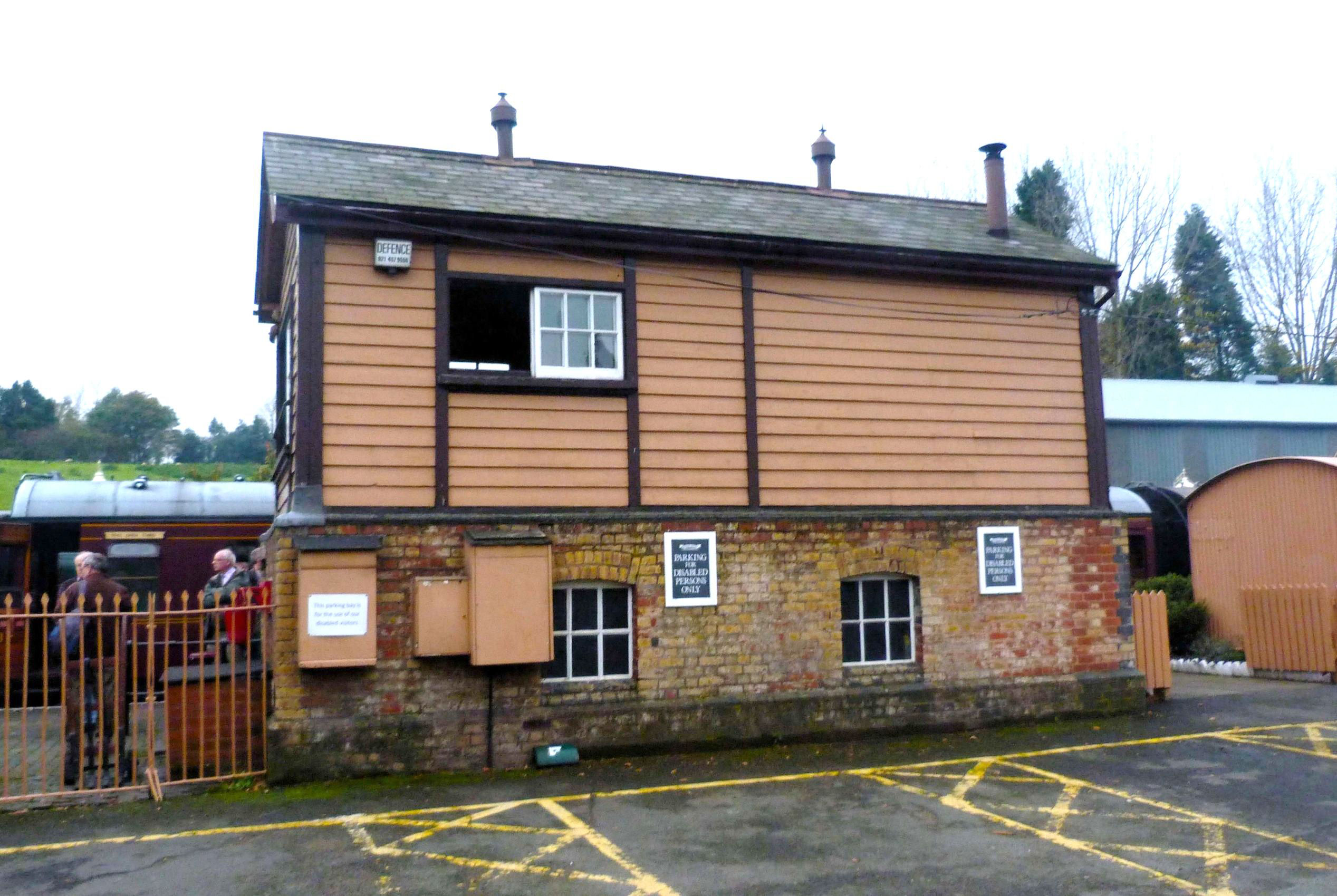
The rear of Bridgnorth box; the brickwork was shortened at the right end, originally there were three windows in the locking room below. 30 Oct 2014.
[© Angus McDougall 2014]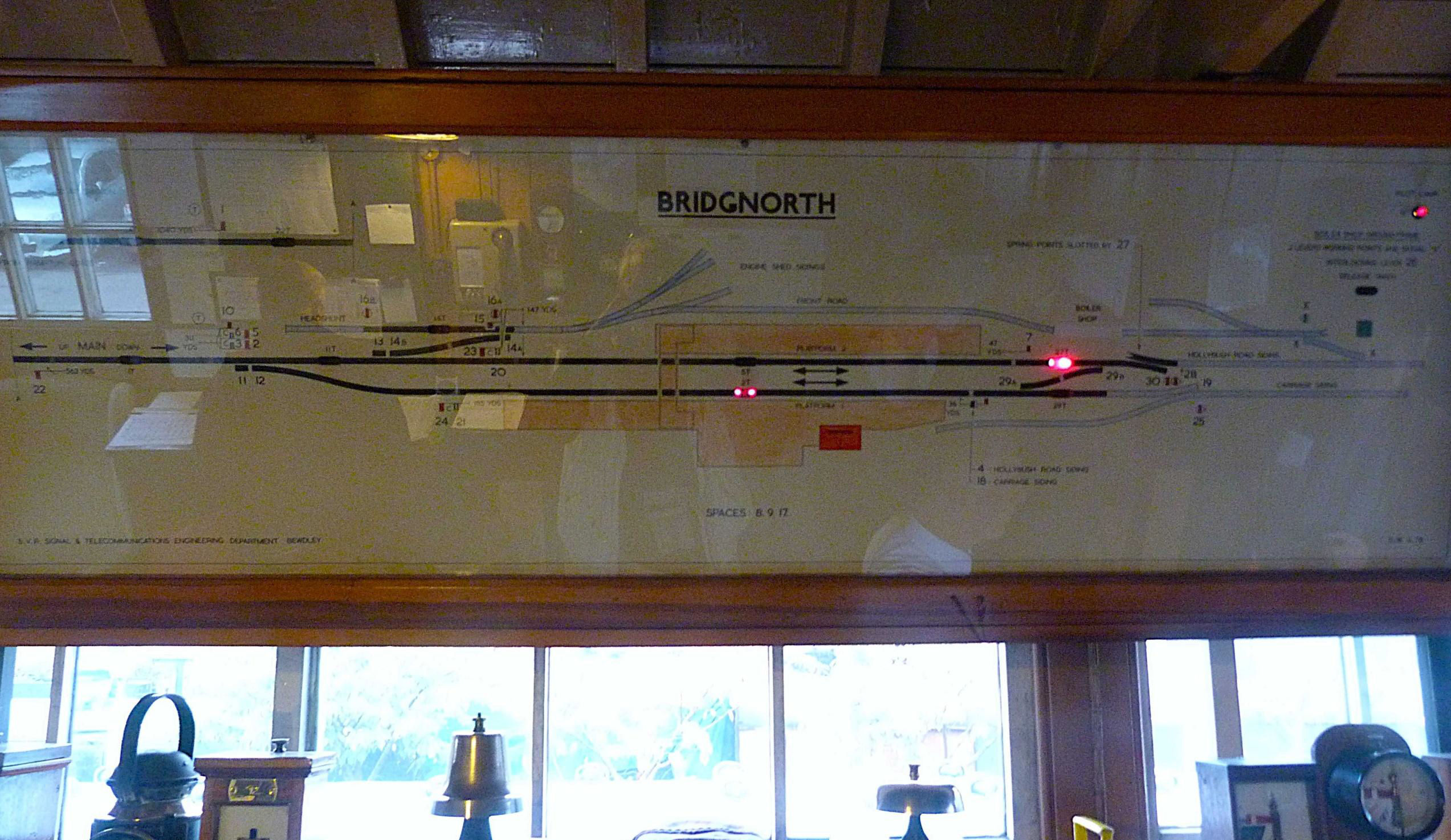
Photography inside signal boxes can be difficult at the best of times with bright light through often extensive glass and reflection off the box diagram, almost mirror like as here, 30 Oct 2014 during our AGM visits that year. Return to Kidderminster by train for most of the group was then in the observation car, a £10 supplement with a very generous cream tea.)
[© Angus McDougall 2014]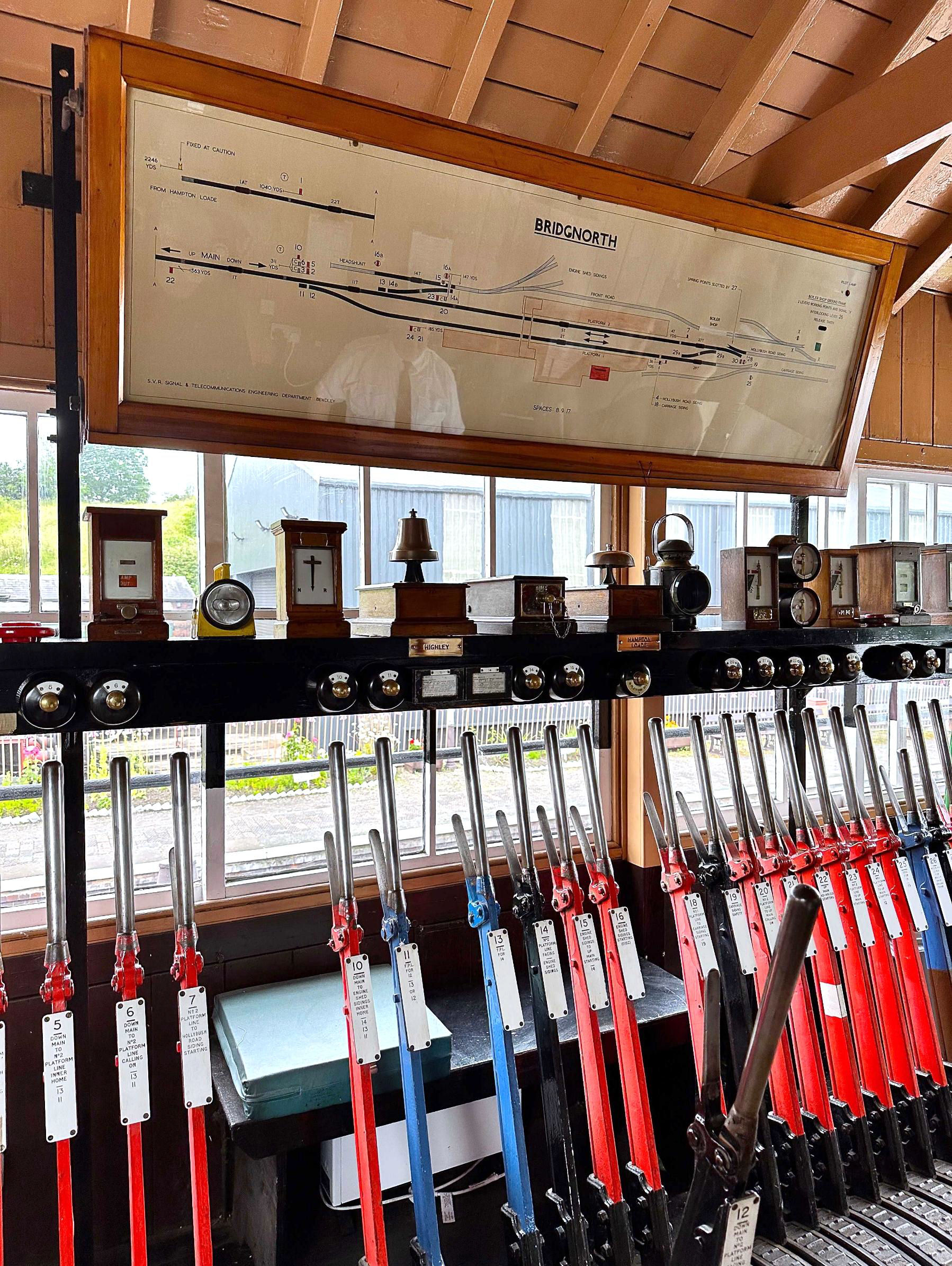
Bridgnorth signal box diagram, block instruments and part of the lever frame during our most recent visit.
[© Mark Shinwell 2024]Passenger services between Shrewsbury and Bewdley through Bridgnorth ended from 9 Sep 1963, Shrewsbury Abbey Branch Jn to Buildwas and Buildwas East Jn through Bridgnorth to Alveley Colliery Sidings (north of Highley) closed to goods and completely from 2 Dec 1963 when Bridgnorth box closed. Buildwas to Buildwas East Jn became part of the railway at the then new Ironbridge 'B' Power Station.
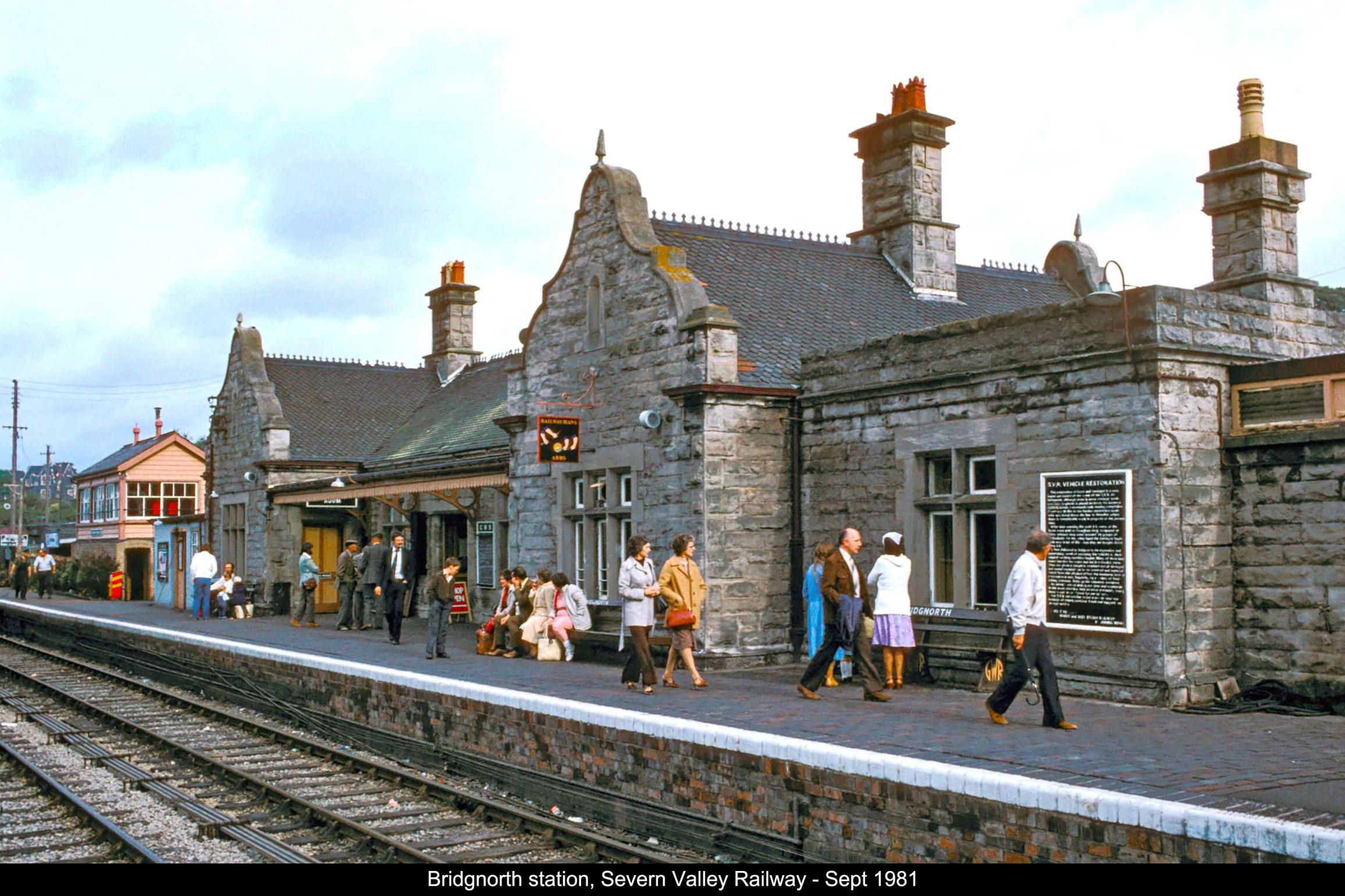
Bridgnorth station in Sep 1981 (with 1980's clothes!), the signal box is far left at the Shrewsbury end.
[© Gregory Marchant 1981]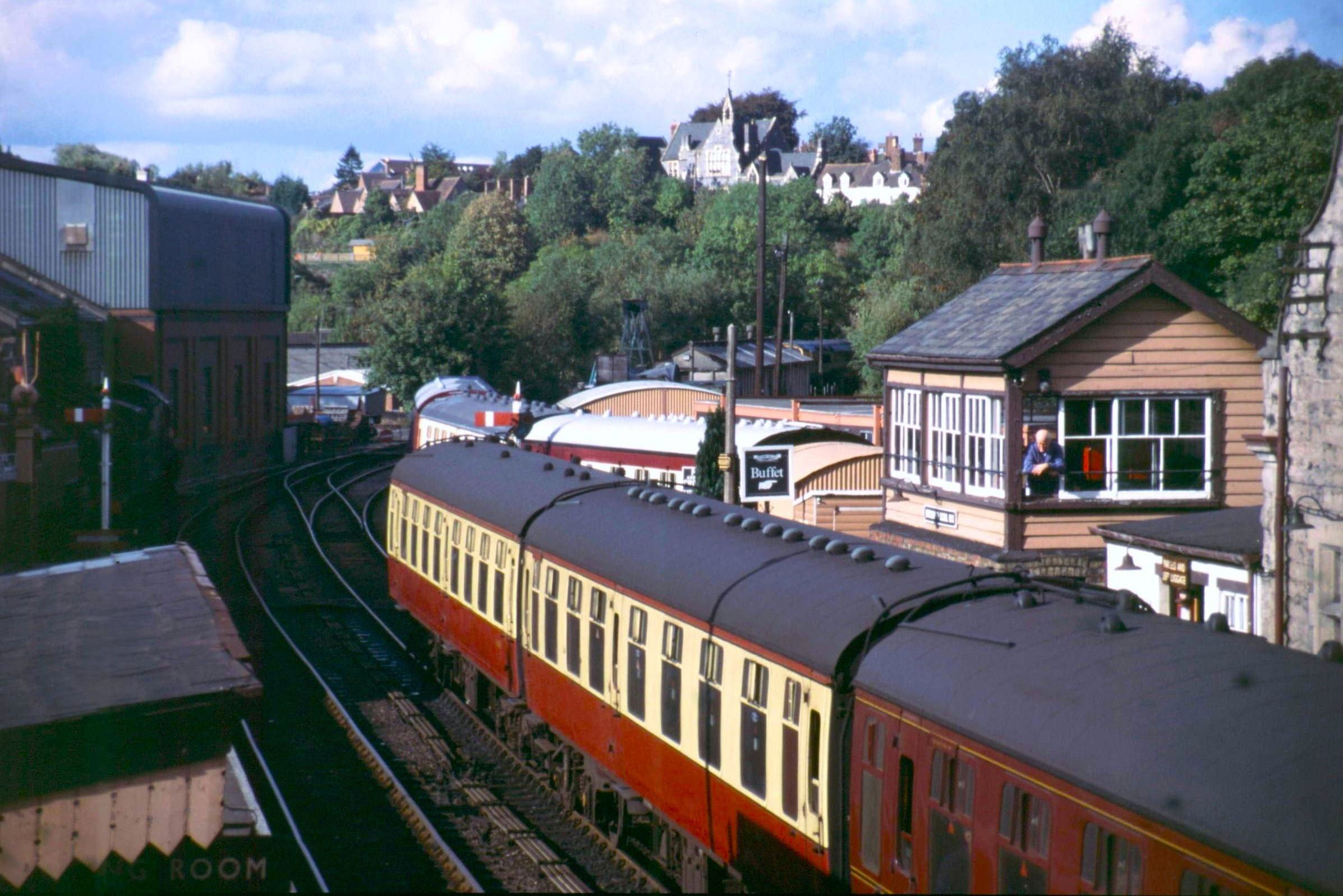
Looking towards Bridgnorth Tunnel and Shrewsbury (if only) with the box prominent right. 28 Sep 2003.
[© Angus McDougall 2003]Thanks to those who made these very interesting visits possible, together with Andy Overton, Paul Stewart and especially Matt Wingfield who helped make many useful improvements to these reports. As a result of the two days of visits, a donation of £1,000 was made to the Severn Valley Railway.