do love a good tunnel so, having been lucky enough to join our Society's exploration of Wapping Tunnel in Edge Hill earlier this year, I jumped at the opportunity to delve into another. This time it was the London, Chatham & Dover Railway (LC&DR) tunnel under the chalk cliffs of Ramsgate to what was the once the site of Ramsgate Harbour station.
The Herne Bay to Ramsgate Harbour line was built by the independent Kent Coast Railway but operated by the LC&DR from the outset. The smaller company was vested in the larger from 1 Jul 1871.
The line opened 5 Oct 1863; it was an immediate success, not just because it was a more direct route to Ramsgate than the South Eastern Railway (SER) line from Canterbury, opened to Ramsgate Town station on 13 Apr 1846, but because the LC&DR station was splendidly located on the sea front right next to the beach and the harbour.
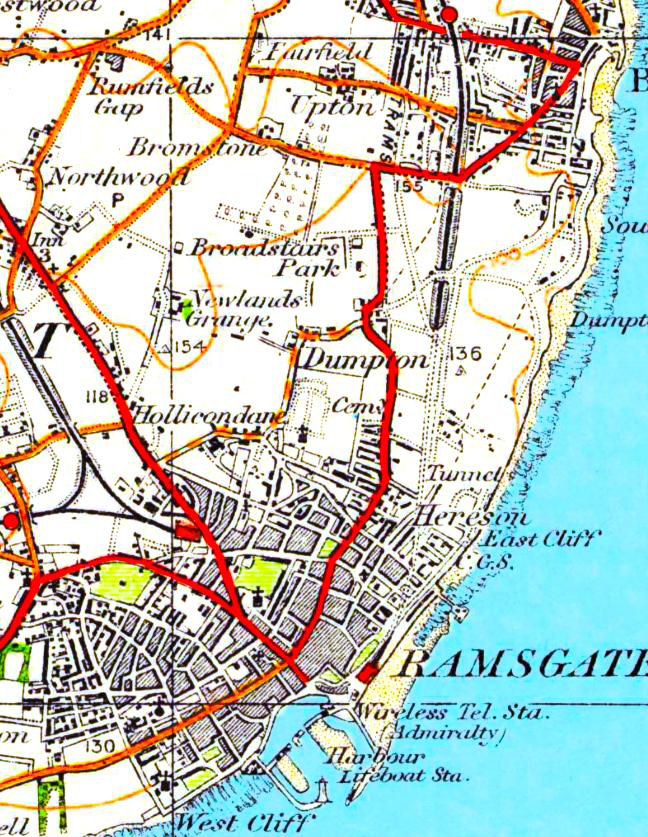
Bottom right on this 1914 map, Ramsgate Town station was at the back of the town then with a triangular junction.The Margate (Sands) line went off northwest. Just west of the triangle was St Lawrence Pegwell Bay station, closed from 3 Apr 1916. Notwithstanding this success, it was clearly less than ideal having two unconnected lines serving two separate termini in the town (and there was duplication at Margate too).
So, after 1923 grouping, the Southern Railway connected the two lines with a link passing through a new Ramsgate station on the north side of the town, resulting in the layout we see today. This came into operation on 2 Jul 1926 when both previous termini closed, along with the stubs of the lines running into them, which in the case of Ramsgate Harbour station included Ramsgate Harbour Tunnel.
The tunnel, however, was to have a second life. After Ramsgate Harbour station closed from that same date, the station site was turned into an amusement park called Merrie England and the operator had the bright idea of using the abandoned tunnel as the route for a narrow gauge electric railway connecting the amusement park with Dumpton Park station on the new main line. The 1,444yd long, 2ft gauge railway opened on 31 Jul 1936 and, except during the war, operated during the summer season every year until 26 Sep 1965 (the last day of operation). Then, with passenger numbers declining, it closed. About 800yd of the 1863 tunnels was used plus a 300yd new spur tunnel to Hereson Rd (Dumpton Park).
Even that was not the end of the tunnel, because in Jun 2014 it was opened again, this time as part of the Ramsgate Tunnels, a volunteer led tourist attraction that includes not only the railway tunnel but a network of smaller diameter tunnels that were bored beneath the town in 1939 as air raid shelters during WWII. Air raid shelter tunnel tours take place several times a day but railway tunnel tours occur only about once a month and this one had been arranged specially for our BLS group by Adam Turner.
Nine of us, including Adam, our leader, met at the tunnel entrance. The portal was heavily modified when the tunnel became part of the narrow gauge railway and it now opens into a reception area for tours into the air raid shelter tunnels as well as the railway tunnel itself. There were originally public entrances to the air raid shelter tunnels all over Ramsgate but now the only remaining entrance is one that branches off the railway tunnel about 200 yards from the entrance.
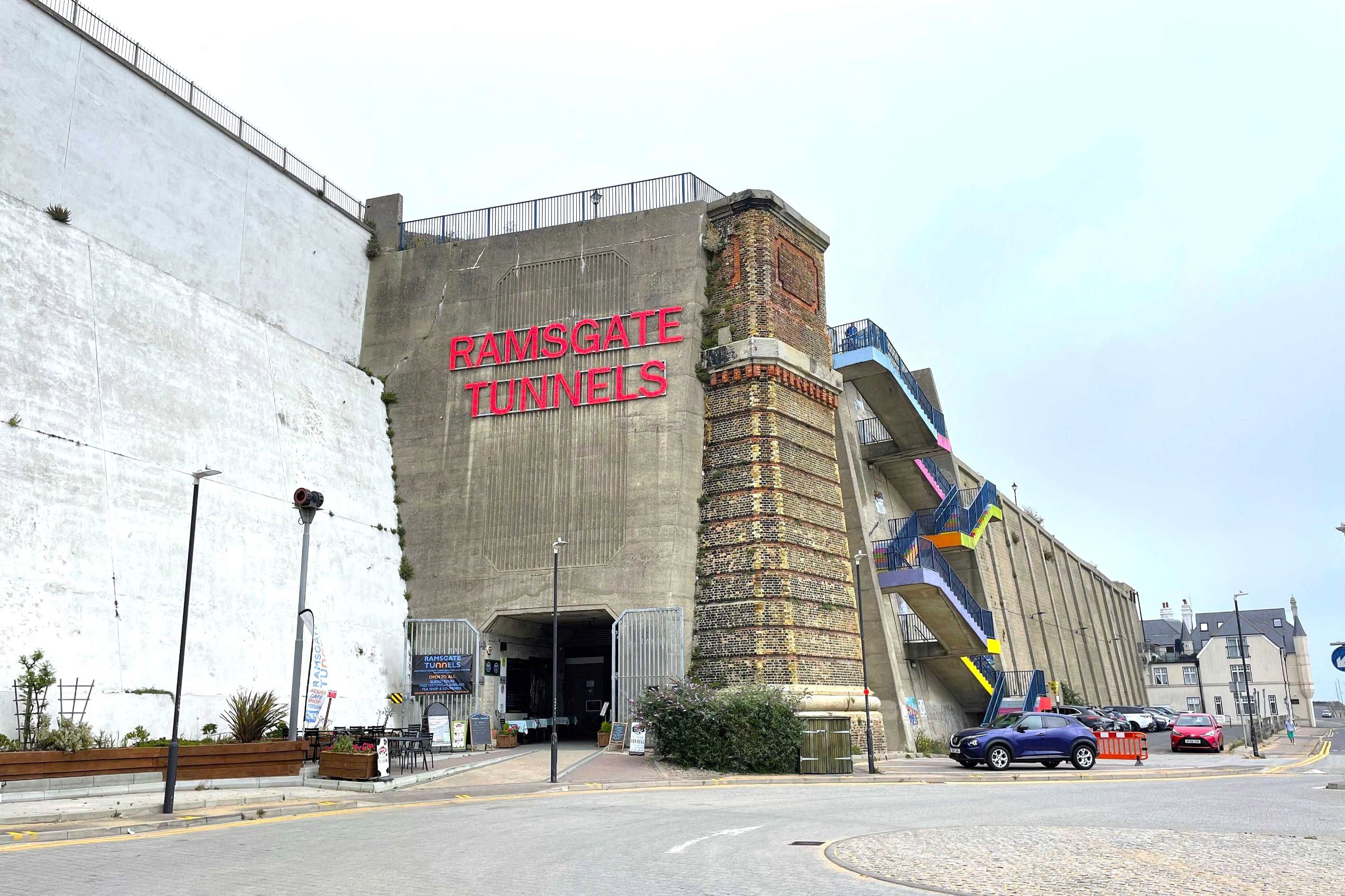
Entrance to Ramsgate Tunnels.
[© Adam Turner 2026]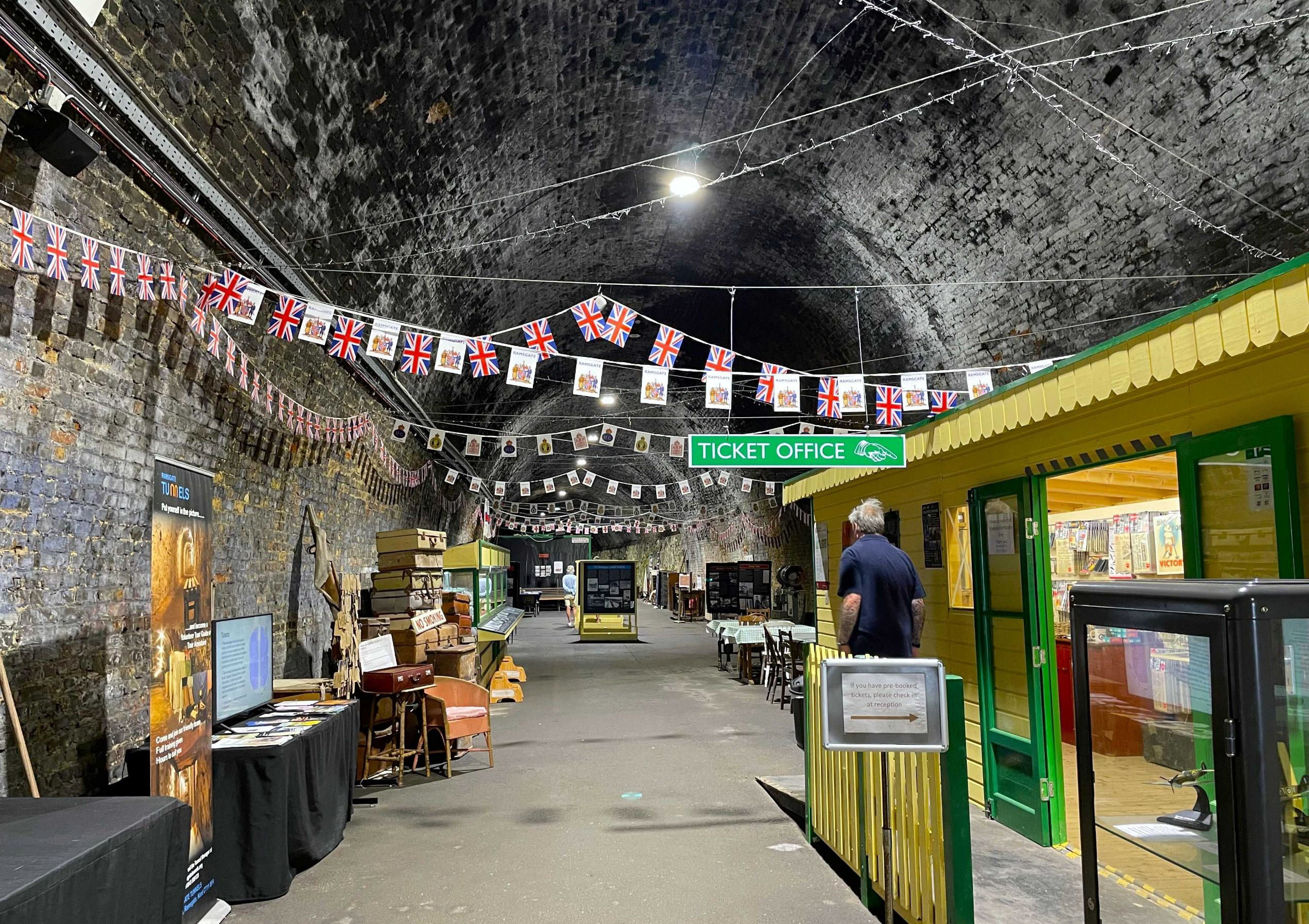
The reception area for tours into the tunnels.
[© Adam Turner 2026]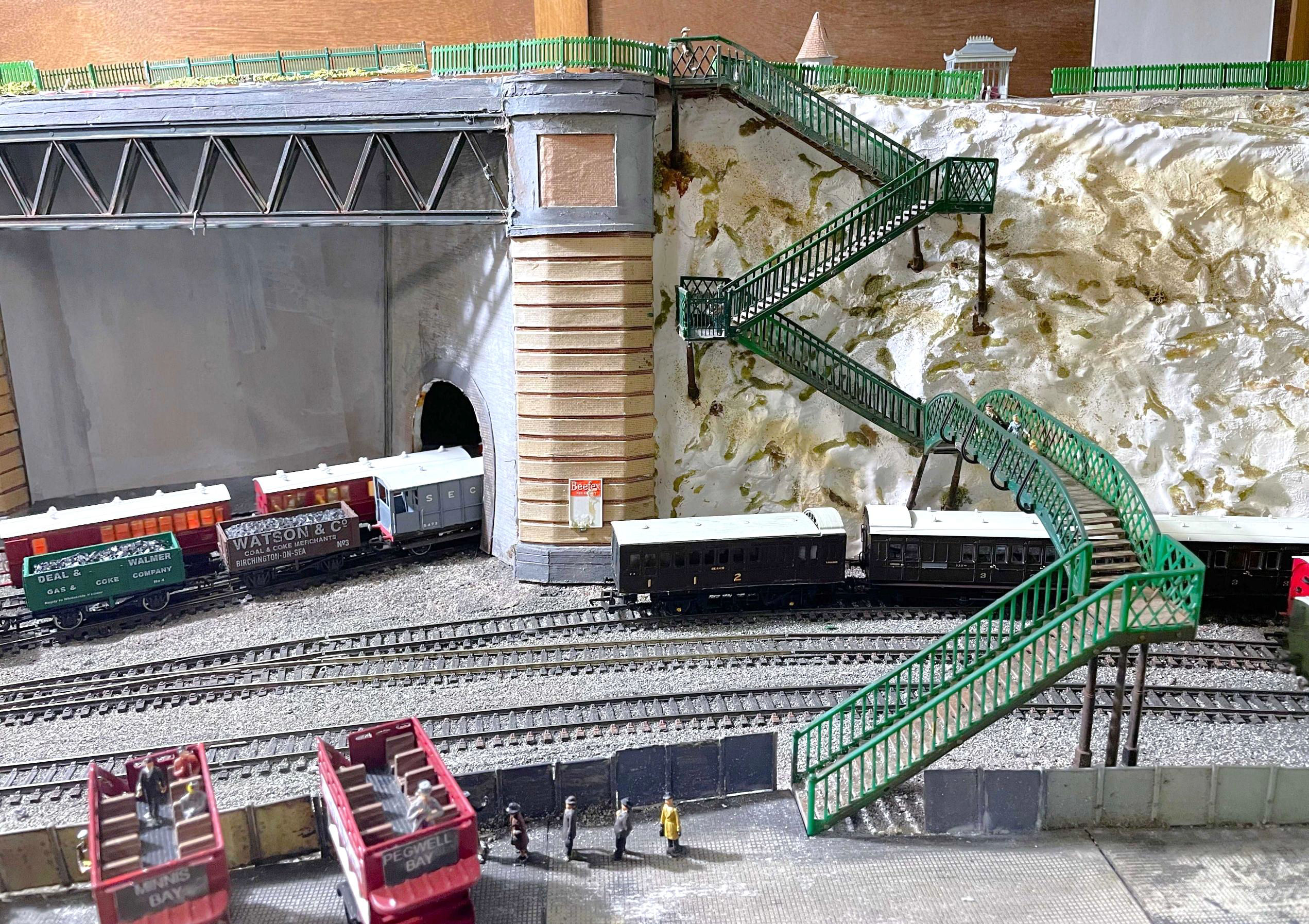
A model railway layout shows how steam trains once emerged from the chalk cliffs into the harbour station.
[© Adam Turner 2026]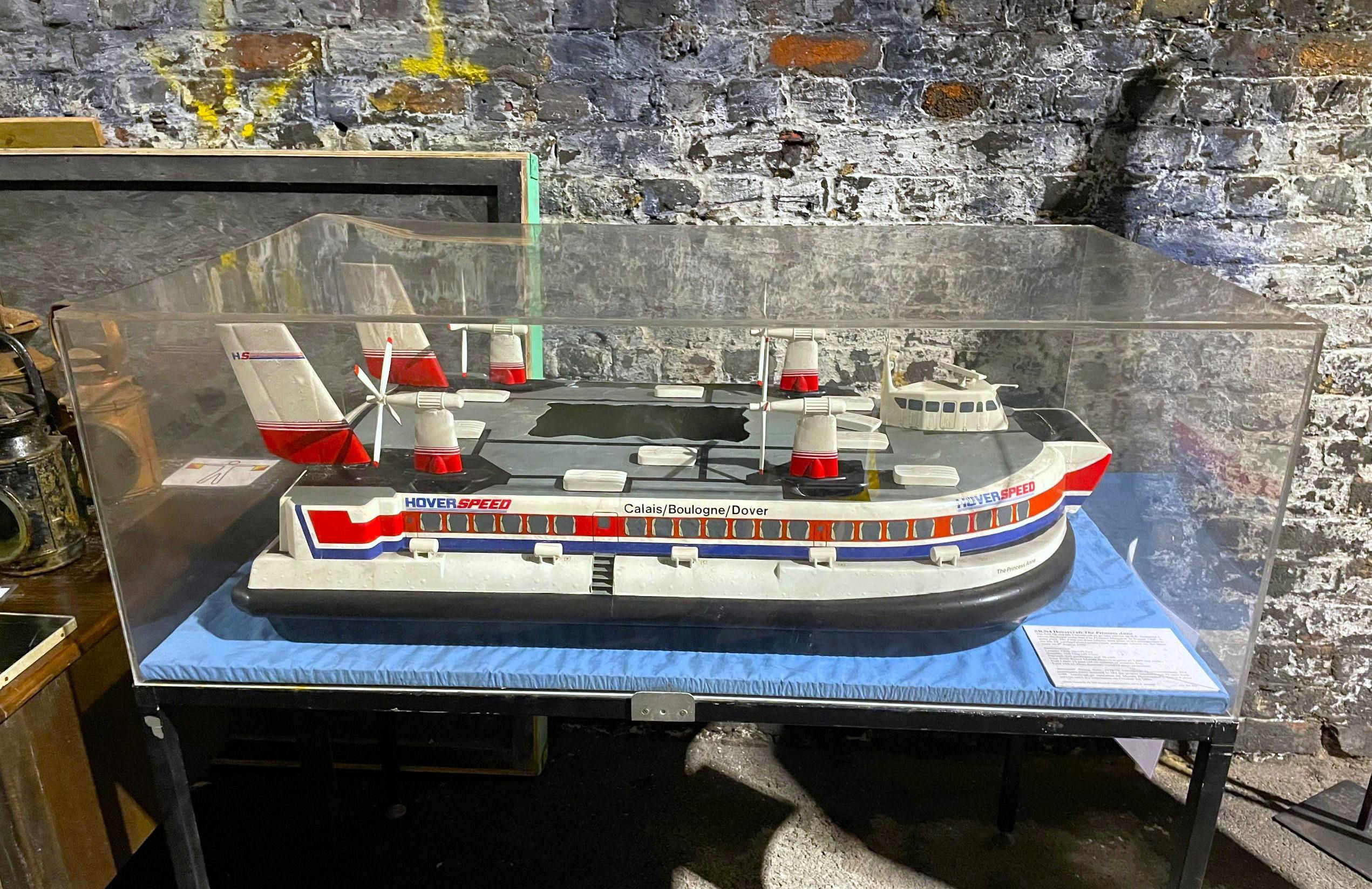
Princess Anne was lurking in the tunnel. Originally operated by British Rail (Seaspeed) the SRN.4 was the largest civil passenger carrying hovercraft built. After 1976, she was fitted with a new deeper skirt and lengthened by 56ft resulting in some newspaper headlines: 'Princess Anne has had her skirt stretched'.
[© Adam Turner 2026]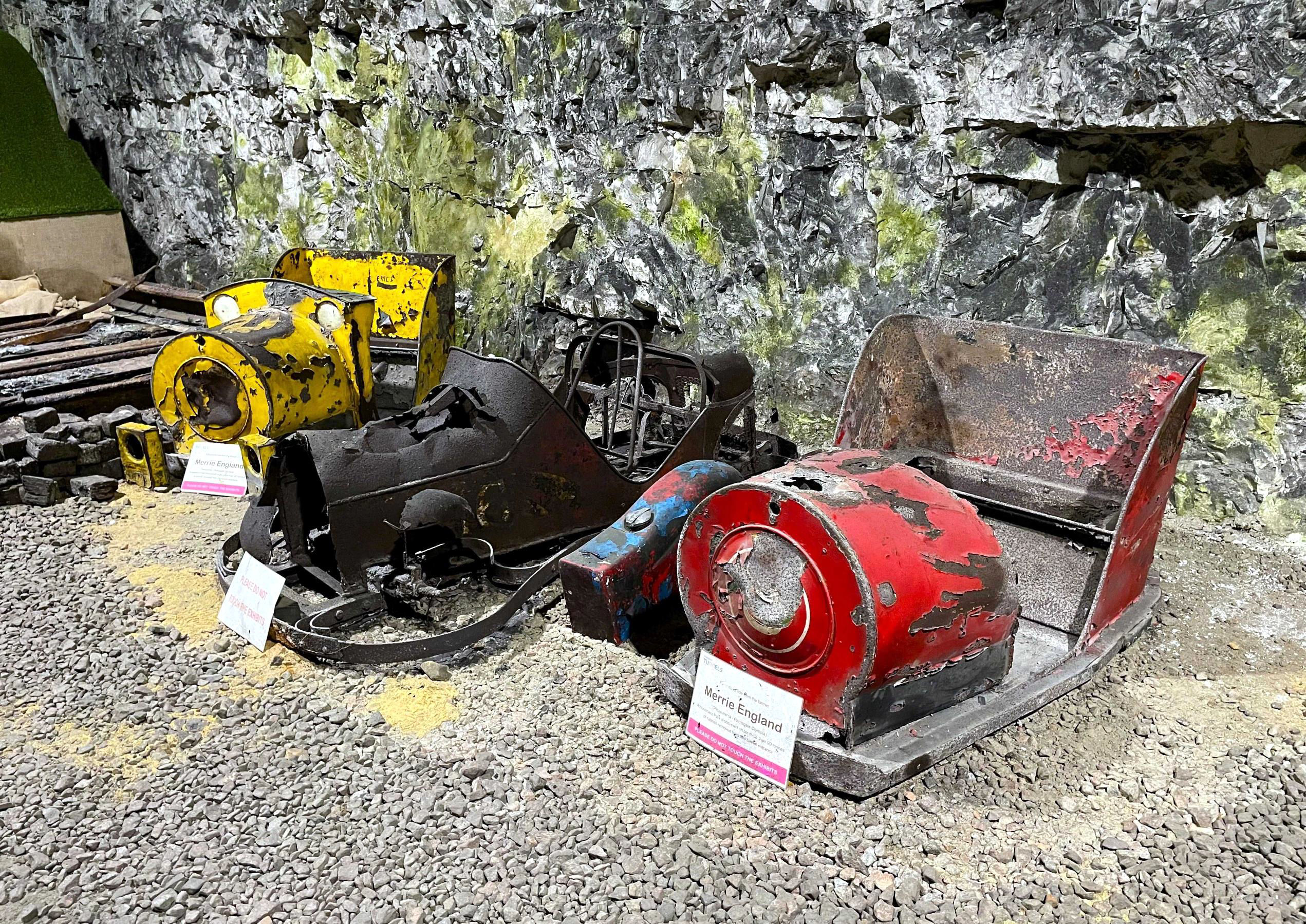
Abandoned fairground cars from the tunnels' Merrie England days.
[© Adam Turner 2026]Having donned extra layers ready for the constant 11oC temperature within, we met our volunteer guides Martin and Sue then were shown a short introductory video before setting off on our tour.
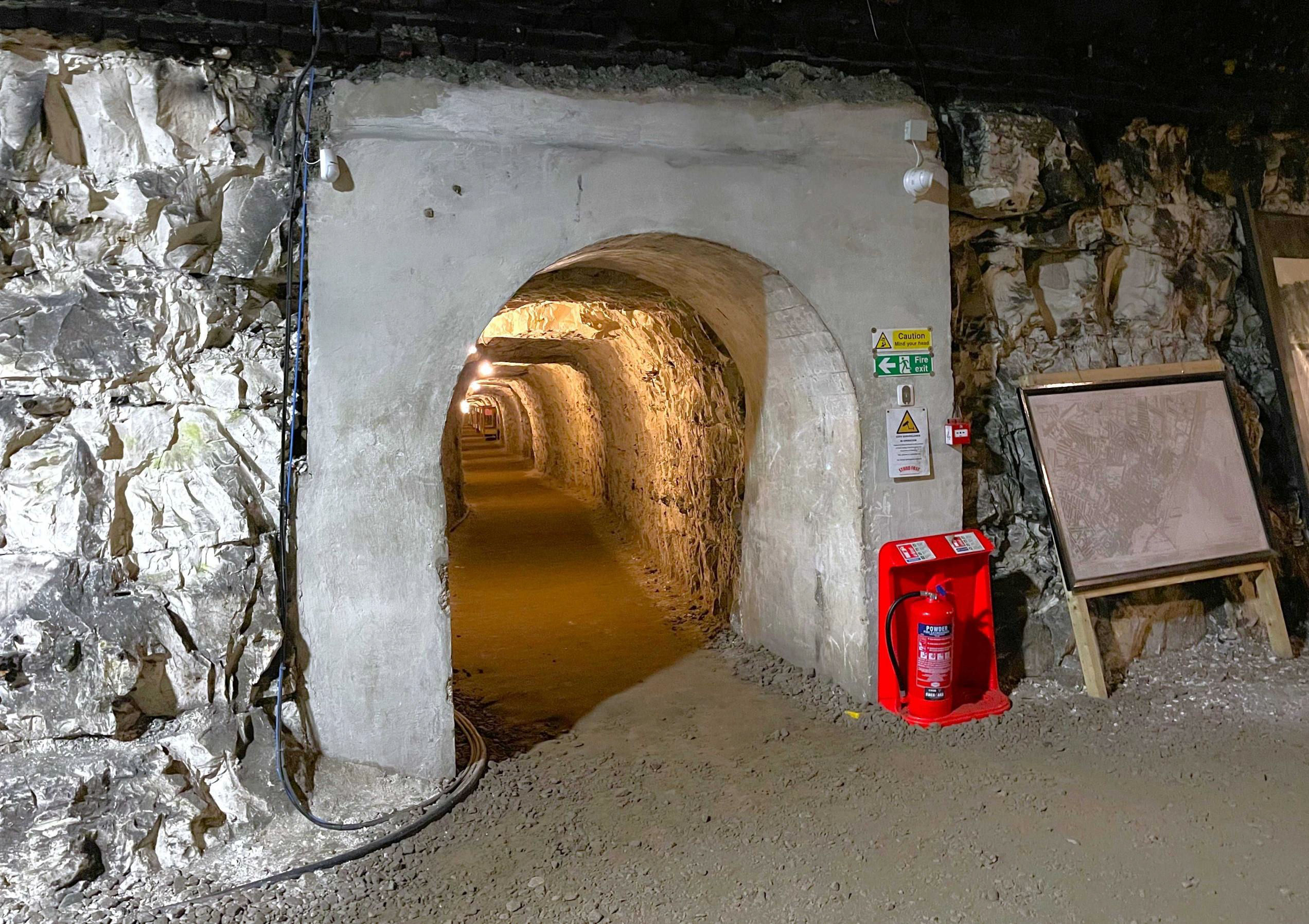
The entrance to the tunnels from the reception area.
[© Adam Turner 2026]The railway tunnel is 1,638yds long (about ¹¹⁄₁₂ mile) and runs at a constant 1:75 uphill gradient, roughly northwards from the Harbour towards the present Broadstairs station. It passes through solid chalk rock; the vertical walls are bare chalk but the arch, segmental in section, is brick lined throughout.
The tunnel is electrically lit as far as the entrance to the air raid shelter tunnel which suddenly diverges perpendicularly to the left. The air raid tunnel, about 6ft wide by 7ft high, is far smaller than the lofty, double track railway tunnel and would not have been habitable for any length of time. We learned from our guides how a community of many hundreds took up residence in the lower reaches of the railway tunnel for the duration of the war, most made homeless by a devastating air raid on 24 Aug 1940.
As we walked along the railway tunnel, the track bed of the narrow gauge railway was apparent almost from the outset running along the left side of the tunnel at a higher level than the rest of the tunnel floor. At various points there were remnants of the overhead line equipment that powered the electric trains. Severed span wires still dangled from brackets attached to the tunnel walls, though the 400V DC traction wire, presumably of higher scrap value, had been entirely removed. About halfway along the tunnel, after passing a capped ventilation shaft, we came to the site of a narrow gauge railway passing loop. Then, immediately after this, the narrow gauge track formation diverged left from the main railway tunnel into its own separate bore taking the electric railway on a steeply graded (1:15) curve upwards towards its Hereson Road terminus, a few minutes' walk from Dumpton Park station.
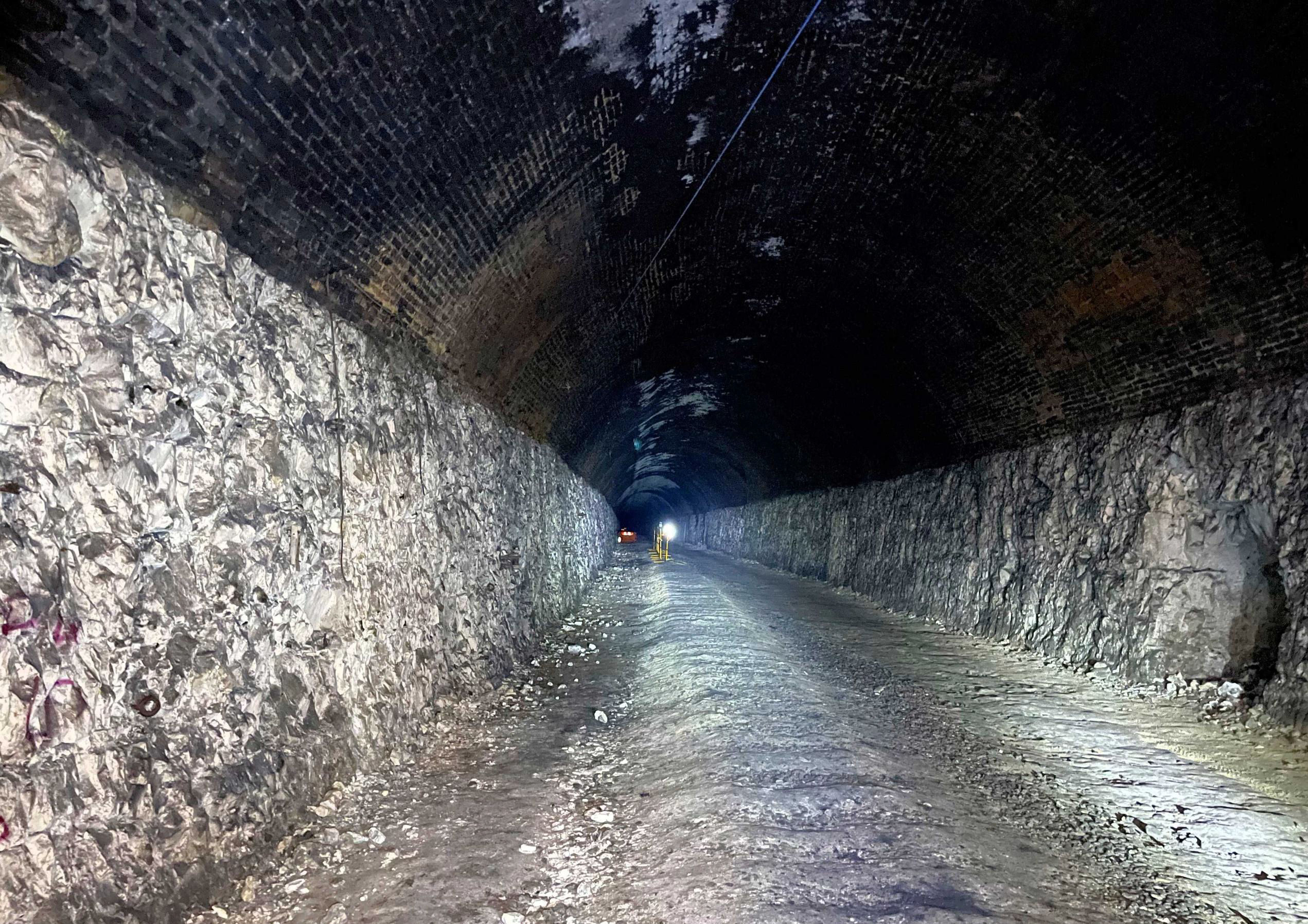
The railway tunnel with the track bed of the narrow gauge railway running along the left side of the tunnel at a higher level than the rest of the tunnel floor. Severed span wires still dangle from brackets attached to the tunnel walls.
[© Adam Turner 2026]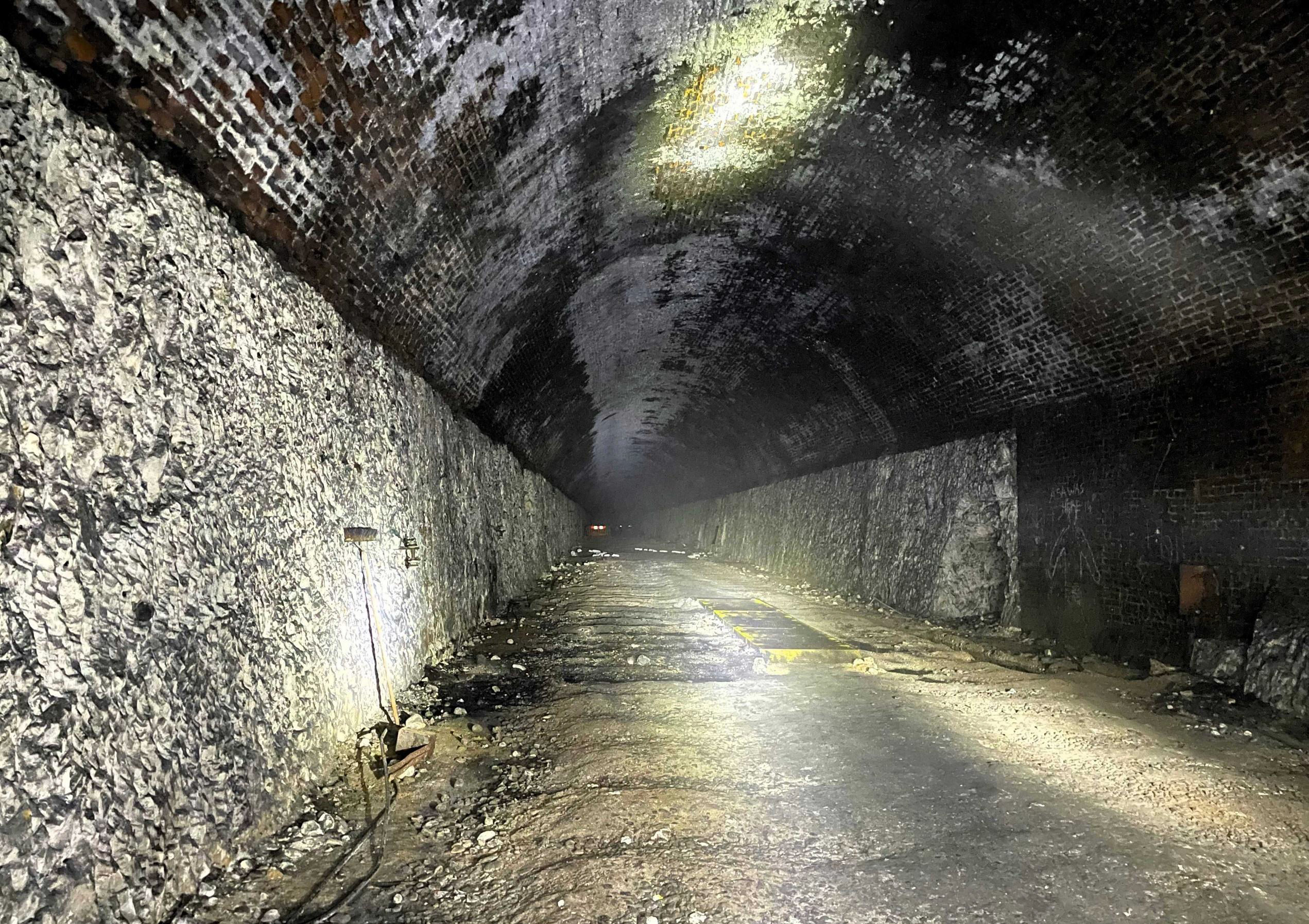
Continuing up the railway tunnel.
[© Adam Turner 2026]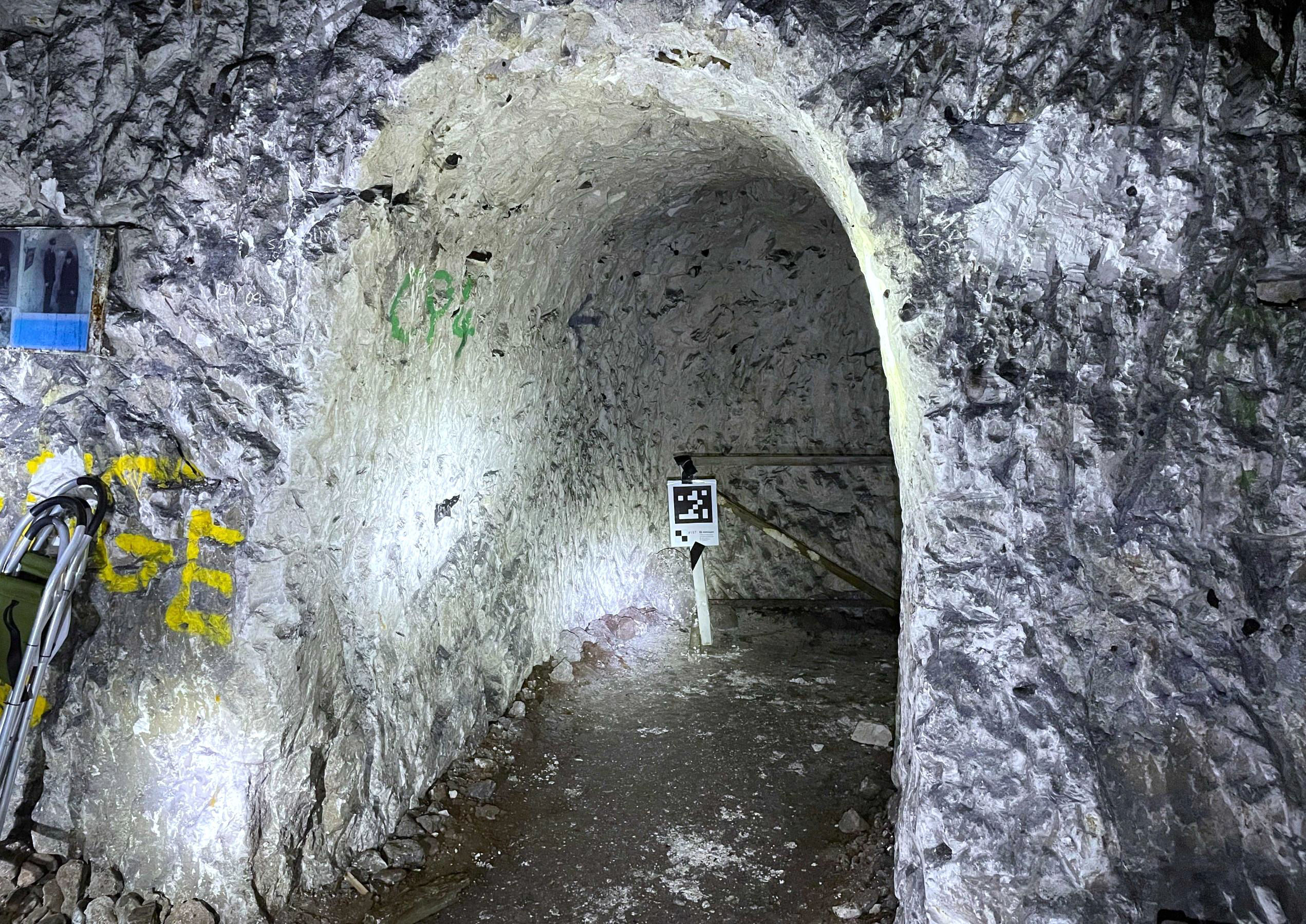
A smaller offshoot tunnel off the main tunnel .
[© Adam Turner 2026]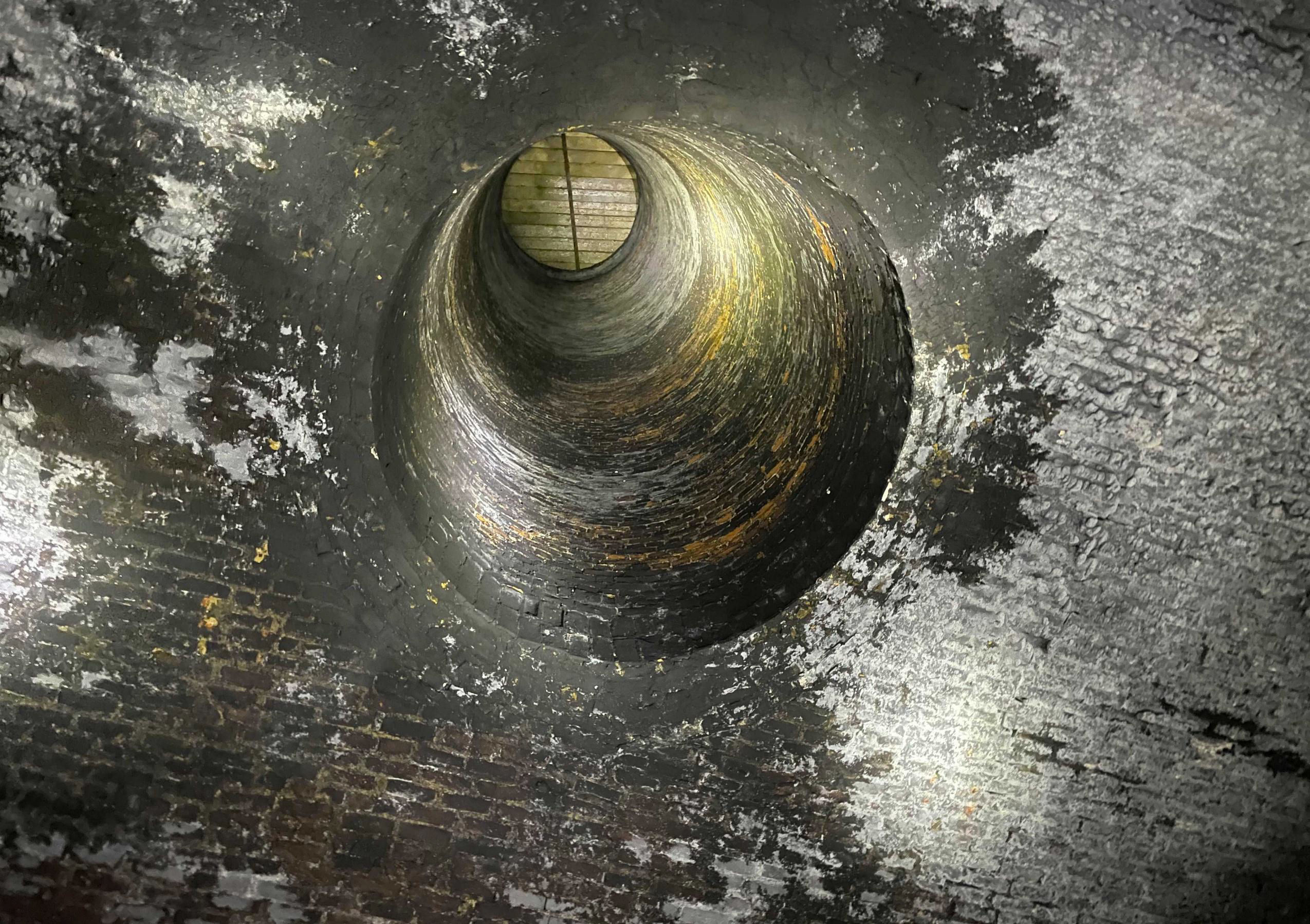
The capped ventilation shaft.
[© Adam Turner 2026]We continued along the main railway tunnel towards its northern portal. After a short distance we came to a large brick chimney which is thought to have been constructed during WWII as part of an attempt to improve ventilation for those living in the tunnel. This chimney marked the northern limit of human habitation and it was remarkable that, beyond this point, the walls and arch of the tunnel are still caked in soot from 80 years of steam loco operation.
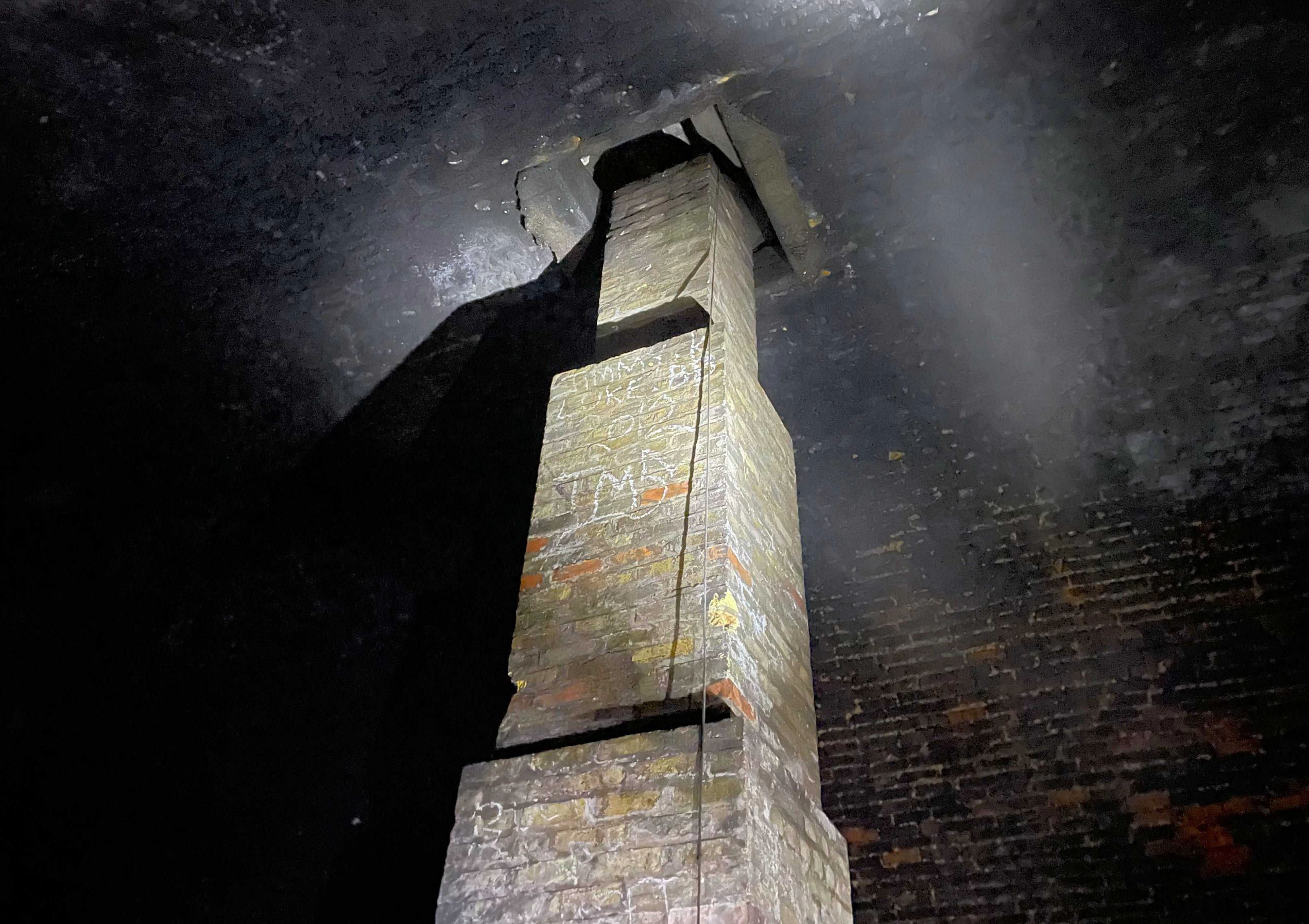
The large brick chimney.
[© Adam Turner 2026]It appears that the lower reaches of the tunnel must at some time have undergone cleaning, to make them more presentable to the electric railway passengers or to improve living conditions for the tunnel's wartime inhabitants.
This soot blackened section of tunnel, illuminated only by our torches, had a slightly eerie quality, far away from the seaside in these upper reaches. On reaching the northern portal, further spookiness was lent by the sight of a pile of old fairground equipment including the rusting shells of cars from fairground rides. The portal itself was thoroughly blocked off to keep out adventurers for whom the tunnel was once a popular haunt. A modern train could be heard passing on the main line at the end of the short cutting beyond the portal. This was not quite the end of our adventure. On our way back we were escorted by our guides along the narrow gauge electric railway spur to Hereson Road. This was a fascinating bonus. The tunnel was barely larger than the air raid shelter tunnels and it was a steep climb for about 300yds around a sharp left curve to the end of the tunnel which, again, had been comprehensibly infilled and blocked off to prevent ingress. The former station was beyond in the open.
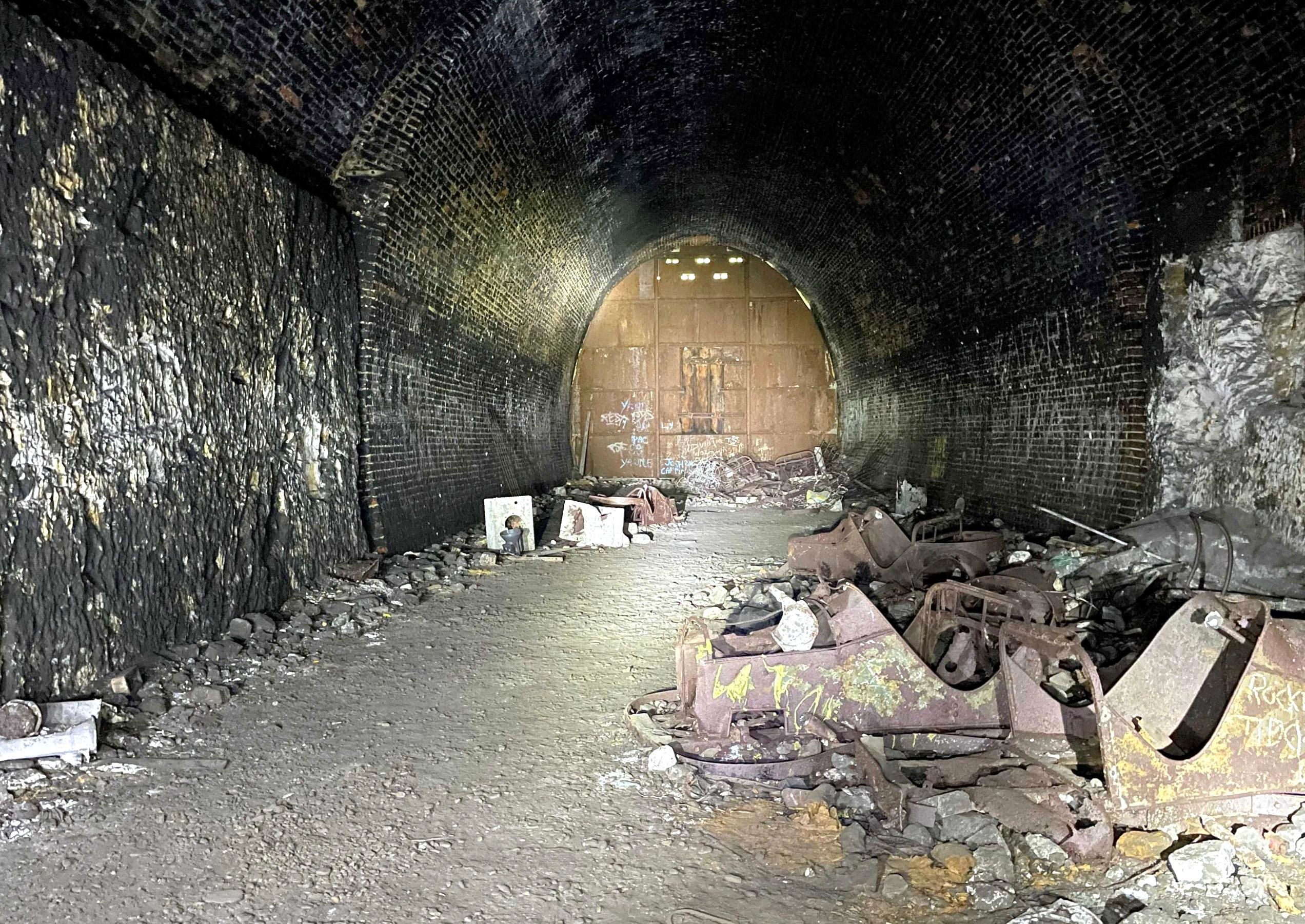
The old fairground equipment including the rusting shells of cars from fairground rides next to the blocked off portal.
[© Adam Turner 2026]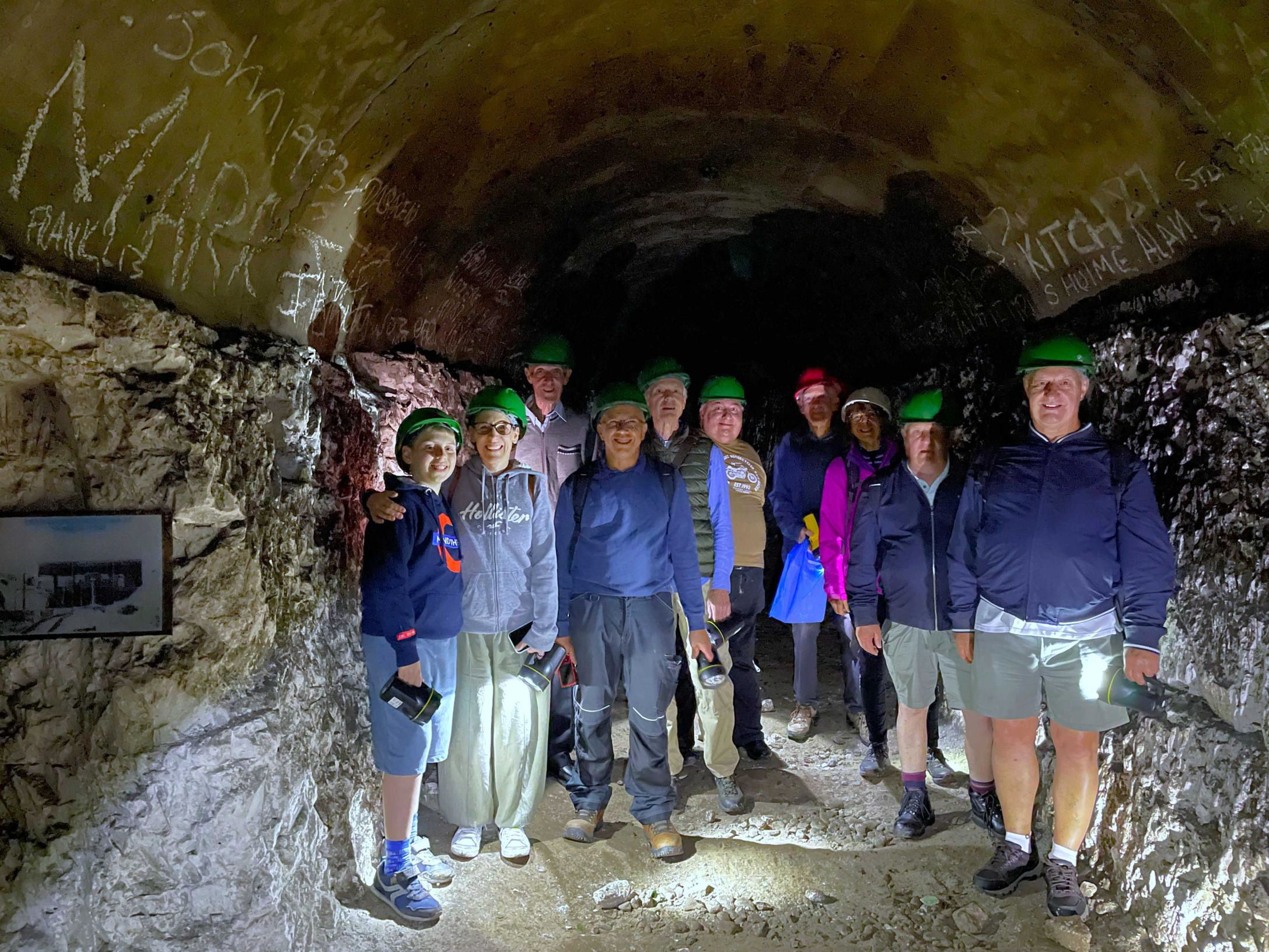
A group photo in the narrow gauge tunnel.
[© Adam Turner 2026]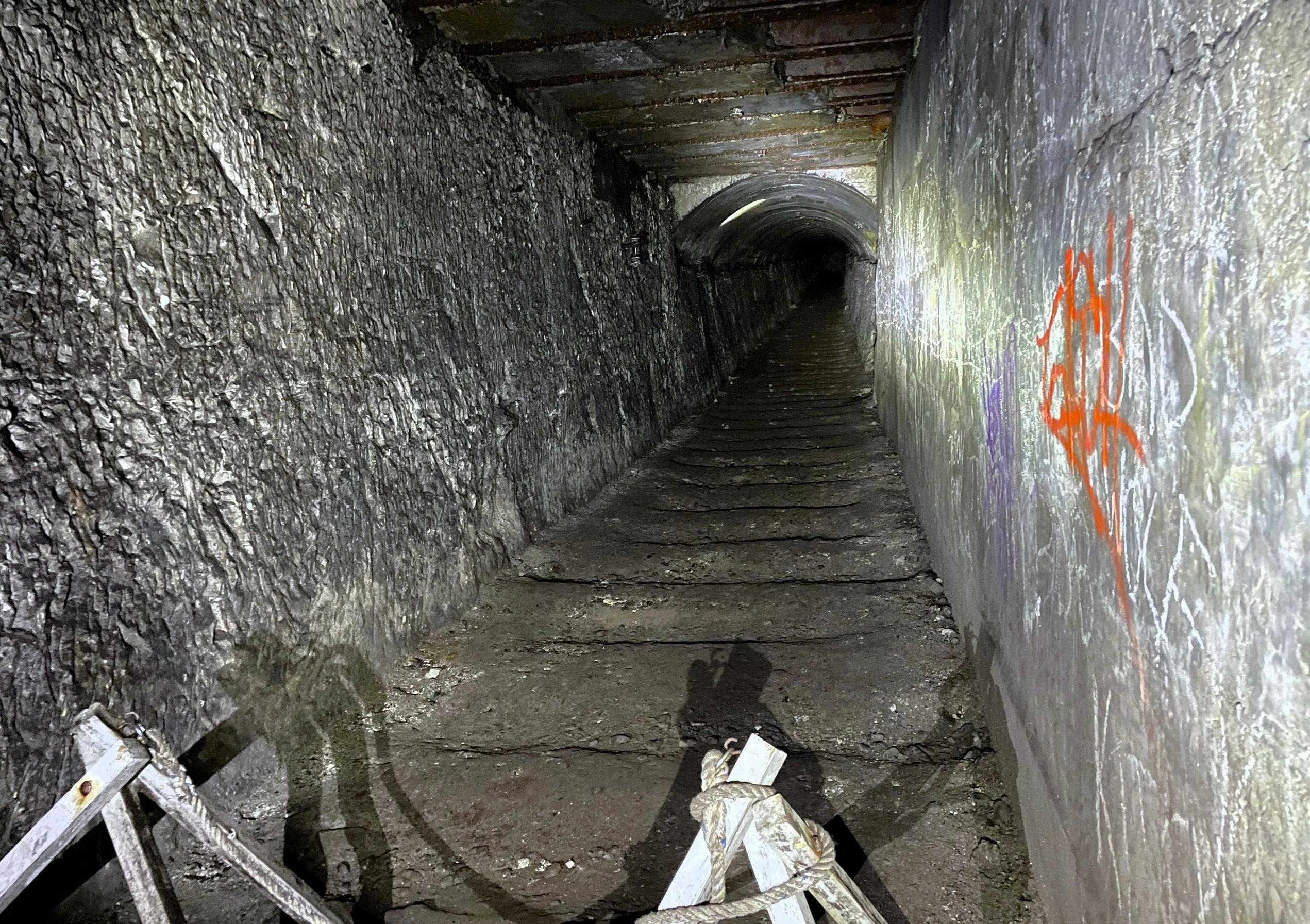
The narrow gauge electric railway spur to Hereson Road.
[© Adam Turner 2026]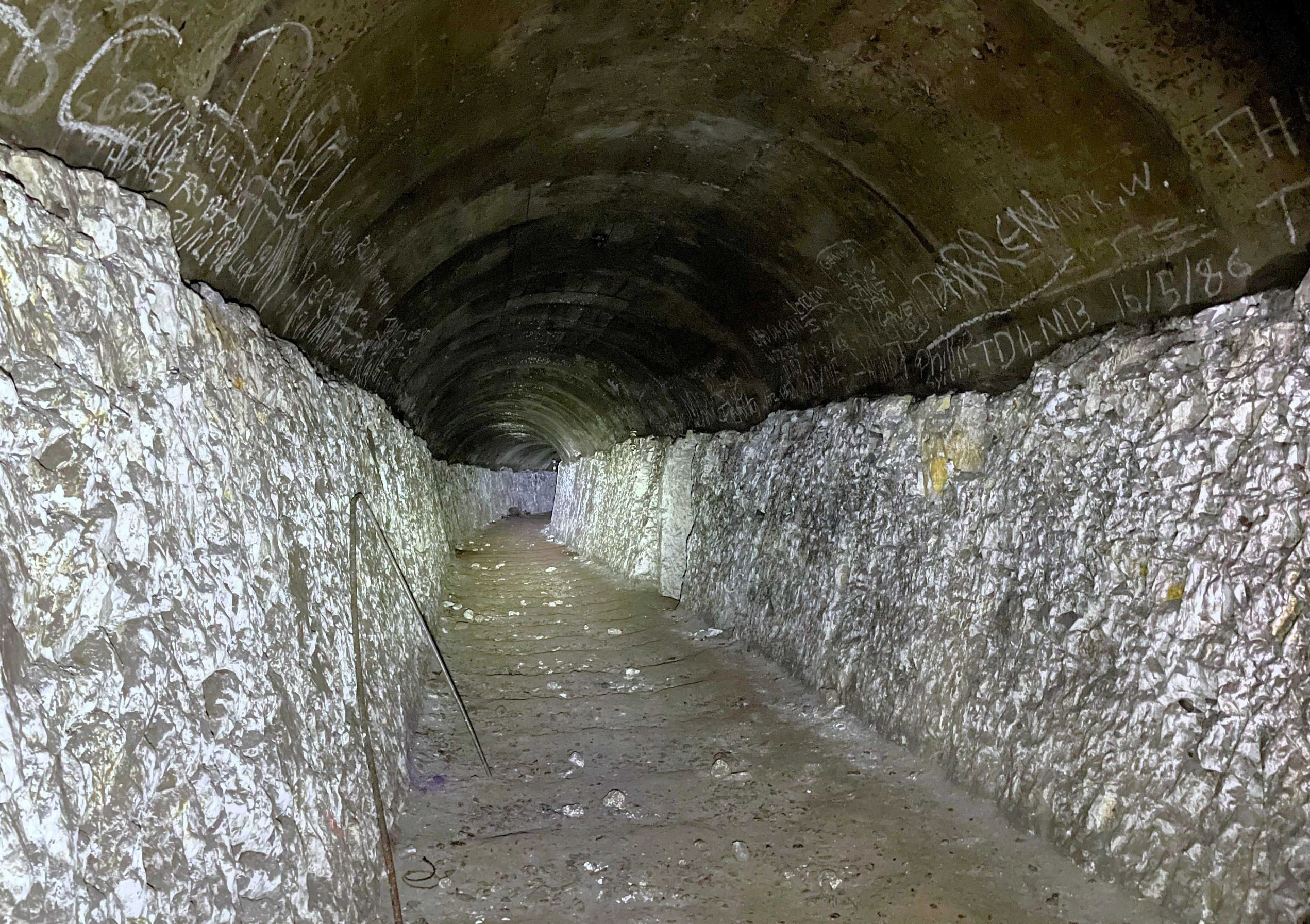
A steep climb towards a sharp left curve to the end of the tunnel.
[© Adam Turner 2026]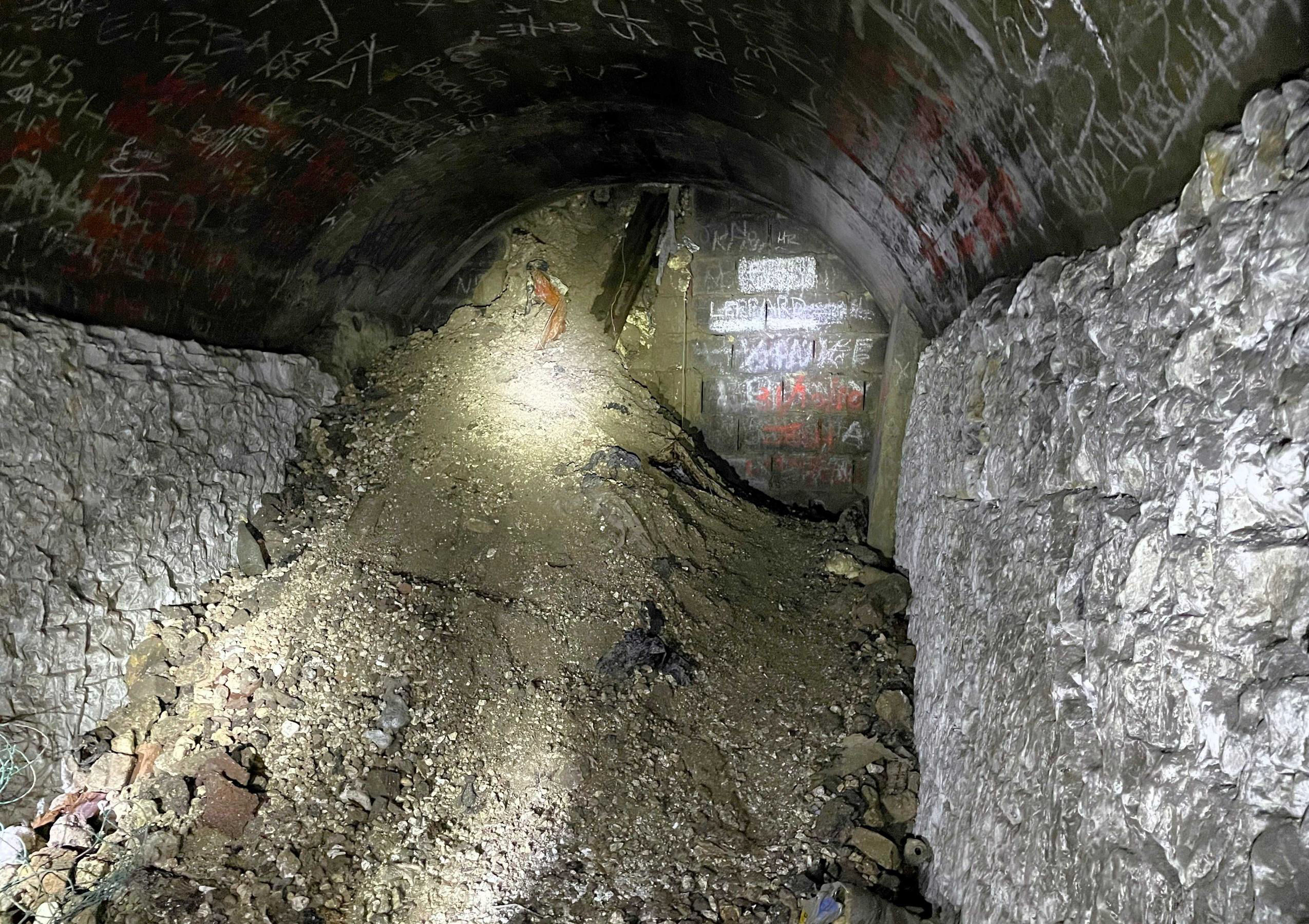
the end of the tunnel comprehensibly infilled and blocked off to prevent ingress.
[© Adam Turner 2026]All in all, a fascinating exploration of a tunnel that keeps on giving. Enormous thanks to Adam and our guides, Martin and Sue, for making it possible. As a result of our fixture, a donation was made to support the Ramsgate Heritage Regeneration Trust, a charity preserving and maintaining this historic site.
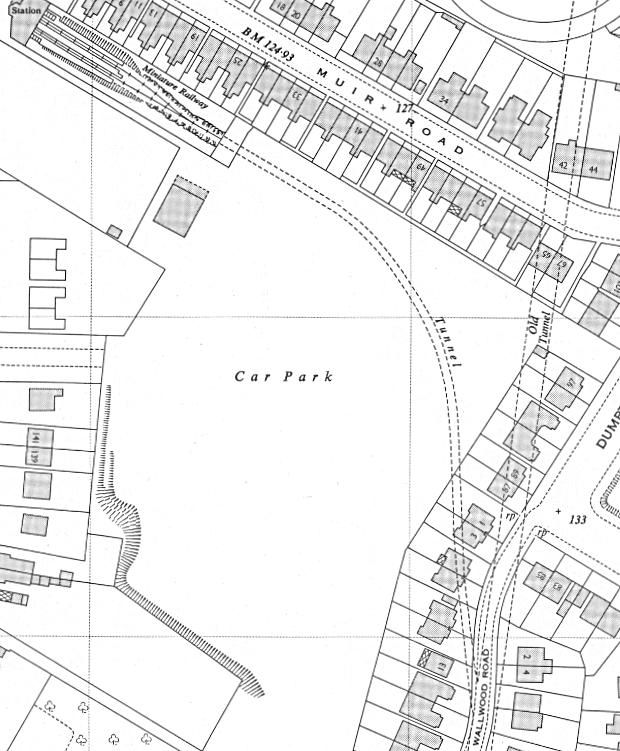
1956 50" map; down the right side, 'Old Tunnel' is the former railway with Ramsgate Harbour off the bottom. 'Tunnel' was for the 2ft gauge line with detail of the station top left corner.