17 of us managed to meet up for an 11am start outside Sheffield Midland for another of Adam Turner's excellent fully booked walking tours. This was, despite the best efforts of EMR cancelling various Main Line services as is now usual.
Walking via the Supertram triangle, our first point of interest was the former Victoria Station approach ramp, relatively unchanged and in use for access to the hotel and inevitable car park on the station site. As usual, Adam was armed with old photos and maps on his tablet for us to compare now and then.
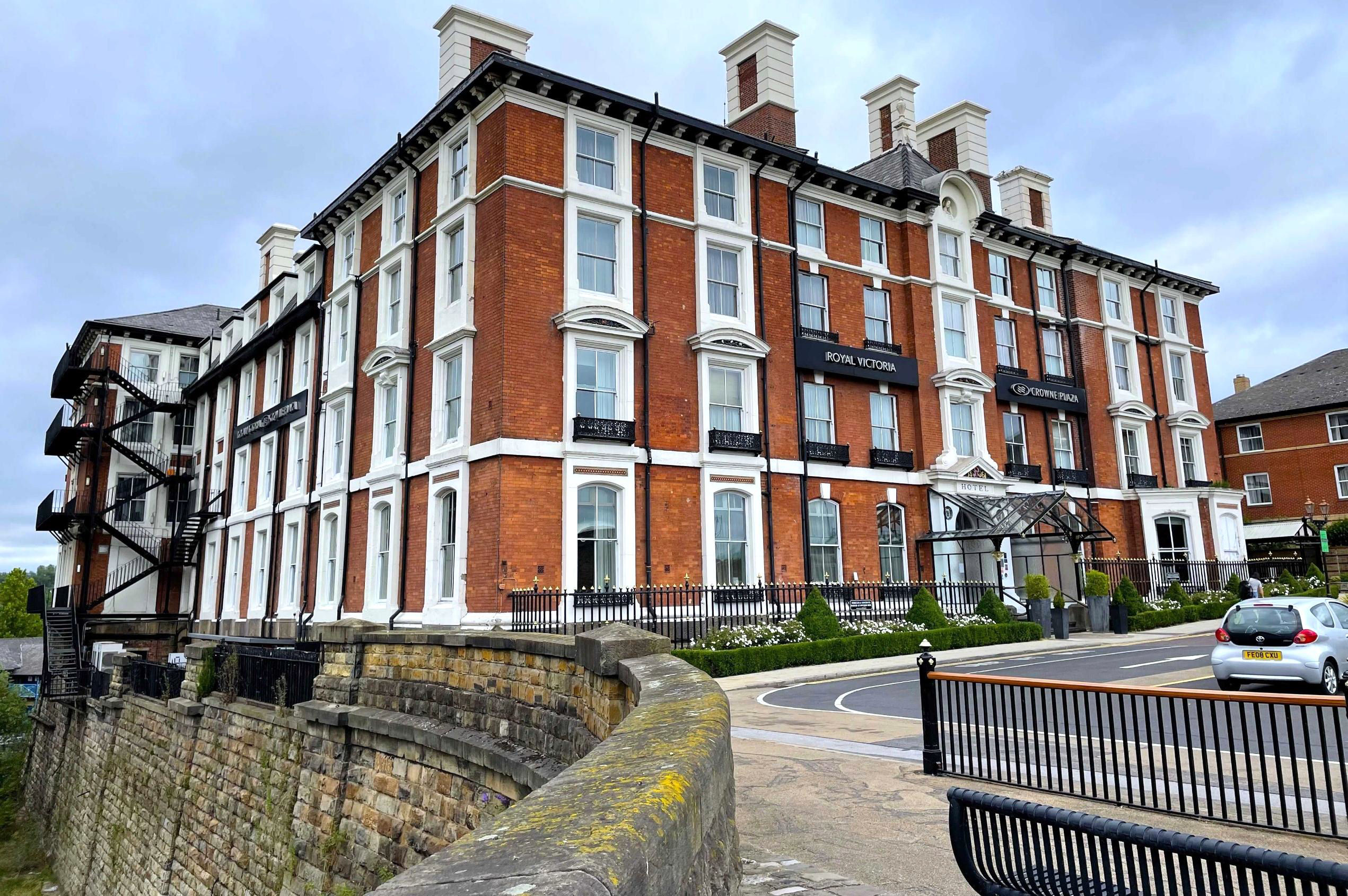
Sheffield, Crowne Plaza Royal Victoria Hotel, the former Great Central Railway Royal Victoria Hotel.
[© Chris Lings & Adam Turner 2026]I'll not attempt to quote dates and details as I'm sure they are all readily available. Thanks to prior arrangements by Adam, we were welcomed inside the Crowne Plaza Royal Victoria Hotel, to view the reception, dining rooms, ballroom and main staircase. Sold by the British Railways Board in 1983, it has undergone a magnificent restoration and, judging by the many historical railway photos and 'Valour' nameplate (including a painting of the loco and roll of honour book), the owners are rightly proud of its railway heritage. (The nameplate is a duplicate of the ones on GBRf 66715, named there in 2003.)
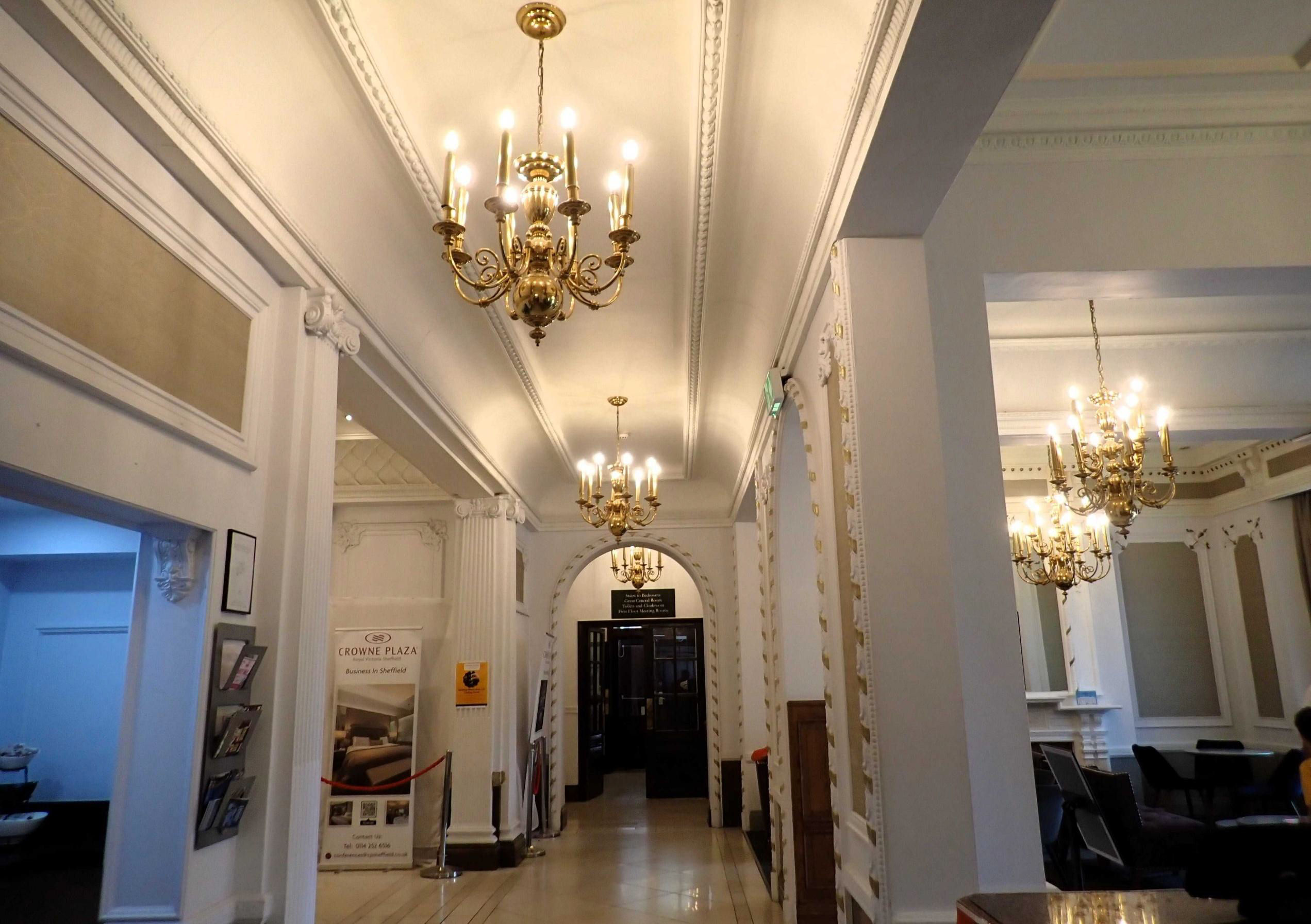
Crowne Plaza Royal Victoria Hotel reception.
[© Chris Lings & Adam Turner 2026]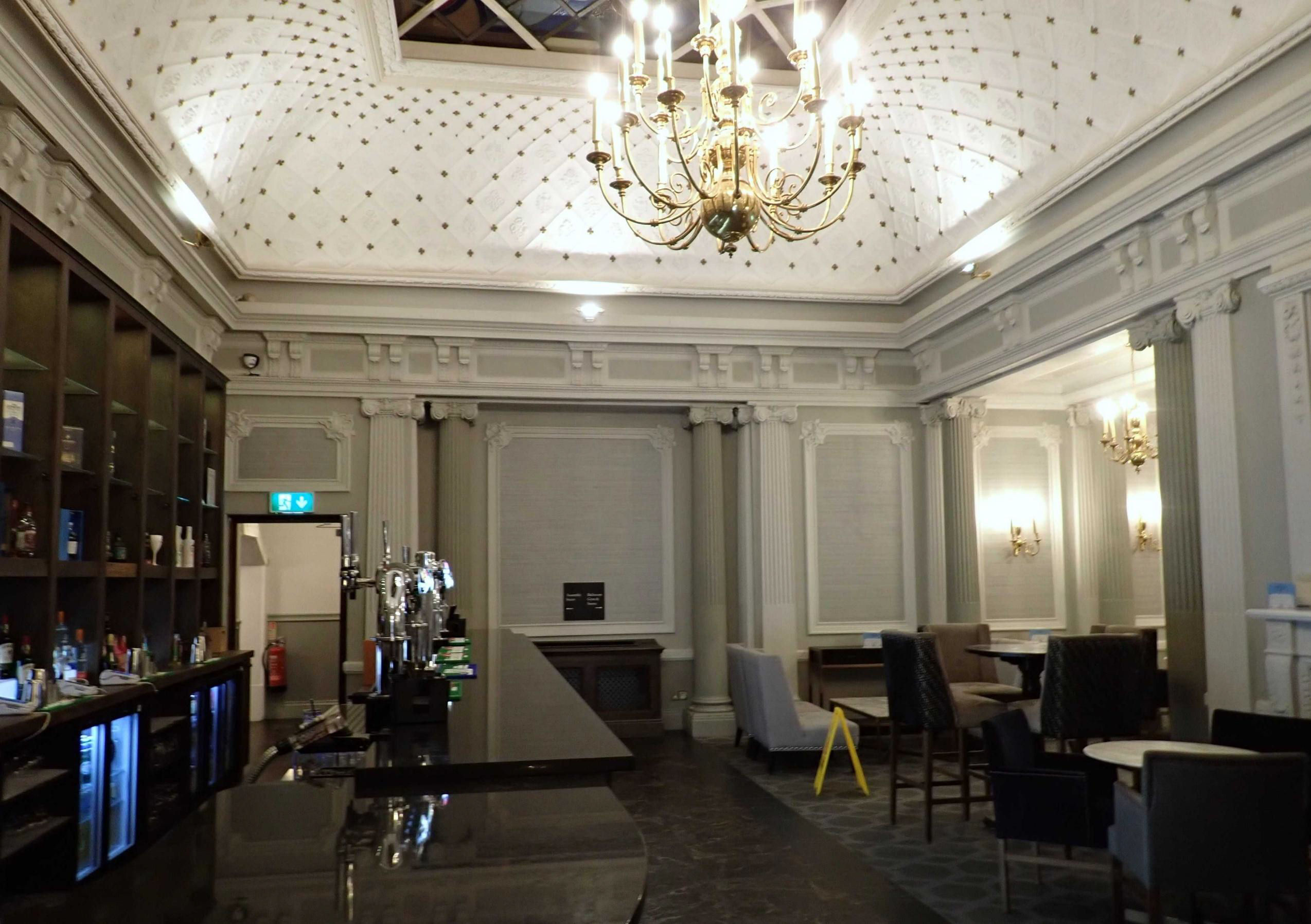
The Grand Lounge Bar.
[© Chris Lings & Adam Turner 2026]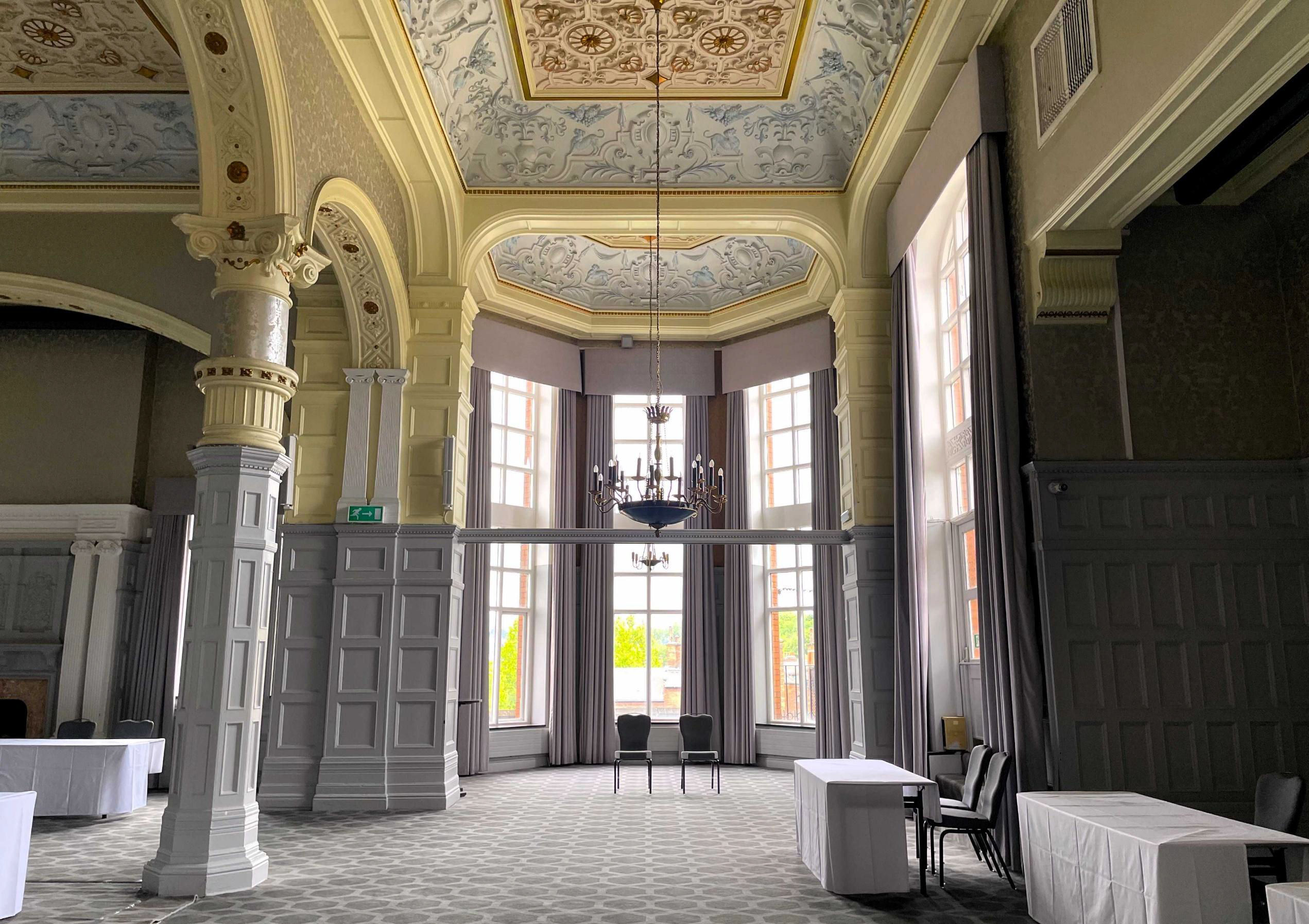
The Ballroom.
[© Chris Lings & Adam Turner 2026]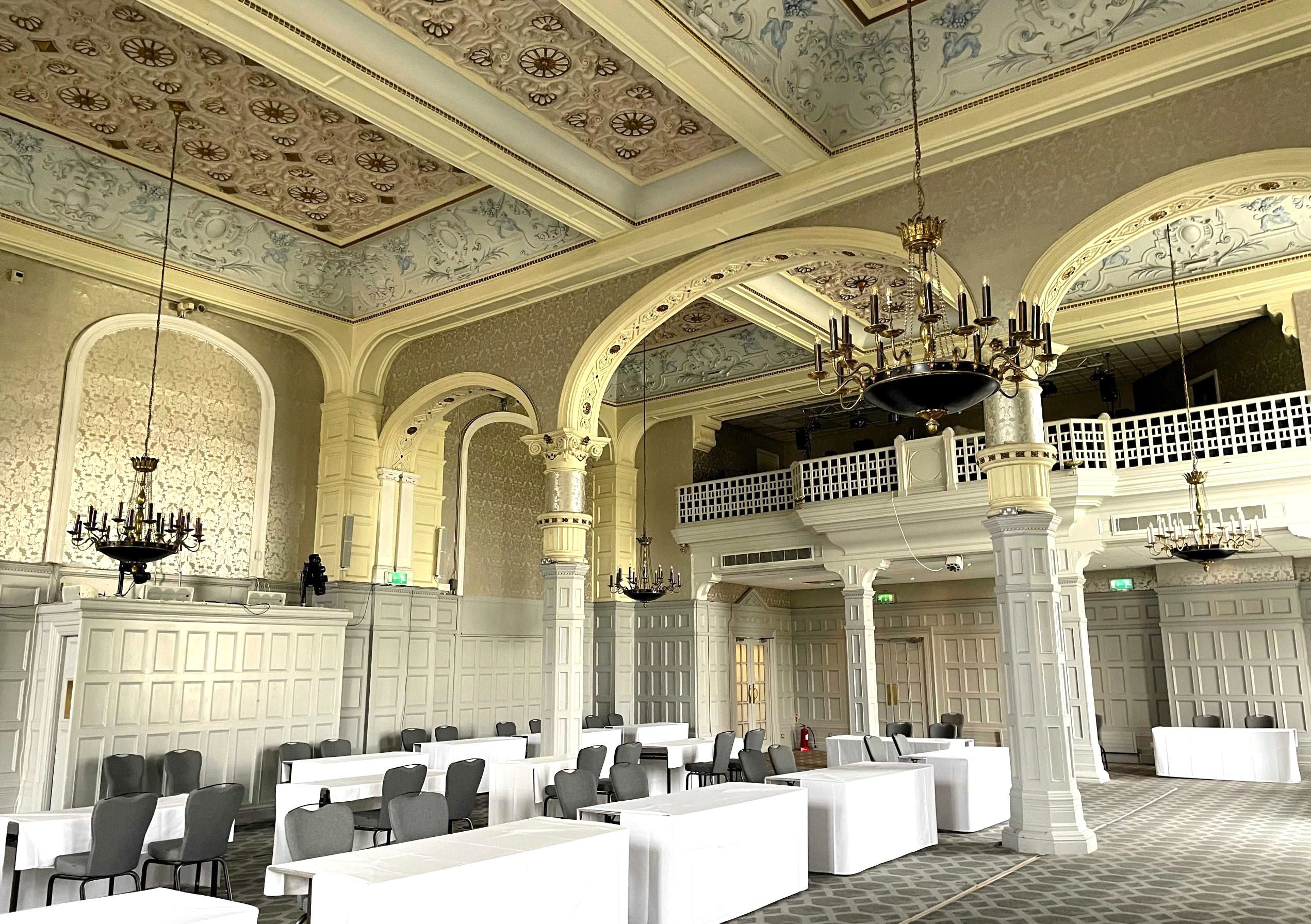
The Ballroom.
[© Chris Lings & Adam Turner 2026]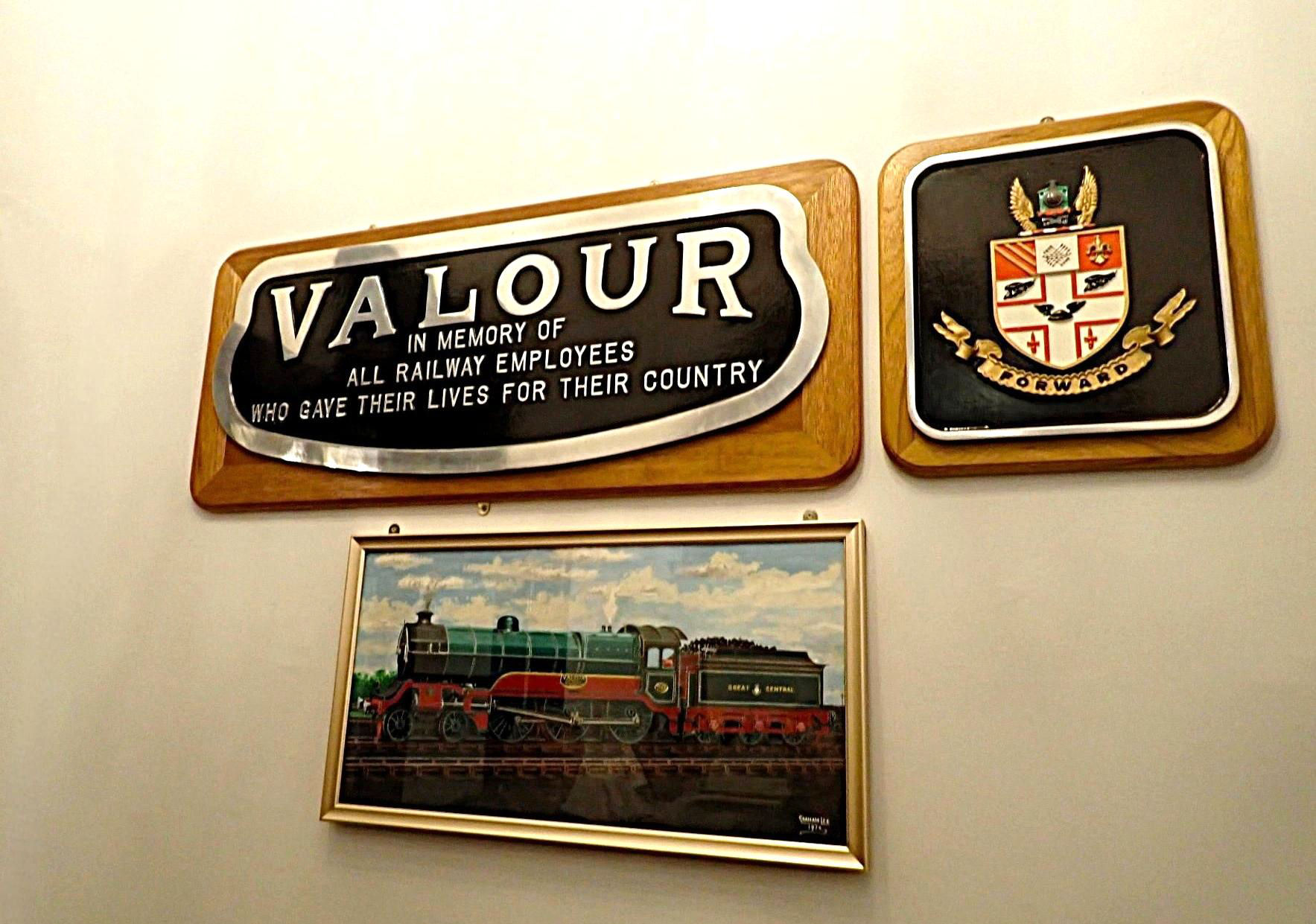
Valour' nameplate and a painting of the loco.
[© Chris Lings & Adam Turner 2026]Returning outside, Adam had more early photos of the hotel and station to compare with now. This was followed by viewing the relocated Great Central Railway (GCR) war memorial plaques. Nearby, the last recognisable fragments of the station's southernmost wall and ramp to the subway were inspected. They still show where the roof ironwork was cut off with demolition and some remaining tiles down the former steps although that area is now partially infilled. The now disused single track line to Stocksbridge is hidden behind a fence and trees so that any remaining platform edges, if still existing, cannot be seen.
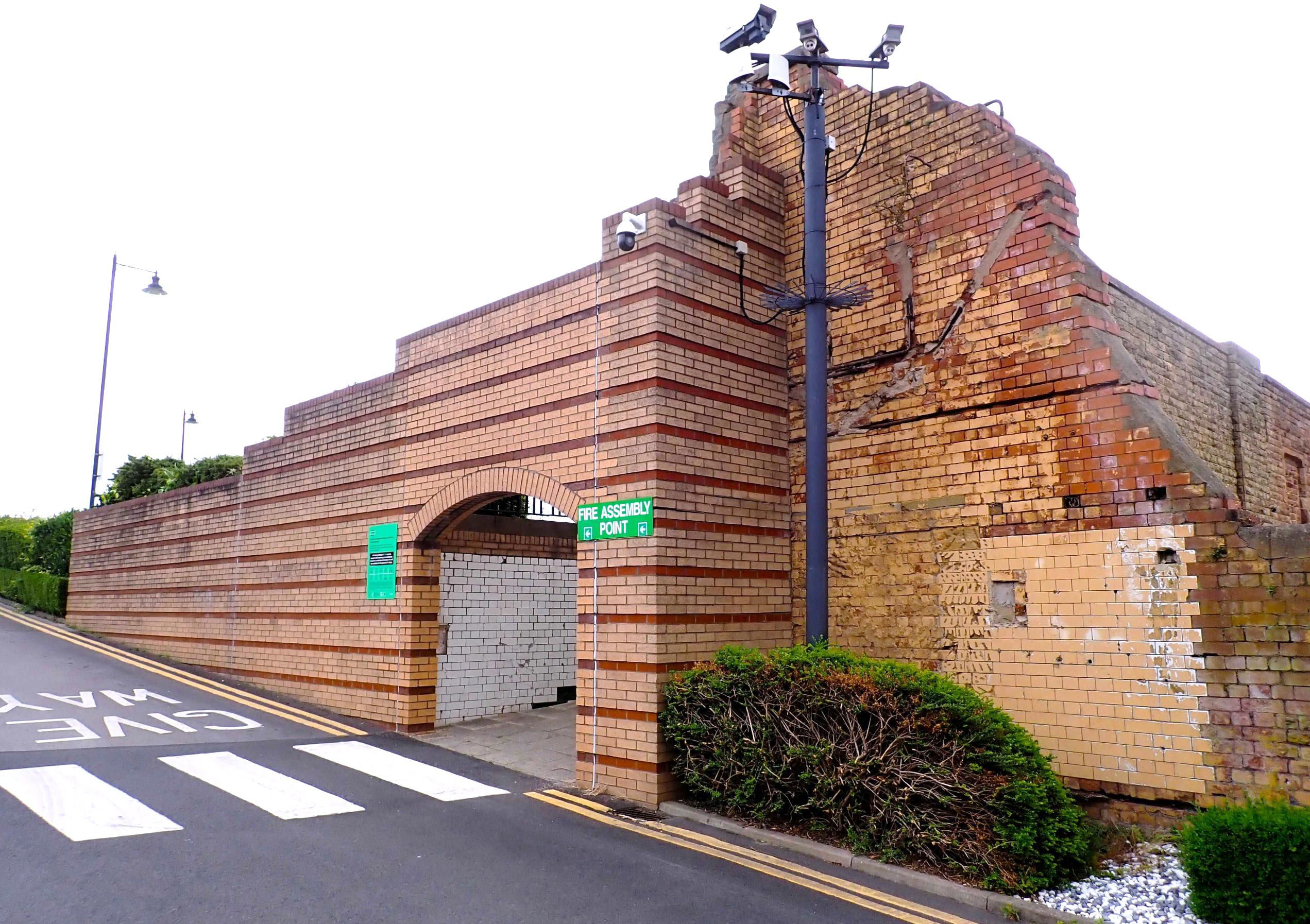
Victoria Station Road, the pedestrian slope (right) once lead from the road and hotel (off left) to the station; it is now foot access to part of the hotel car park.
[© Chris Lings & Adam Turner 2026]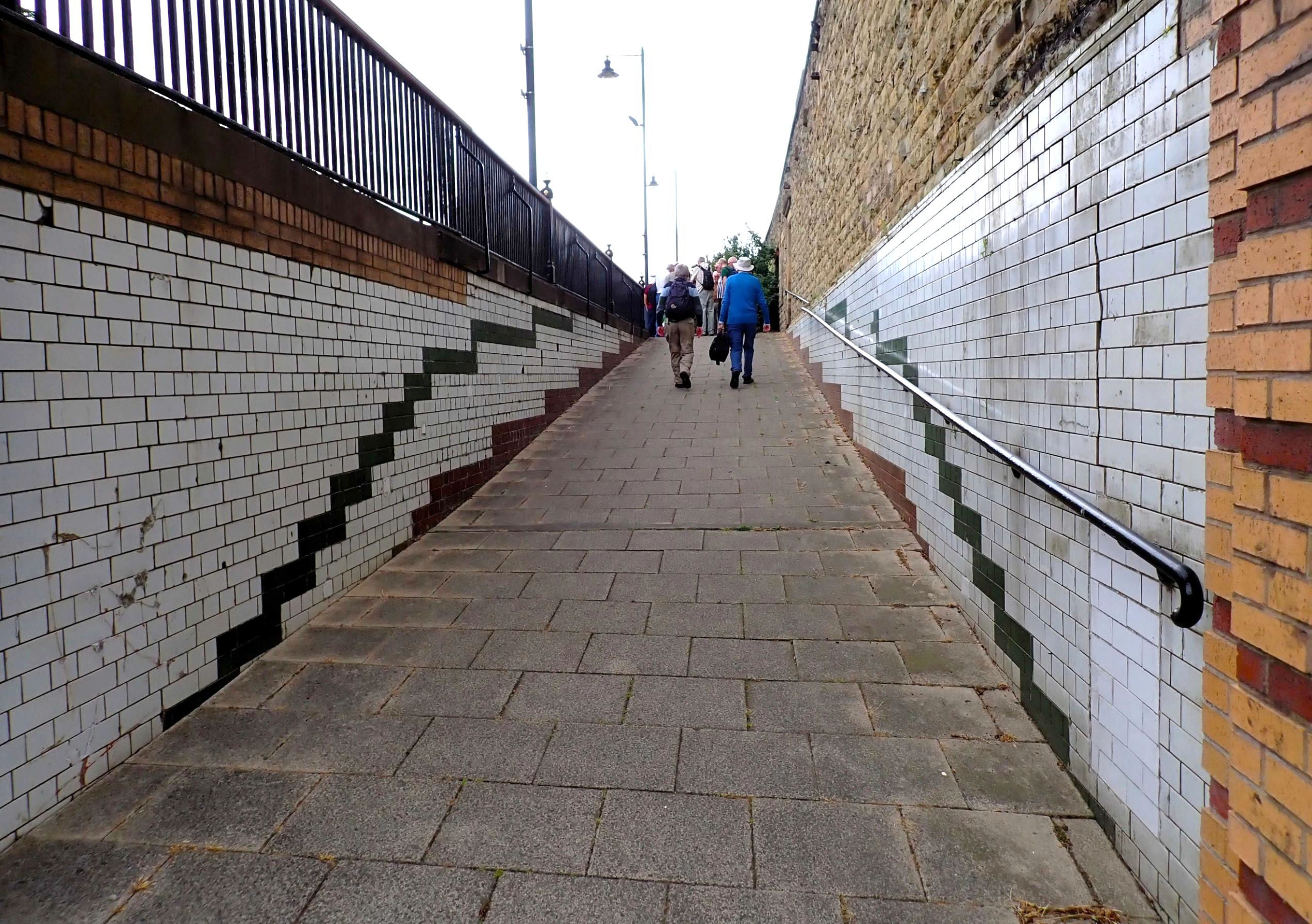
Looking up the pedestrian slope.
[© Chris Lings & Adam Turner 2026]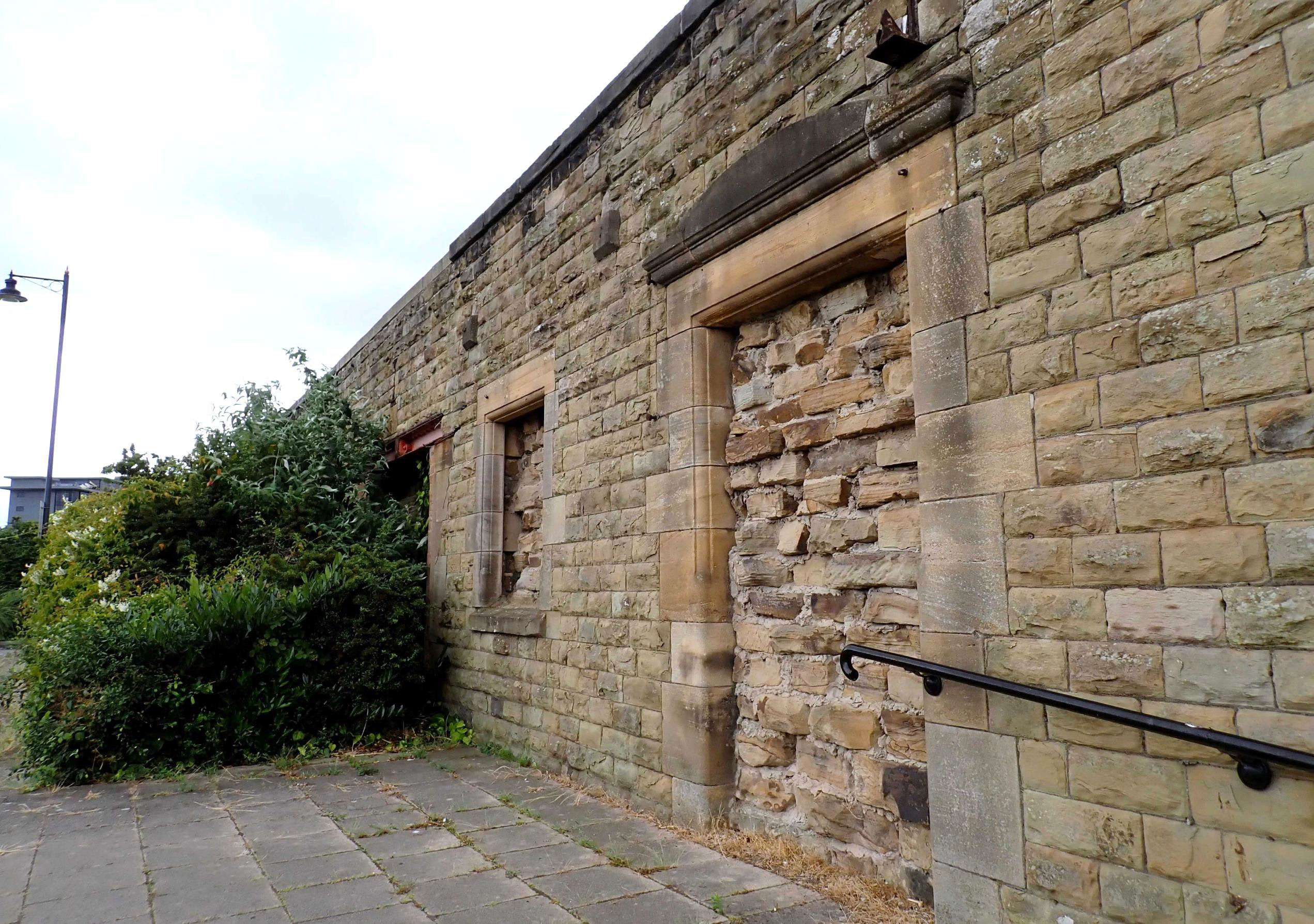
At the top of that slope are the remains of Sheffield Victoria Station.
[© Chris Lings & Adam Turner 2026]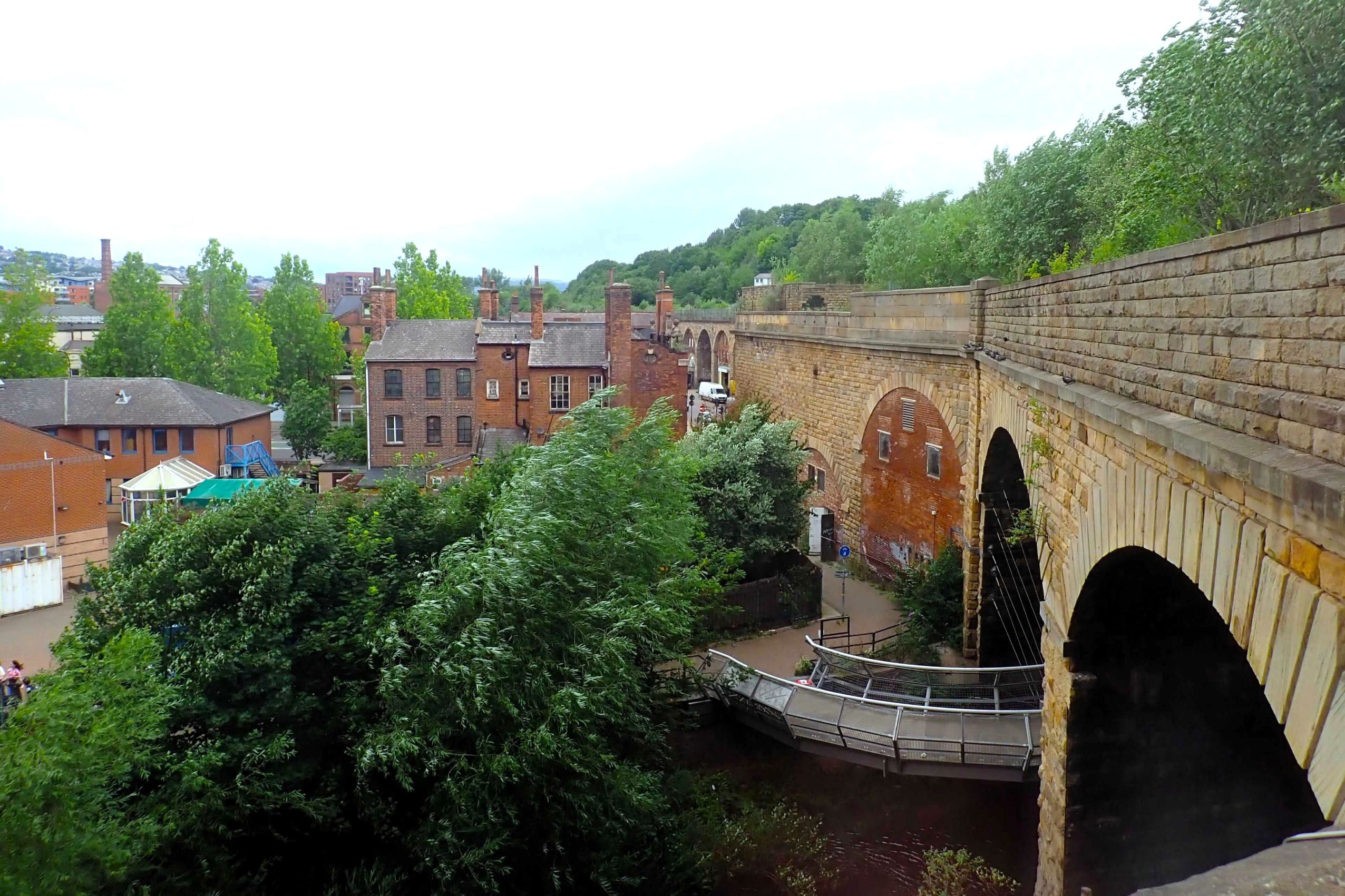
Looking north from the Hotel (north of the station), the viaduct toward Stocksbridge; the River Don is at the bottom.
[© Chris Lings & Adam Turner 2026]My first encounter with the station was from the front seat of a Huddersfield bound DMU in 1974 (before they ran via Barnsley) on the way to spot 'Tommies' (1,500 Volt DC Class 76 locos) at Penistone. Sheffield Victoria was closed but complete, as if the last person to leave had switched the lights off. [The last passenger train to call was thought to have been on Thur 17 Jun 1981 - see BLN 1496.1368.1.]
Walking back down the ramp and doubling back alongside the River Don, the massive supporting foundations of the hotel could be appreciated with the GCR line high above. A footpath alongside the base of the west end of the station embankment led us out to the well known Wicker Arch with former railway buildings, incorporated into some of the adjacent arches, still in use as commercial premises.
Acting as a gateway to Sheffield City centre, the Wicker Arch is still a magnificent structure with four different carved coats of arms, two on each side with the line continuing west on a large stone viaduct. Wartime bomb damage repairs are still evident at the crown of the arch, so a fortunate survivor as well.
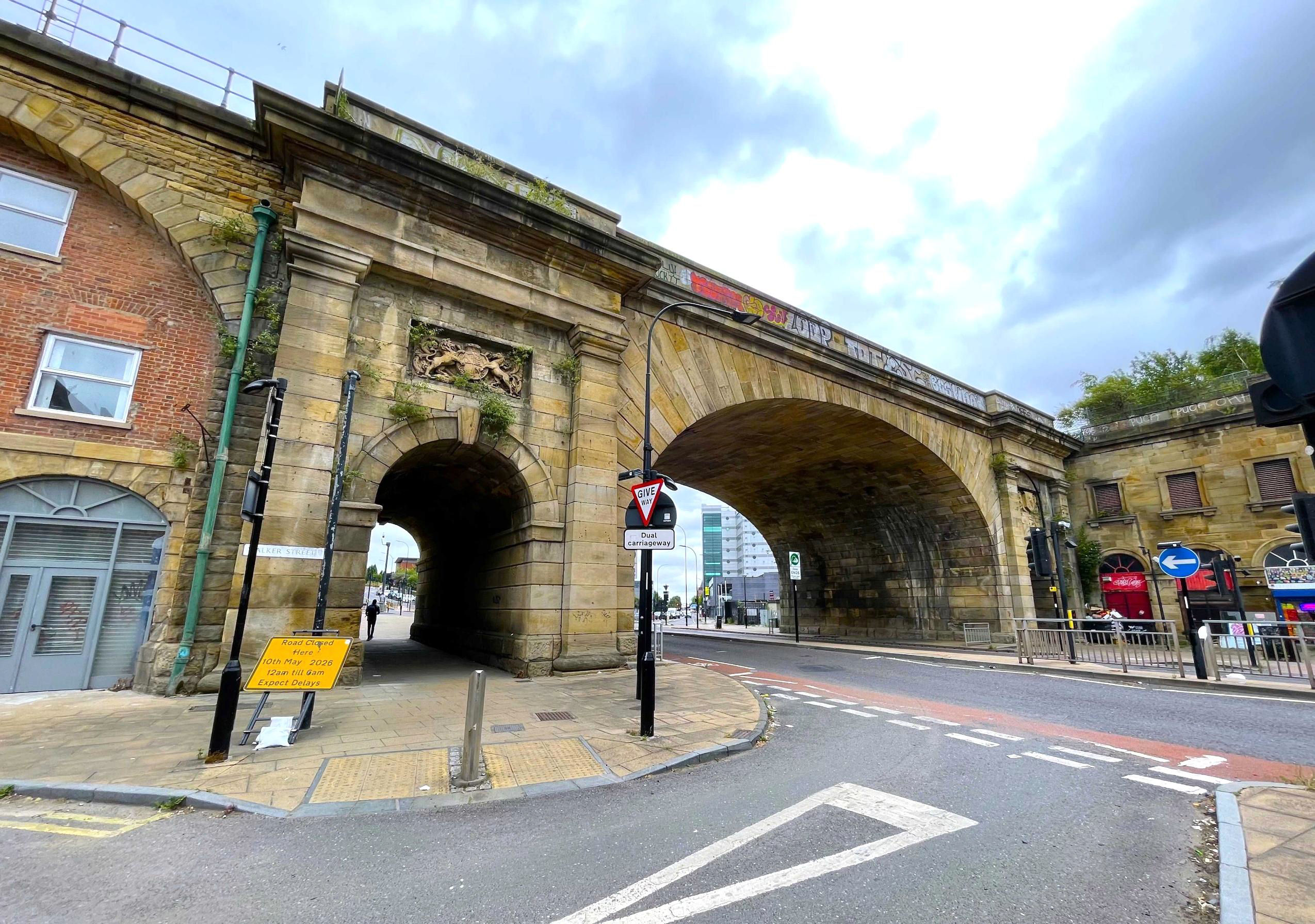
A little further north is Wicker Arch at the northern end of Sheffield Victoria station site, (right) now with just the disused Stockbridge branch over it.
[© Chris Lings & Adam Turner 2026]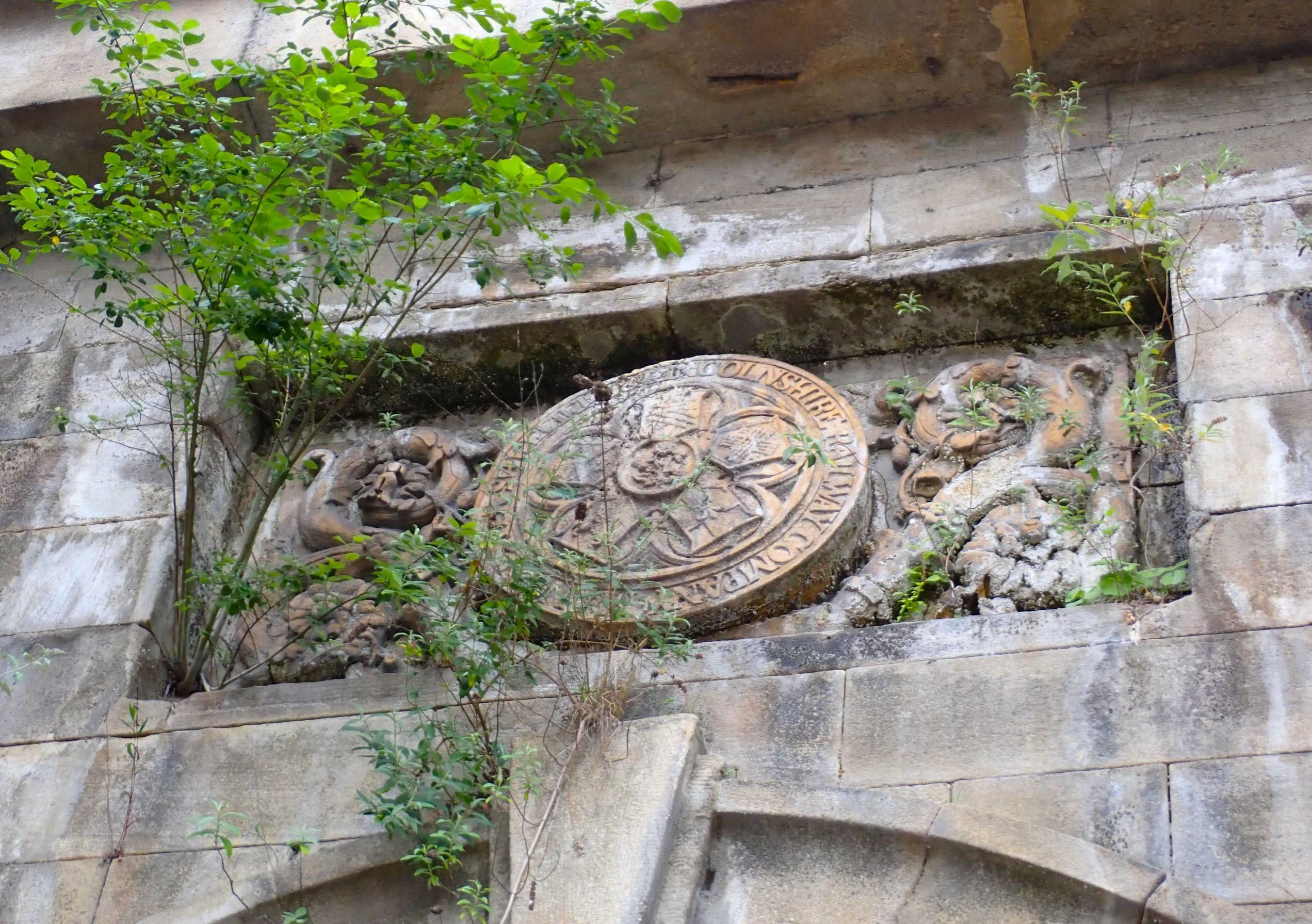
Manchester, Lincolnshire & Sheffield Railway crest (which became the Great Central Railway).
[© Chris Lings & Adam Turner 2026]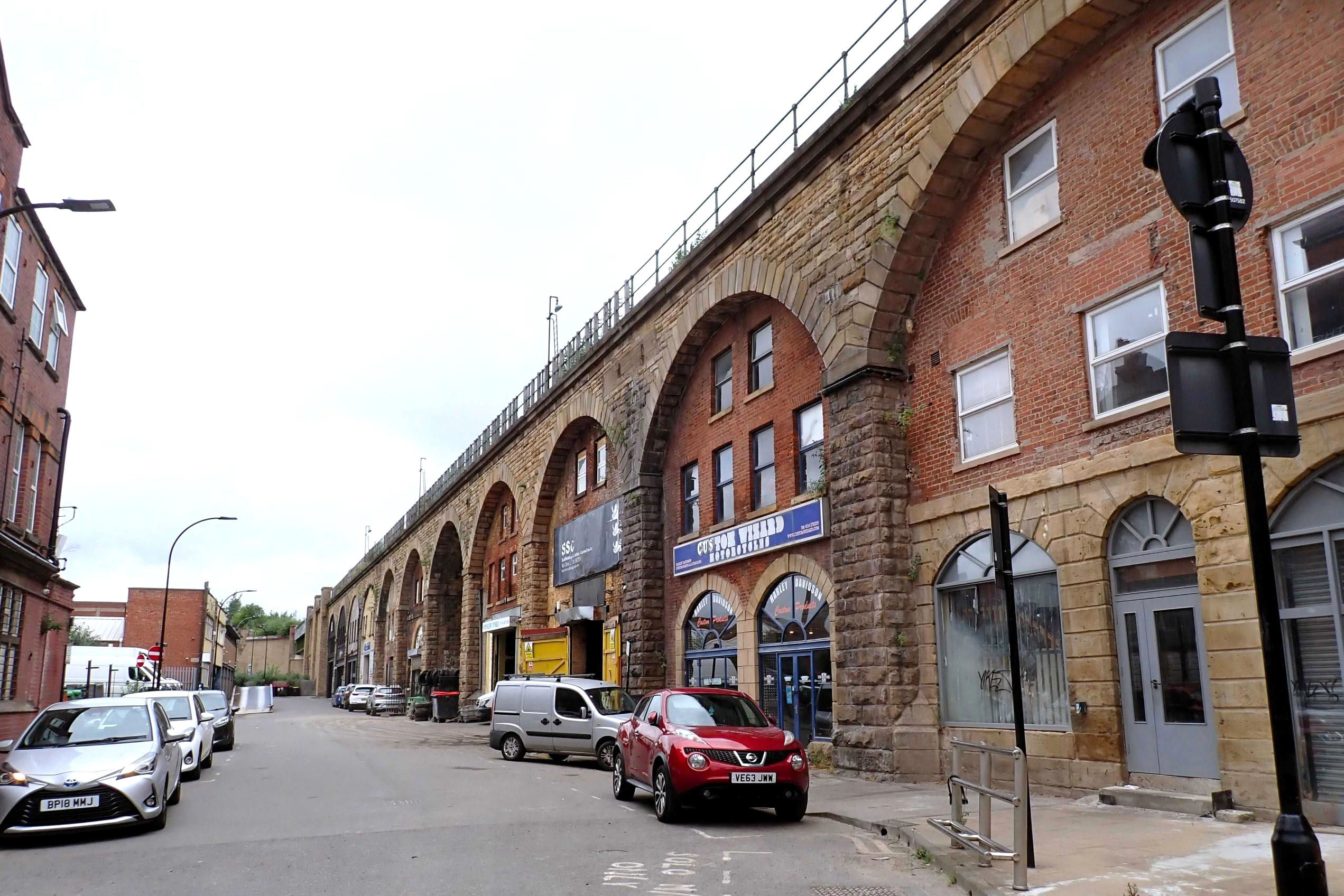
Further on still are Wicker Arches, looking north from Walker Street again towards Stocksbridge and Penistone.
[© Chris Lings & Adam Turner 2026]Returning to Midland station by a similar route, a convoy of Freightliner Class 66 and 70 locos headed north, presumably to Midland Road, Leeds.
Arriving in good time for the 12.40 Norwich service allowed us to view the River Sheaf and Porter Brook running below the south end of Sheffield P5 from the fairly new access grills (BLN 1497.1473.1). One of 'my' 2+3 car EMR Class 170 DMUs turned up from Liverpool to reverse. We all obtained seats, the aircon was working and it was on time … so it does happen!
It was all too familiar surroundings on arrival on Nottingham Midland P1c. I seem to spend most of my working life here, trying to send Class 158 and 170s on their way, without much hope when it's too cold / wet / hot / windy / leaves on the line* (*delete as applicable). At least this time, I managed to not be dragged away to look at something ''while you're here, can you just ... ?''
We didn't dwell long; Adam pointed out the location of the former P1 signal box, now a mess room and the Andrew Handyside Co canopies. Pausing to admire the renovated entrance hall and former cab road, we walked to the also restored Great Northern Railway London Road Low Level, east of Midland station.
Another survivor, the station was an early closure (22 May 1944), then a parcels depot until 1 Jun 1981 staying open for newspaper traffic until 11 Jul 1988 (using the original buildings and train shed). One of our party actually worked there, so we learnt even more about its later history. Again, Adam had done some prearranging, so we were able to see inside, as it now houses a gym and swimming pool. It is a great example of repurposing historic buildings for modern use while retaining many original features.
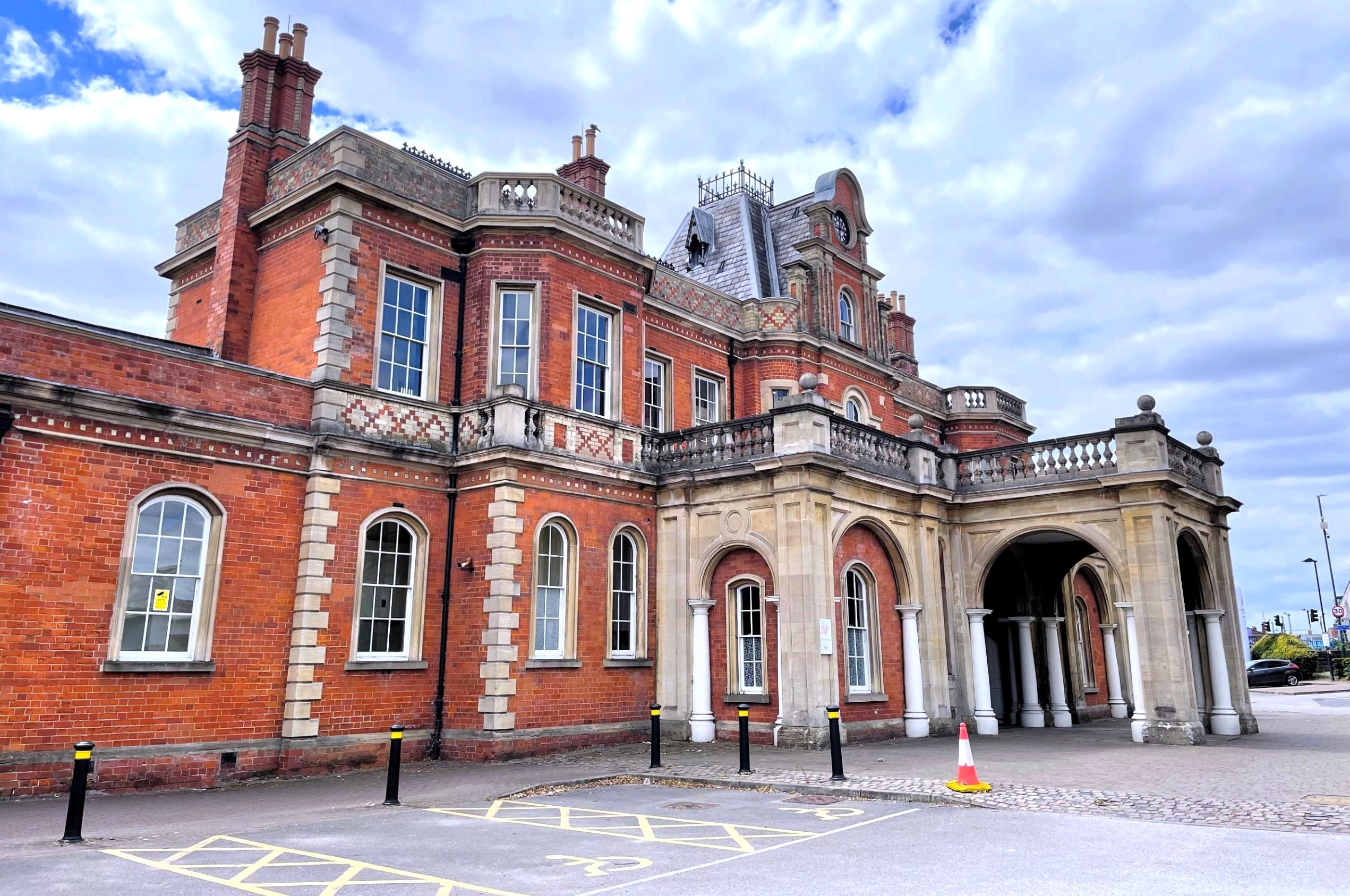
The former Great Northern Railway Nottingham London Road Low Level station building is Grade II listed.
[© Chris Lings & Adam Turner 2026]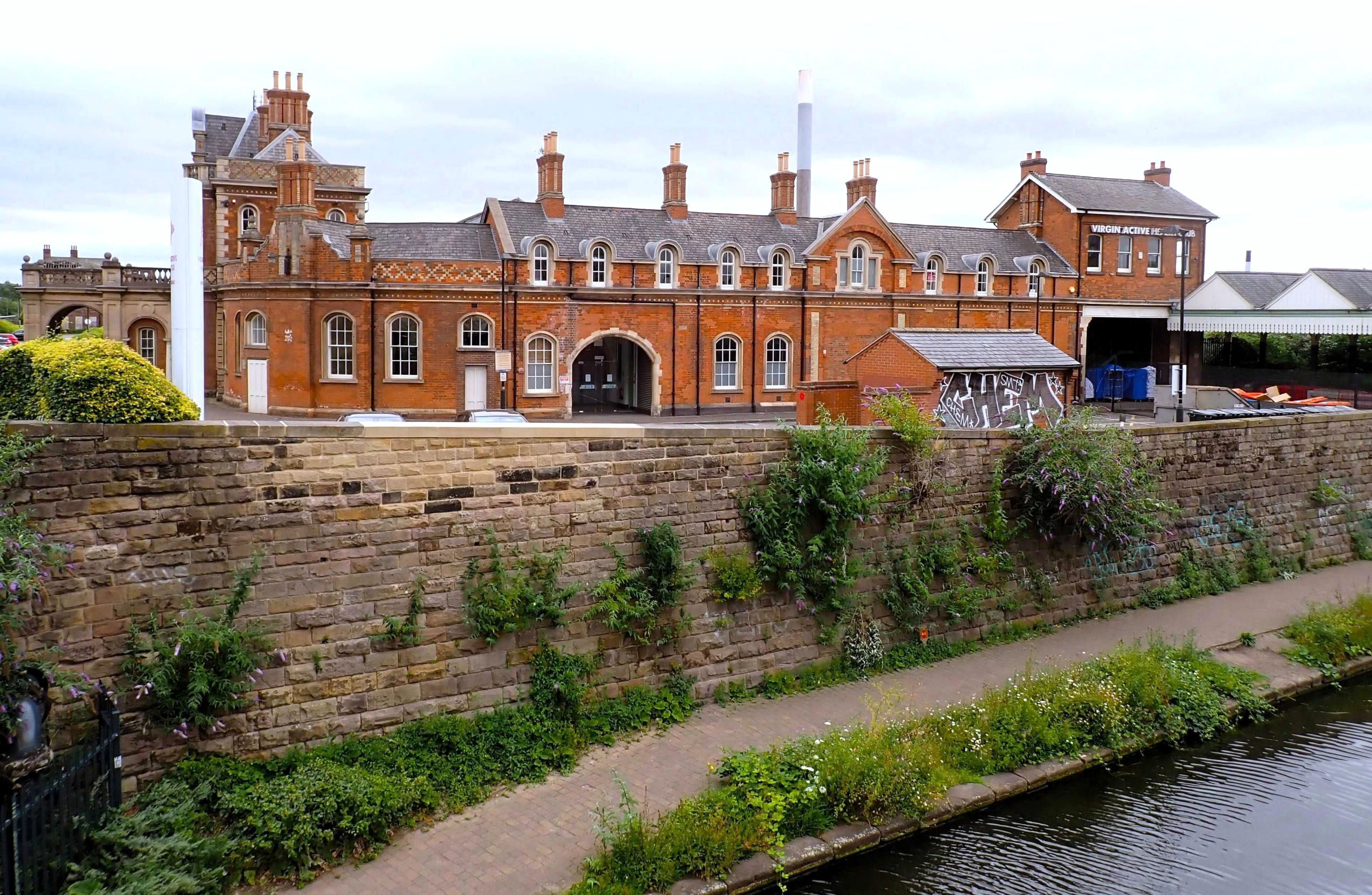
A side view, Nottingham London Road Low Level building was Grade II listed on 12 Jul 1972. After closure to rail traffic in 1988 (latterly parcels and newspapers), the station was refurbished for industrial use but was severely damaged by a fire in 1996.It was restored as a health club.
[© Chris Lings & Adam Turner 2026]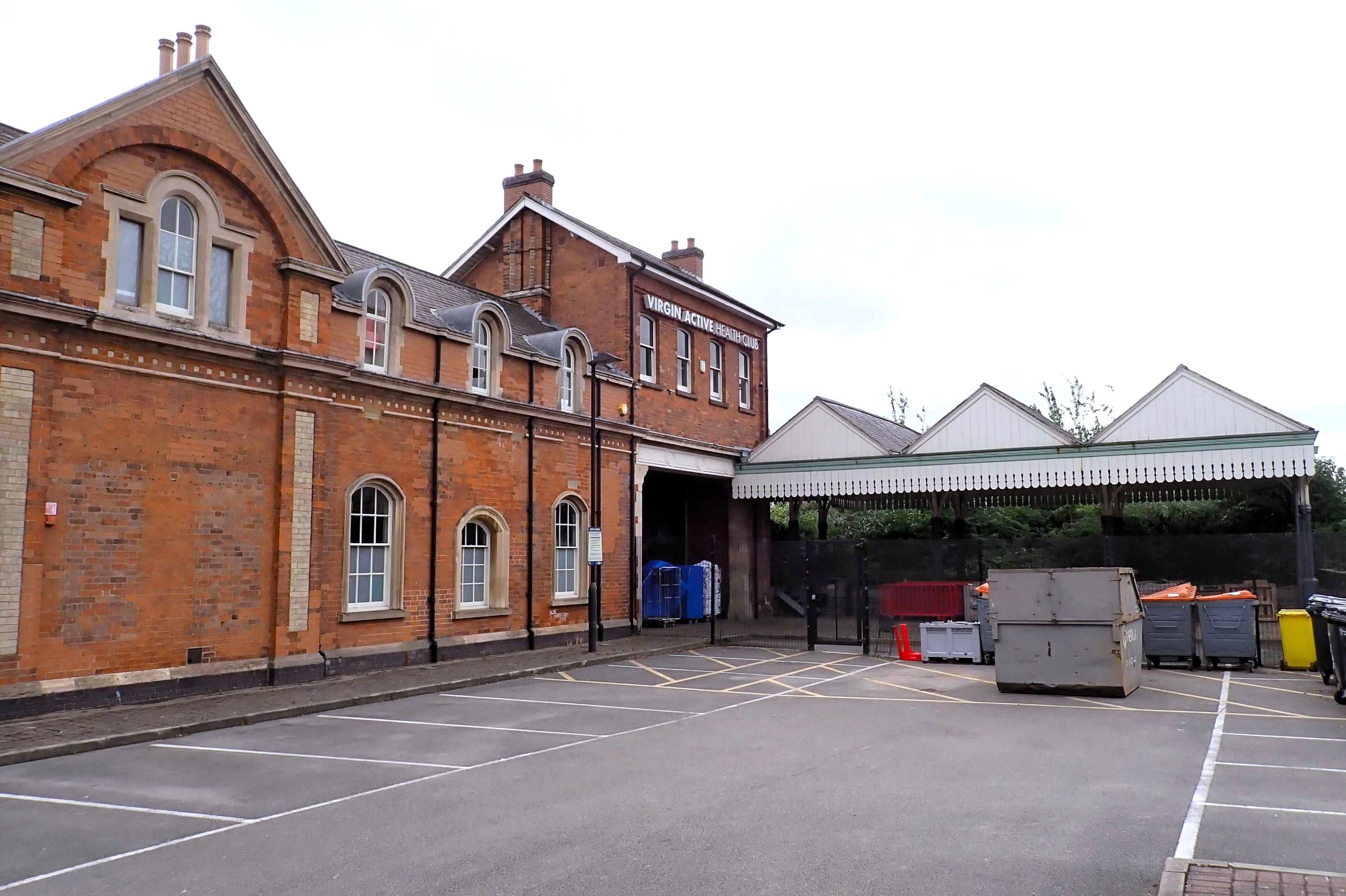
Now a Virgin Active Health and Fitness Club - from trains to training.
[© Chris Lings & Adam Turner 2026]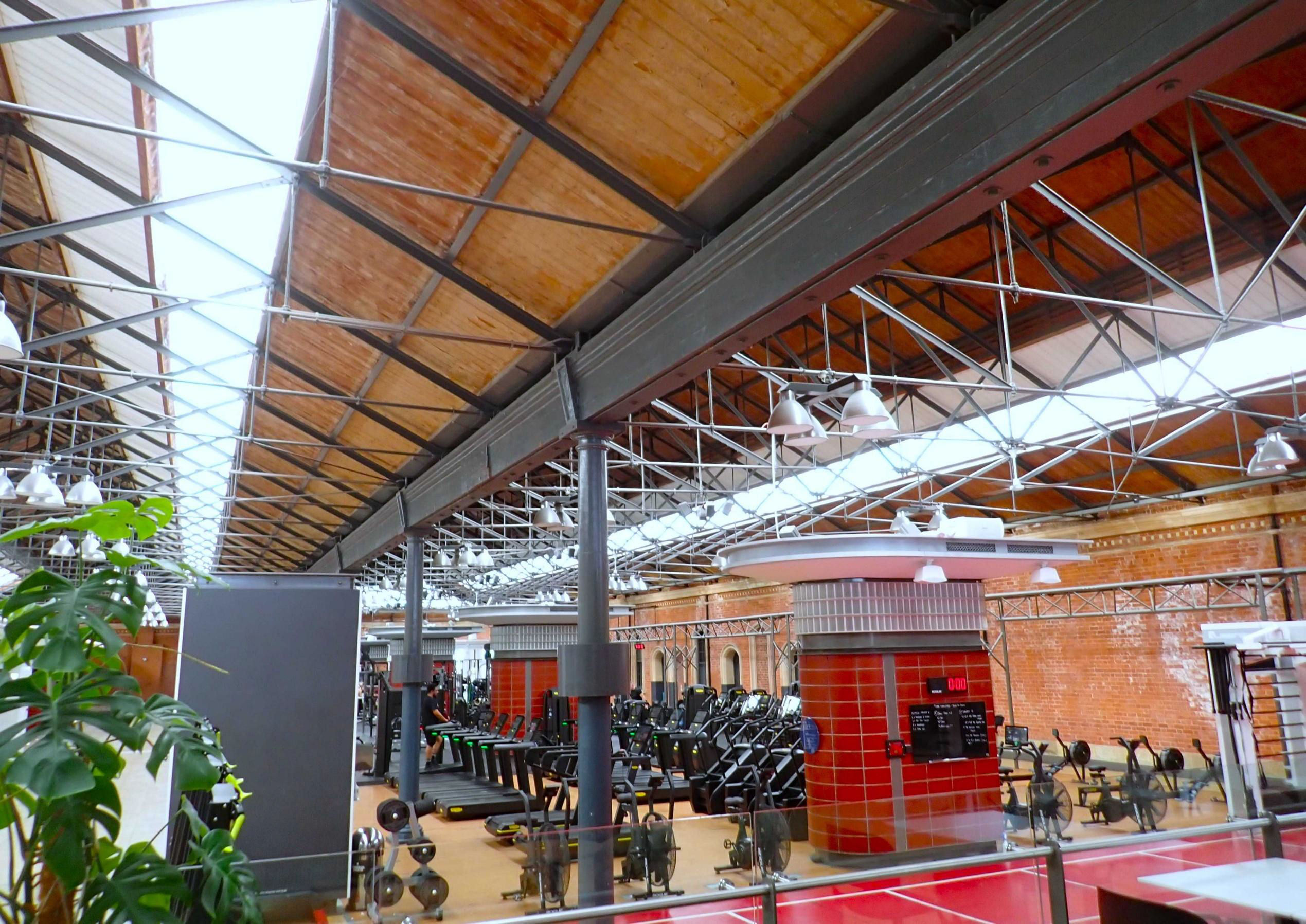
Inside the Virgin Active Health and Fitness Club - Although there wasn't much training during our visit...
[© Chris Lings & Adam Turner 2026]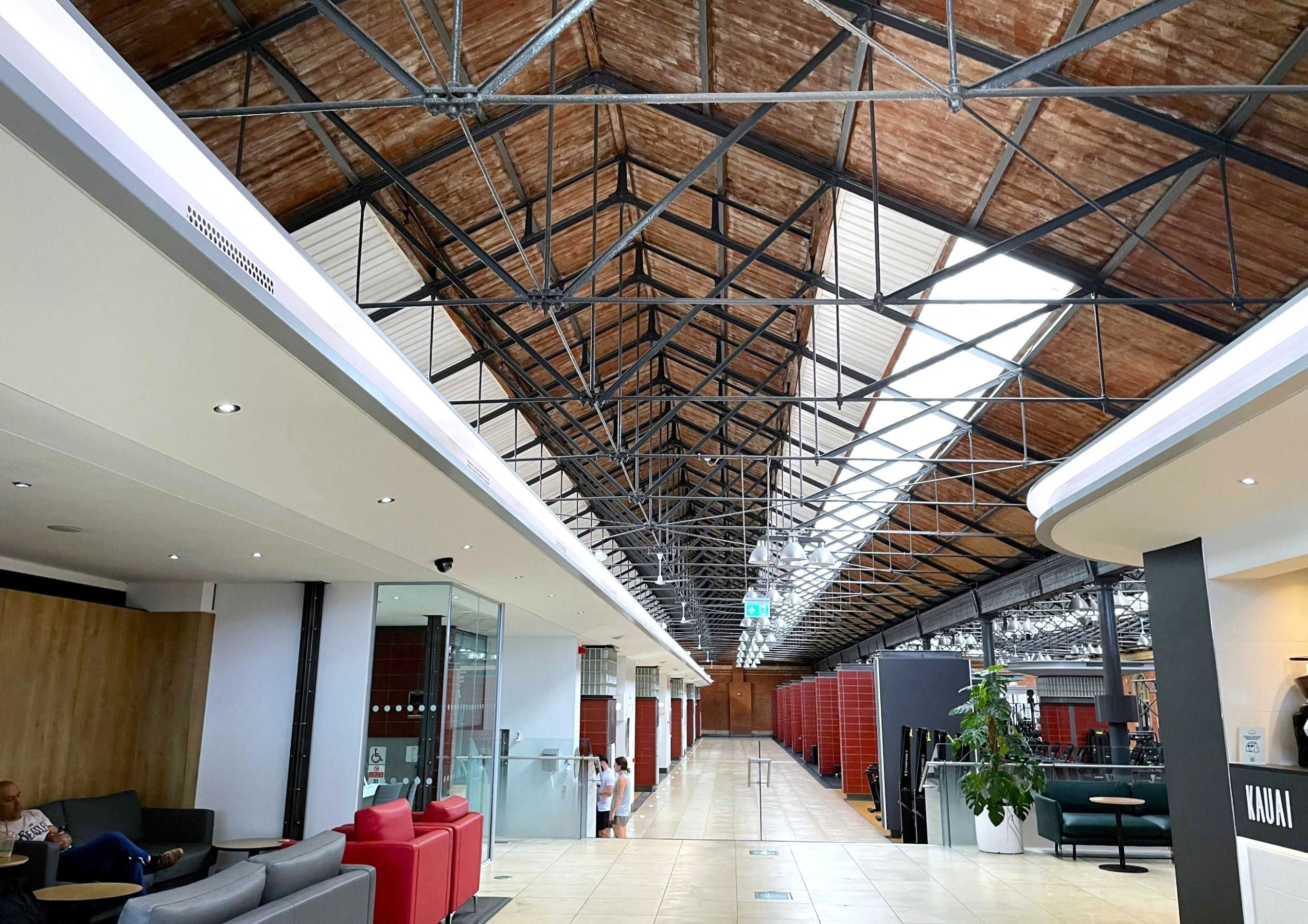
It's not very active!
[© Chris Lings & Adam Turner 2026]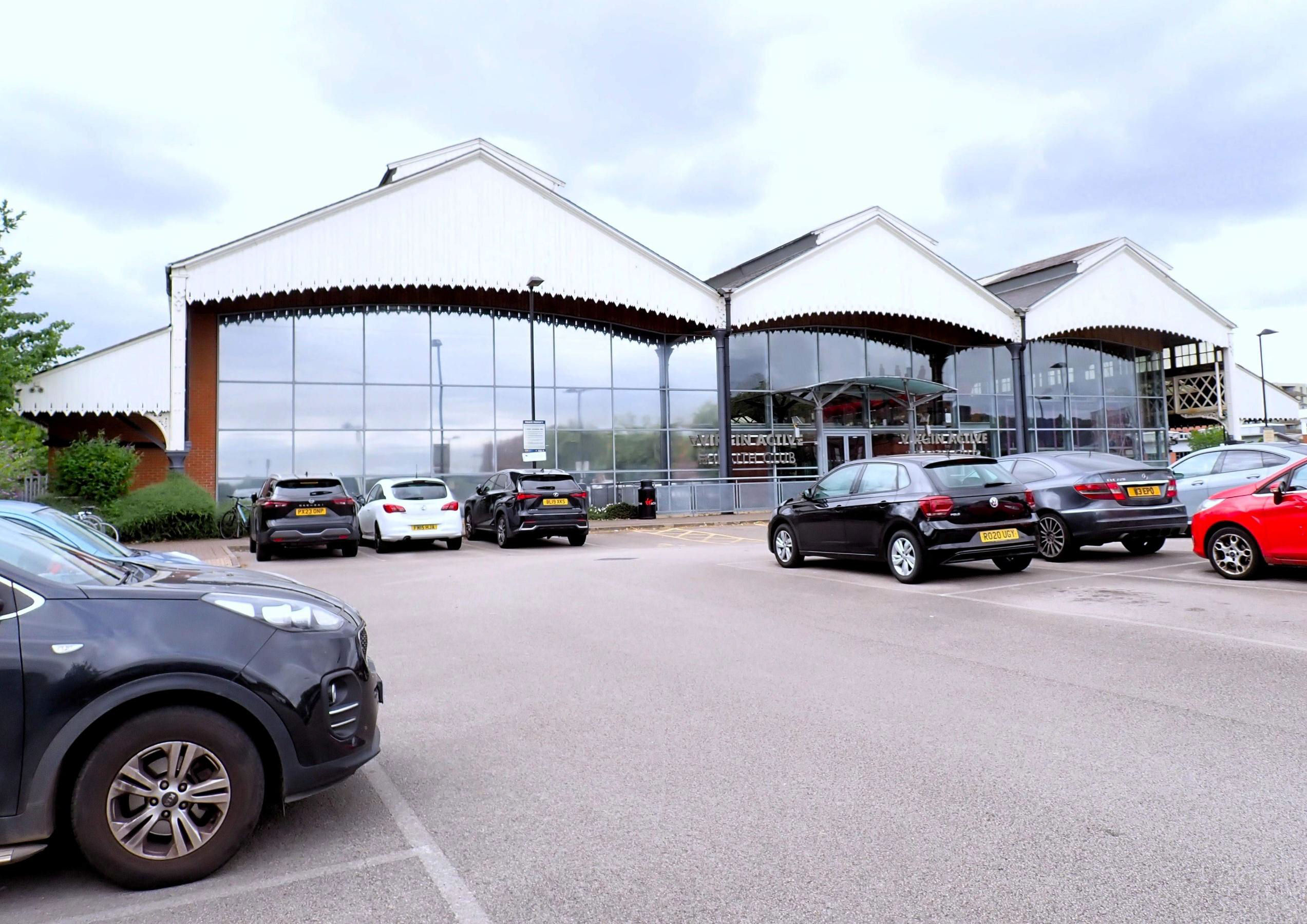
The end view of the Virgin Active Health and Fitness Club.
[© Chris Lings & Adam Turner 2026]Towards the Grantham direction, London Road Low Level station throat is now a car park beyond which the extensive sidings are now wasteland, passing the increasingly ruinous extensive goods sheds. I'm unsure what the plans are for this brownfield site but it must be on borrowed time as they have been unused for as long as I've known them, certainly forty plus years as I remember helping to salvage signalling equipment for the Midland Railway Trust from the yard in the 1980s.
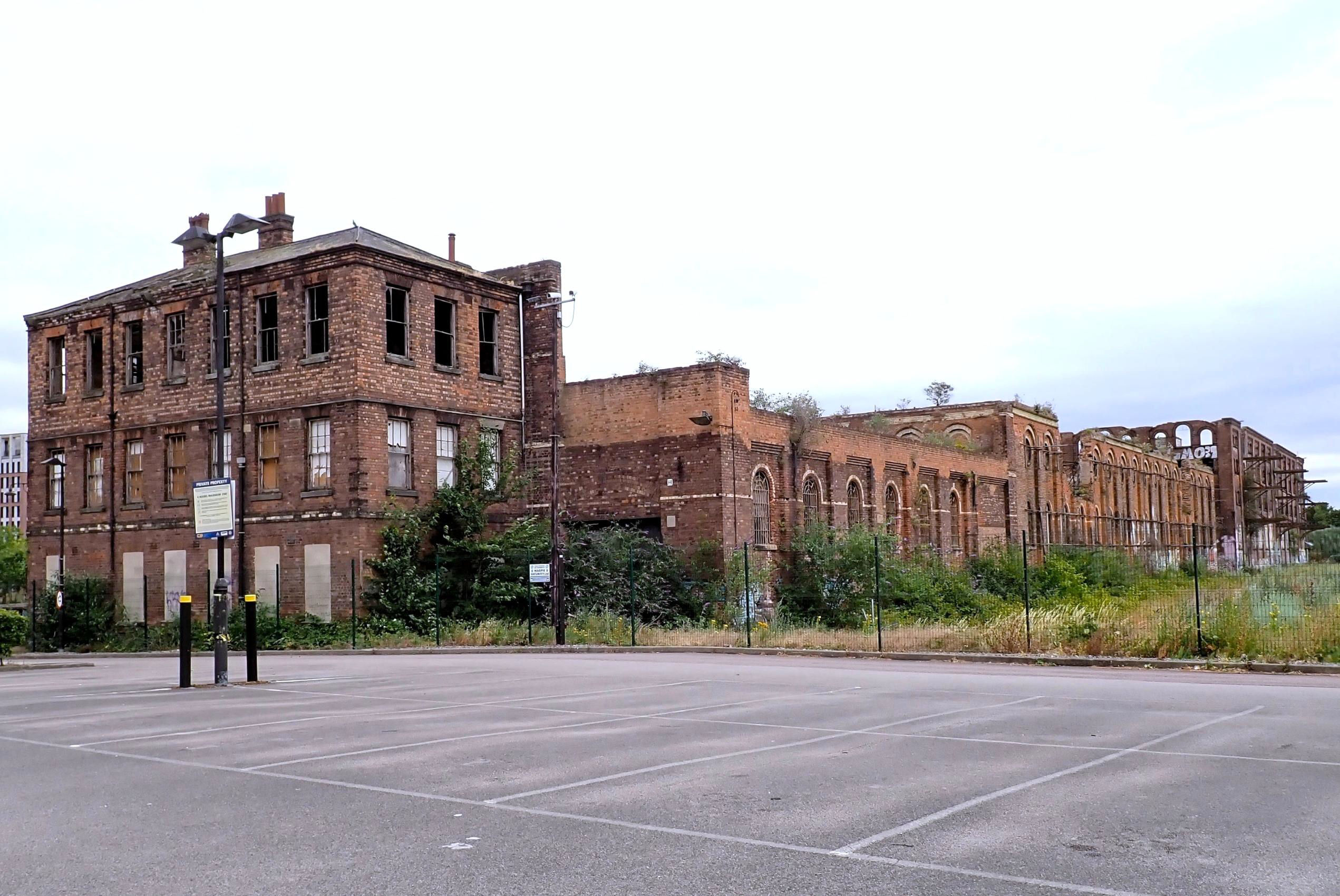
Derelict former railway warehousing and sidings at the former Nottingham London Road station, a brownfield site (like this) for many years.
[© Chris Lings & Adam Turner 2026]We returned towards Midland station along the Nottingham Canal towpath. Nothing remains of London Road High Level station (CP 3 Jul 1967) or the viaducts linking Weekday Cross Jn to the Great Northern Railway Grantham lines, other than a truncated blue brick bridge abutment next to the canal. The station building survived long after closure, latterly as an Indian restaurant with a small saddle tank loco outside.
When the present Nottingham modern tram system was built, a small portion of the Great Central Railway viaduct was used just north of Midland Station, passing over the canal where we viewed a wartime air raid shelter built for canal workers. North of that, the original viaduct to Weekday Cross Jn has been replaced with a new viaduct, which routes the tramway to street level past the mostly demolished Broadmarsh Shopping Centre and bus station. This also meant the loss of the junction structure and view of the southern tunnel portal where an art gallery has been built. The tunnel is still there, carrying pipework for the district heating system from the Eastcroft Waste incinerator.
Making our way to Nottingham Victoria through a very busy City centre, we managed to lose a few of the group but eventually all met up by the surviving clocktower at the entrance to Victoria shopping centre. Victoria Station Hotel (latterly Victoria Hotel) still survives as Nottingham Hilton but, apart from the retaining walls of the station 'hole', the clocktower is the only substantive building left. Adam pointed out a curved wall to the north of the clocktower which bounded one of the access roads into the station.
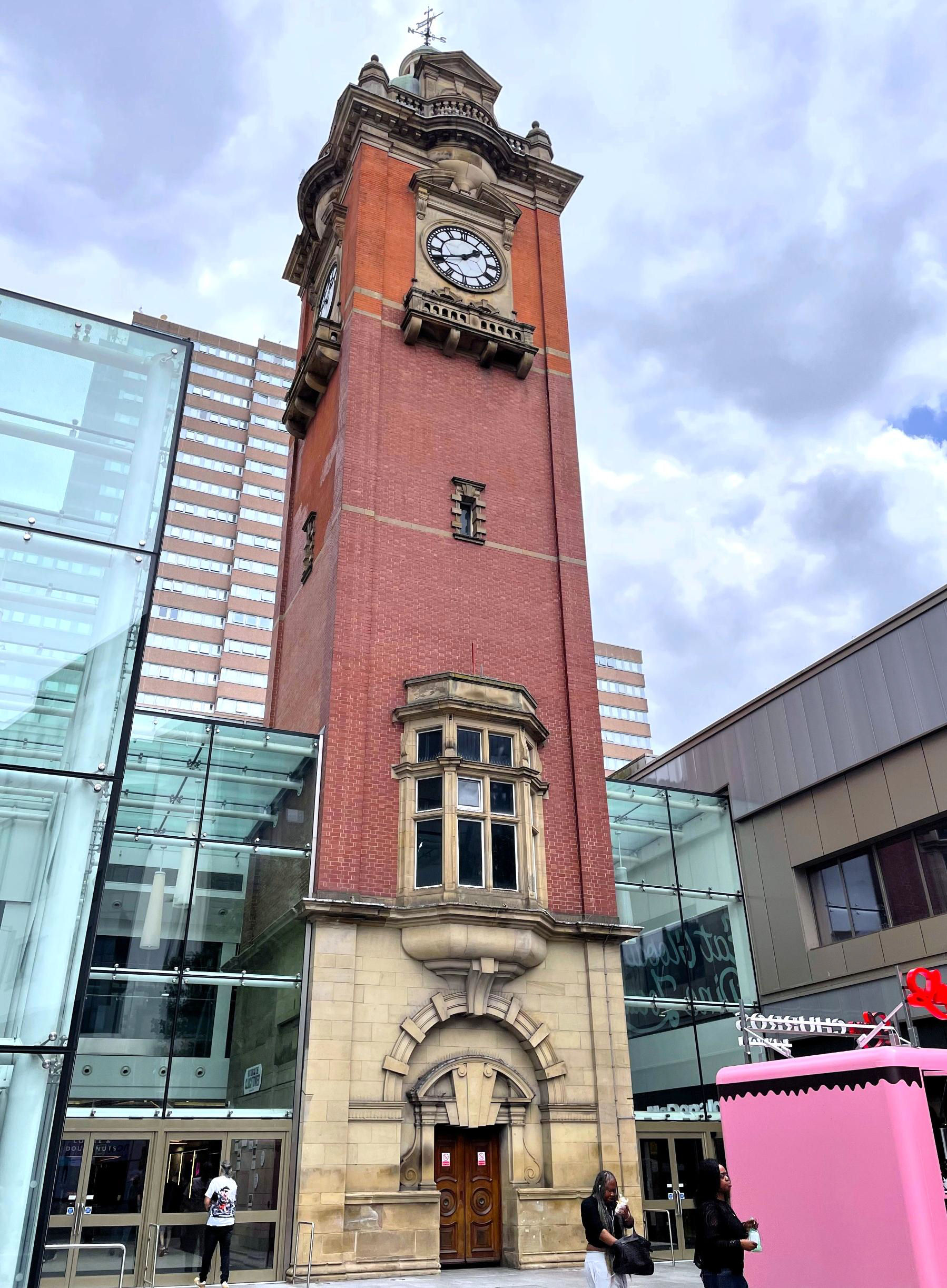
Nottingham Victoria clocktower, the main station relic, now part of the shopping centre.
[© Chris Lings & Adam Turner 2026]Now accessing the North Car Park, more blue brick retaining walls were seen. The 'hole' dug into the sandstone for the station is still well defined by original walls at this end, with the modern car park constructed from track level without touching the sides. This gives a good view of the sealed up south portal of Mansfield Road Tunnel and turntable area (no remains evident). The car park is a more recent addition as, when I was at college in Nottingham in the early 1980s, a good view was possible from the adjacent York House looking down into a large space in front of the portal.
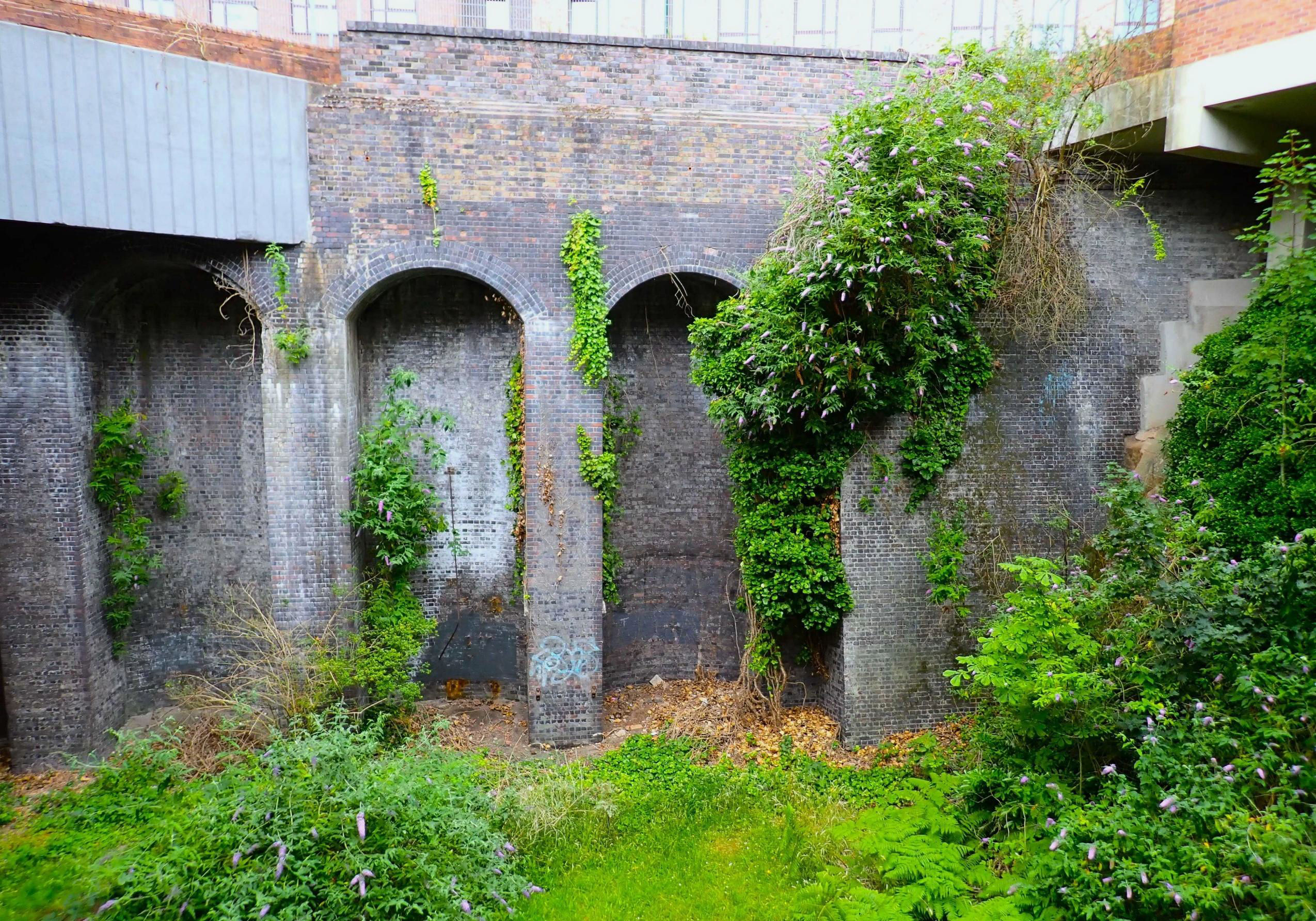
Surviving retaining walls.
[© Chris Lings & Adam Turner 2026]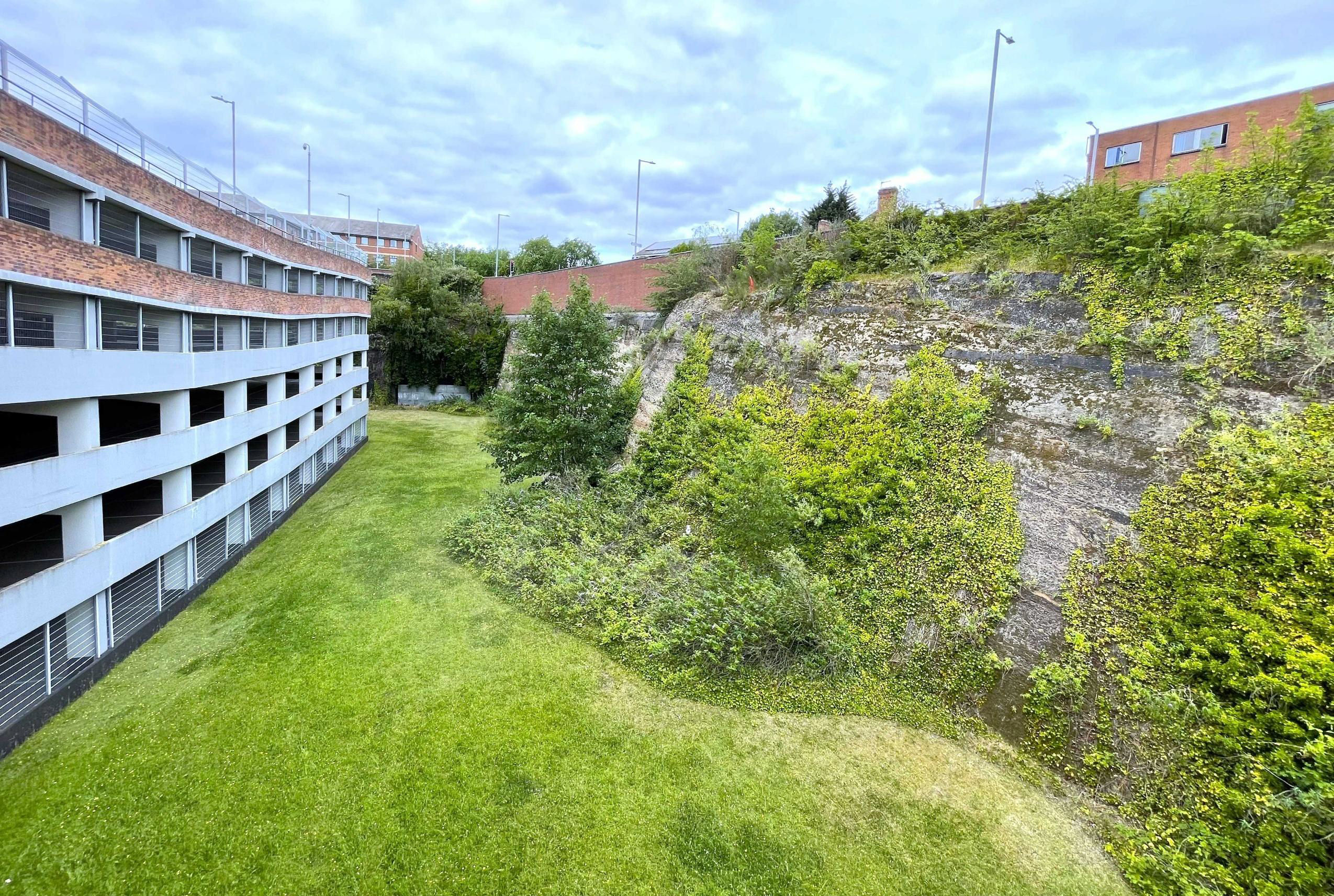
Ahead is the sealed up south portal of Mansfield Road Tunnel at the north end of the Nottingham Victoria site.
[© Chris Lings & Adam Turner 2026]Using the lifts and walking through the shopping centre for more car park gricing at the south end, we became split up again. Most knew the next objective, so soon regrouped. This end is less inspiring but the original retaining walls, now painted white, forming the edges of the car park, taper in towards the Thurland / Victoria Street Tunnel, now hidden behind two grey metal doors. Of note were the supporting columns for a newer building above, built over the railway opening between the parallel Clinton Streets (which we had walked past earlier) and the railway era bridge girders for Lower Parliament Street.
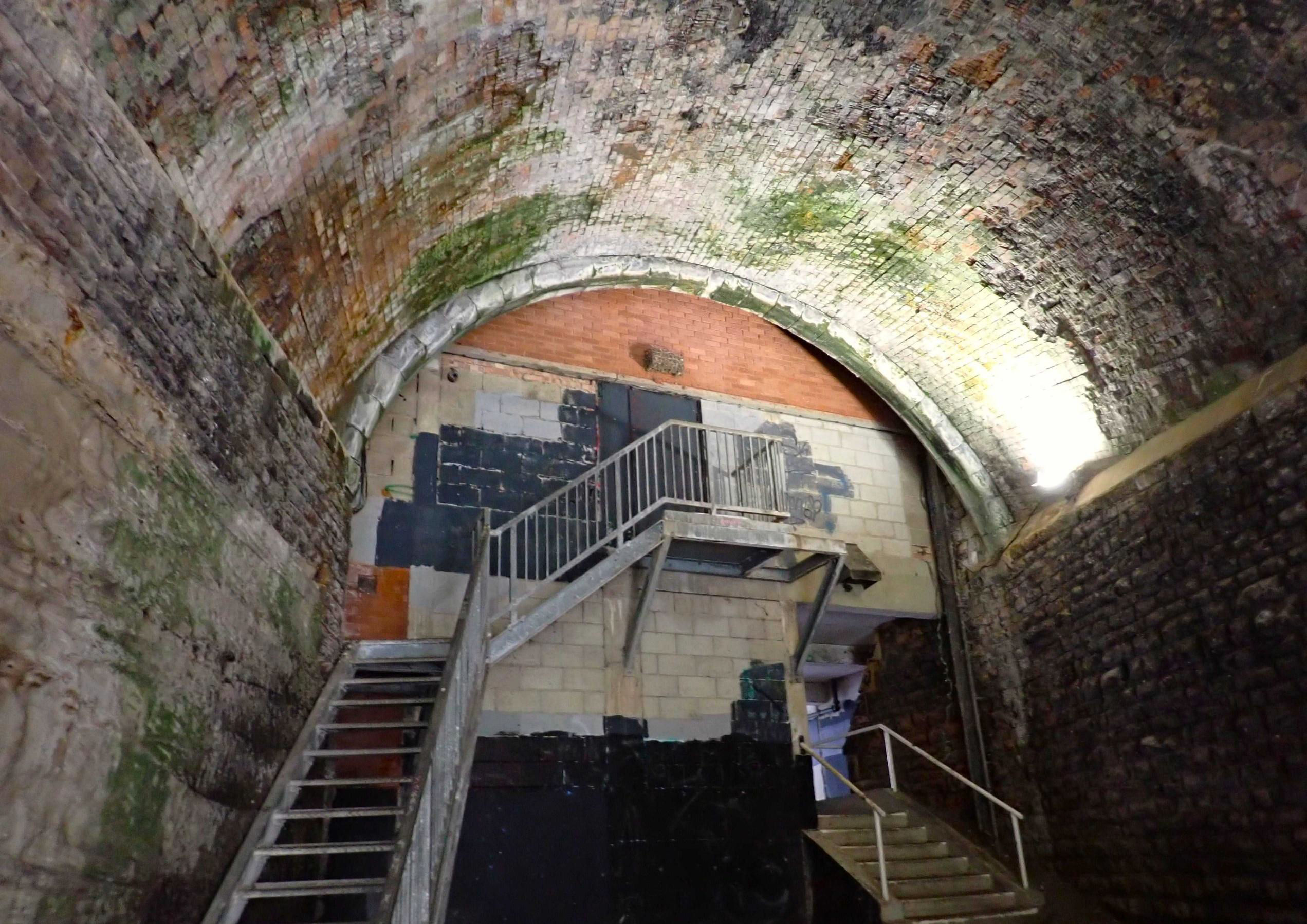
The Thurland / Victoria Street Tunnel, now hidden behind two grey metal doors.
[© Chris Lings & Adam Turner 2026]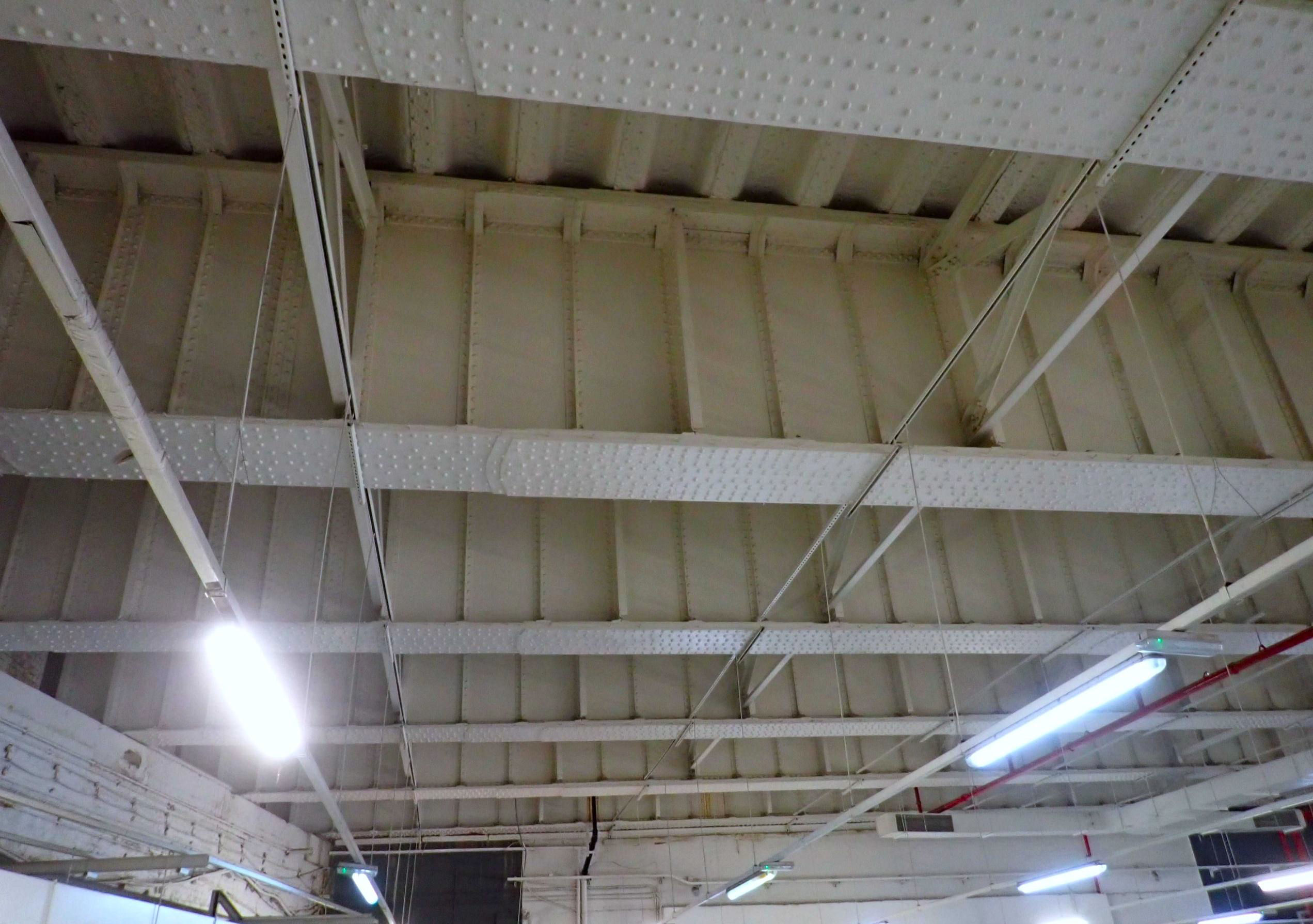
The railway era bridge girders for Lower Parliament Street
[© Chris Lings & Adam Turner 2026]A non-railway related, but just as interesting, diversion was made to walk down (at 1:12!) Park Tunnel just off Derby Road at the top of Maid Marion Way. New to me despite my college time here, it suddenly appears after turning off onto an unlikely looking alleyway to drop down to a Nottingham 'des-res' area. Apparently, it was built to railway size dimensions for horse carriage access to a large house / estate in the 1830s but it was far too steep, so remained as a path and folly.
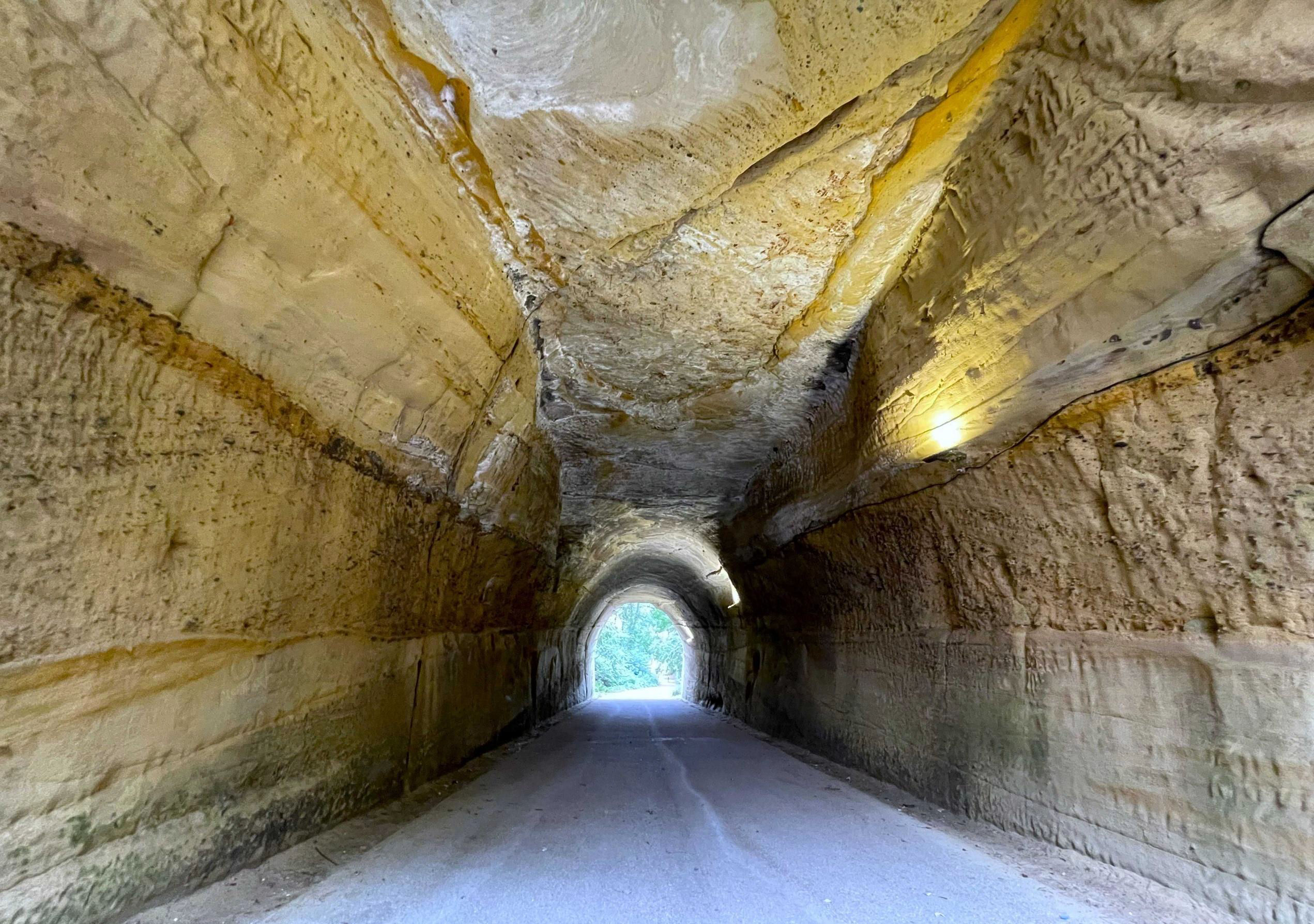
The descent down through Park Tunnel.
[© Chris Lings & Adam Turner 2026]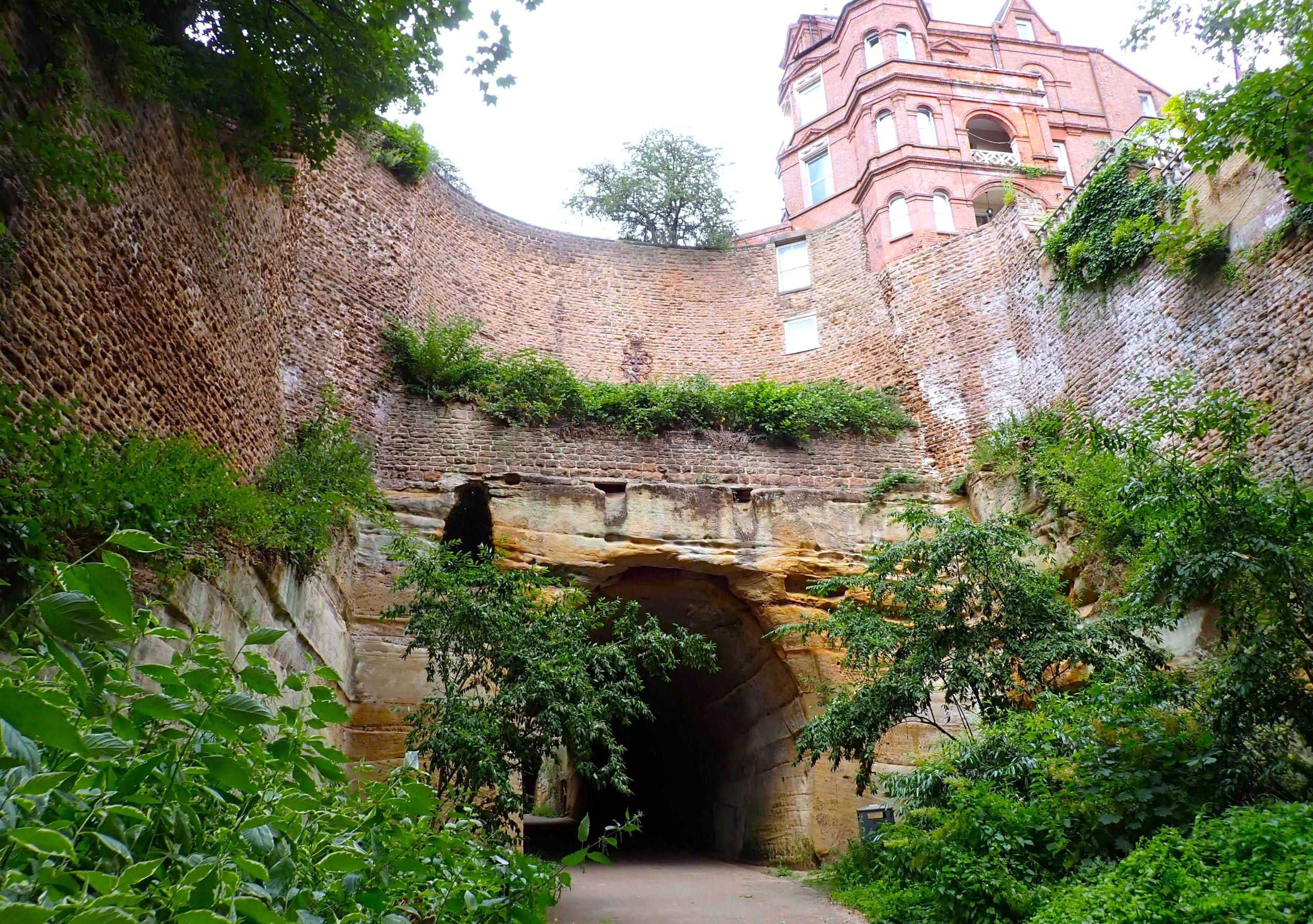
Park Tunnel portal.
[© Chris Lings & Adam Turner 2026]In the hot weather, Adam had spurred us on all day with a promise of 'a visit to the Pub' as an ending. Passing Nottingham Castle, we reached the 'Trip to Jerusalem' (the oldest pub in England). Unfortunately, most of Nottingham had the same idea, so the crush to the bar was almost as bad as a CrossCountry Sunday service from Birmingham! Defeated, we said our cheerios and made our departures. This was yet another well organised, researched and informative day out, which also raised £170.00 for Stonebridge City Farm charity in Nottingham. Many thanks, Adam.
'The Great Central Then & Now' by Mac Hawkins has a good selection of photos of some places visited.