Even without the attraction of redundant railway artifacts, I must confess to being a big fan of Liverpool. When it comes to finding parts of the old rail network, the city is awash with it! Even more of a reason for a return visit. Travelling from Birmingham on a cheap split ticket, the late running of my second train wasn't a good start. Luckily, I was able to switch trains and still arrive in Liverpool in time for the start of the tour. 17 of our members met at Brunswick station (OP 9 Mar 1998; 847,000 passengers in 2024-25) on Merseyrail's Northern Line. The station is rather basic but the things to see around it are amazing.
Local historian Paul Wright was on hand to guide us around the City, with Adam showing us his amazing store of old photos on his iPad. While we waited for our transport for the day, Paul took us to see the remains of the original Brunswick terminus (OP 1 Jun 1864; replaced by Liverpool Central 1 Mar 1874).
Not a lot was left, aside from the lower part of a pier. Nearby there was evidence of other activity in the shape of bricked-up bridges which used to serve the vast network of goods lines that existed in the lower docks area of Toxteth and Dingle. We also had a look at an old bridge, which crossed many of the lines. With its cobbled surface to help horses ascend the slope, it was like a step back in time and seemed strange that it remains there unused. Our transport had arrived, so we had to depart the historic bridge.
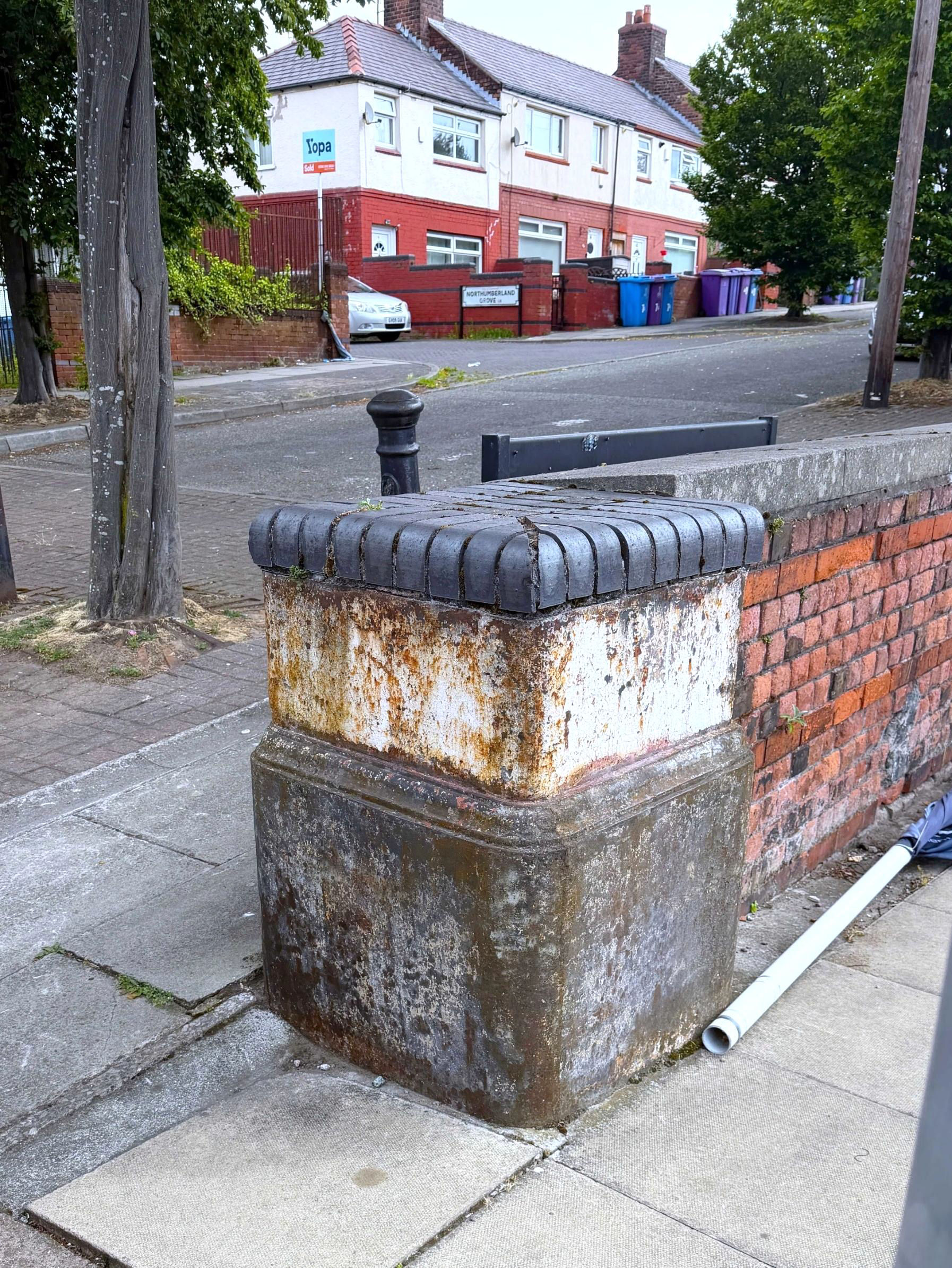
The only remains of the original Brunswick terminal station, the bottom of a pier.
[© Peter Plisner 2026]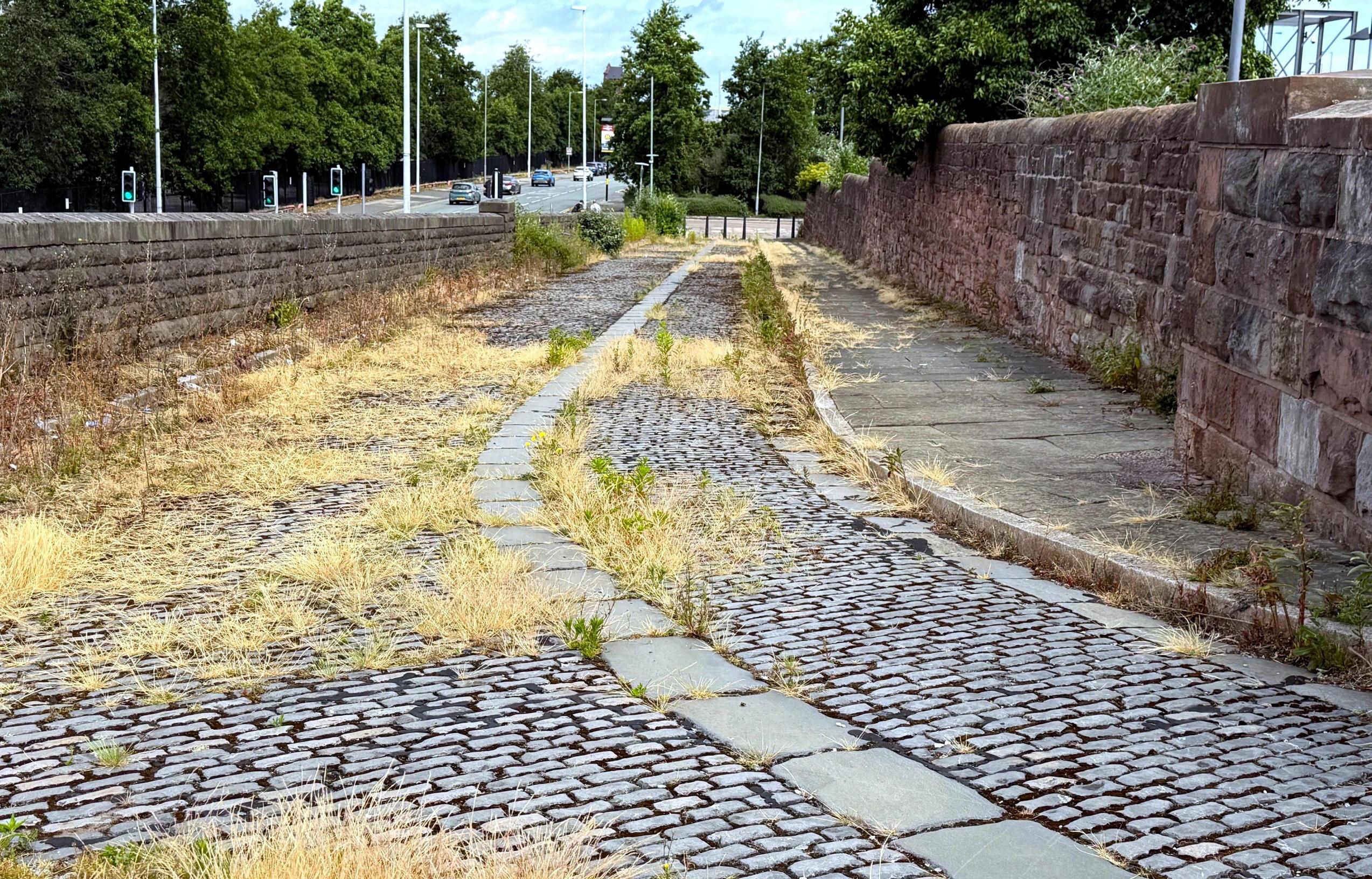
A nearby cobbled bridge, once above some Liverpool Dock lines.
[© Peter Plisner 2026]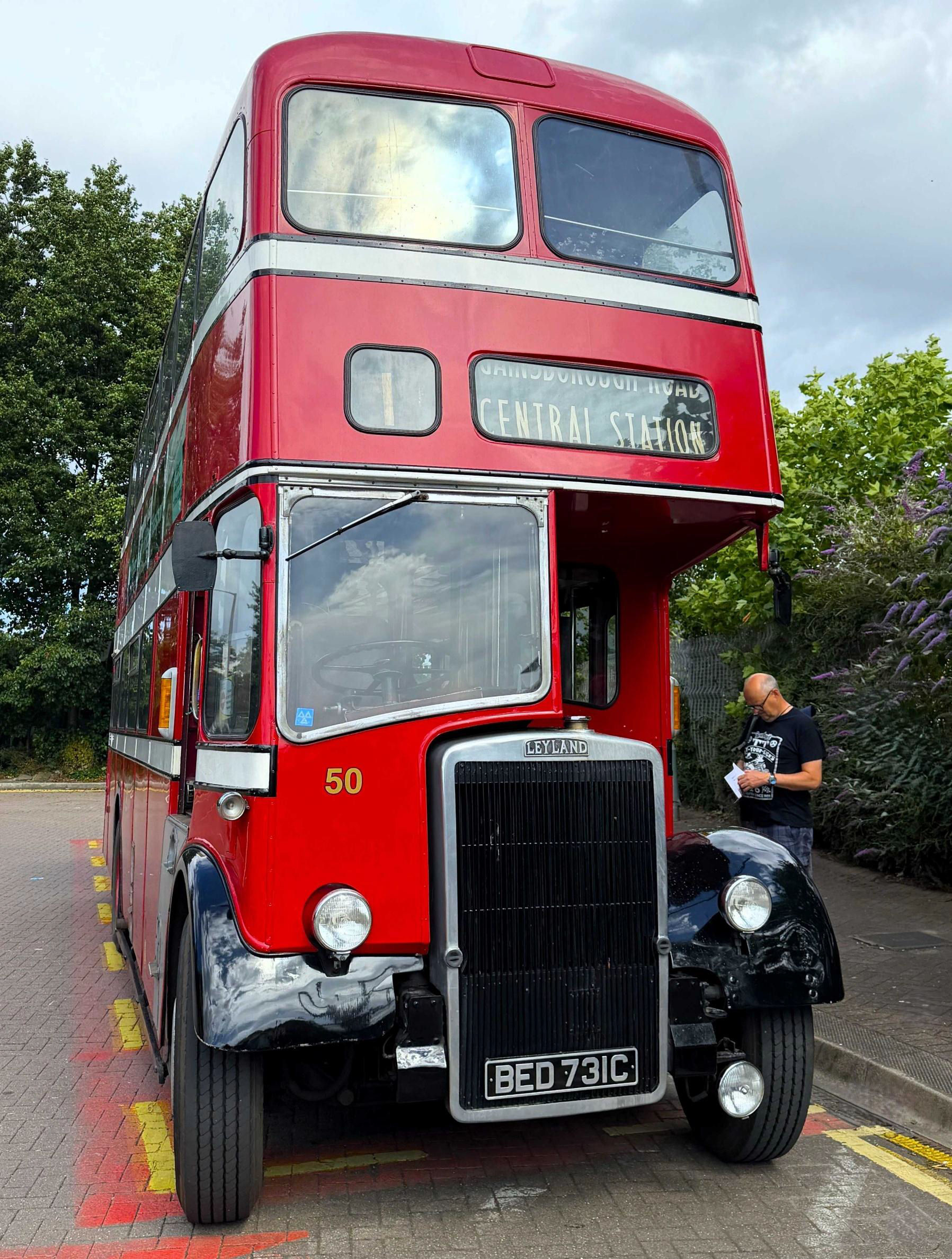
Our vintage Leyland Titan double decker bus, formerly Warrington Corporation No50.
[© Peter Plisner 2026]What a treat it was! A vintage Leyland double decker bus formerly from Warrington. This was provided by the North West Museum of Road Transport. Everyone headed up the stairs to the top deck for the best views. However, it wasn't long before we were heading back down the stairs again for the first proper remnant of the famous Liverpool Overhead Railway (LOR). The southern extension tunnel portal at Herculaneum Dock. Strangely, it was an extension to the LOR but underground! Even more strangely, it was halfway up a sheer cliff face, although Adam's store of pictures helped to explain. At the height of the elevated railway, the tunnel was accessed via a huge lattice bridge that had long since disappeared, along with most of the other parts of the LOR. Small parts of the bridge remain, including cast iron brackets still attached to supporting walls. The tunnel, which was half a mile long and other remains, continue to serve as a reminder of what was a hugely innovative system. The LOR was an amazing piece of railway history which opened in 1893 to help alleviate congestion on the streets of the city. It ran for seven miles along the docks from Dingle in the south to Seaforth & Litherland in the north.
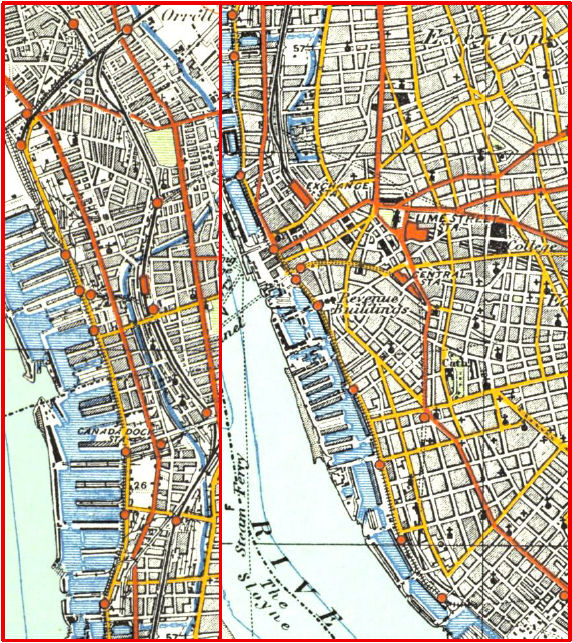
Liverpool 1920; left hand map is the northern section of the Liverpool Overhead Railway (furthest left line by the docks); end of line at Seaforth & Litherland station is top left. The bottom station is the top one on the right hand map. Dingle station [rings a bell] is the other end of line, bottom right.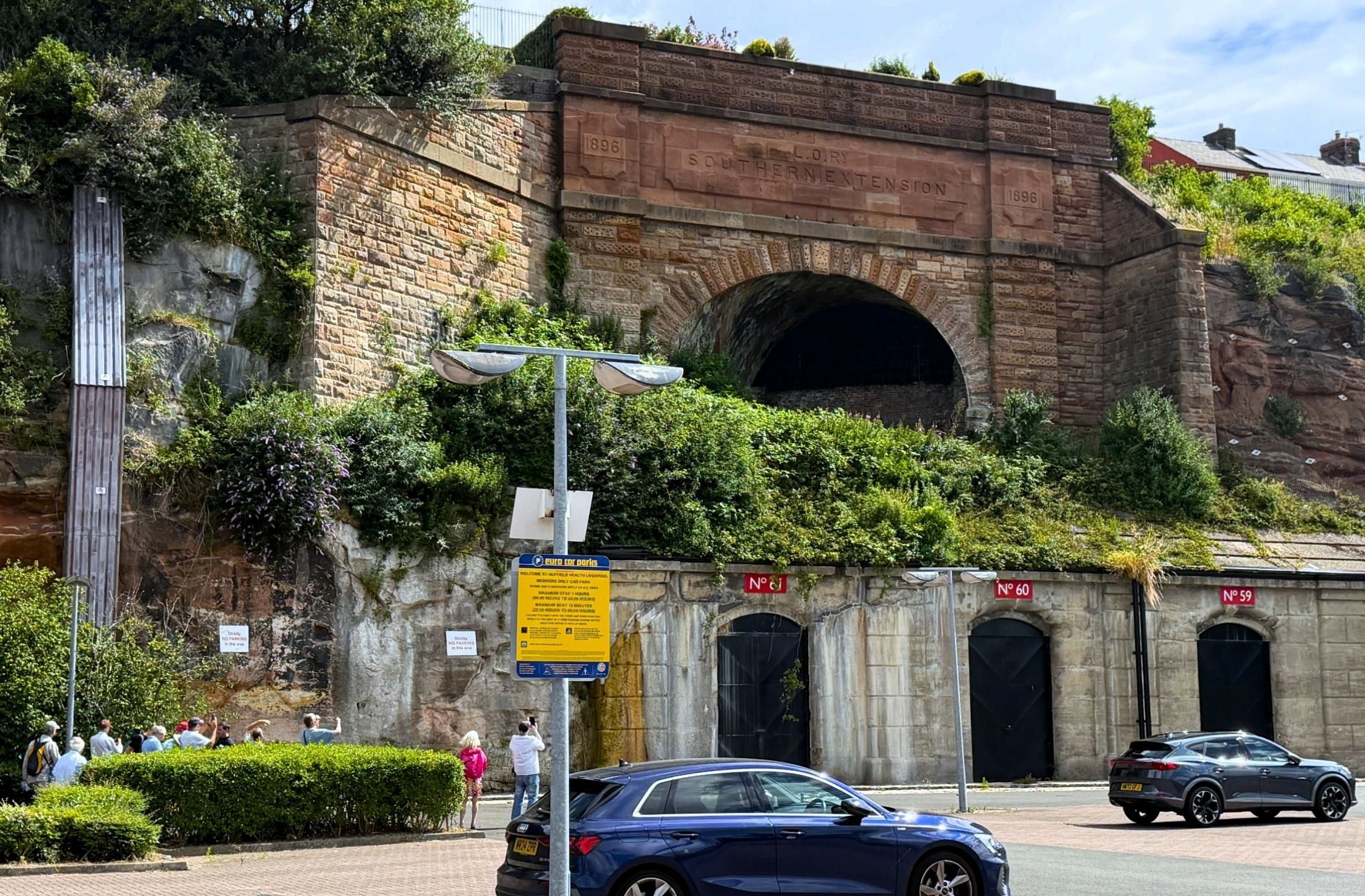
Liverpool Overhead Railway the southern (underground) extension (to Dingle) tunnel portal at Herculaneum Dock.
[© Peter Plisner 2026]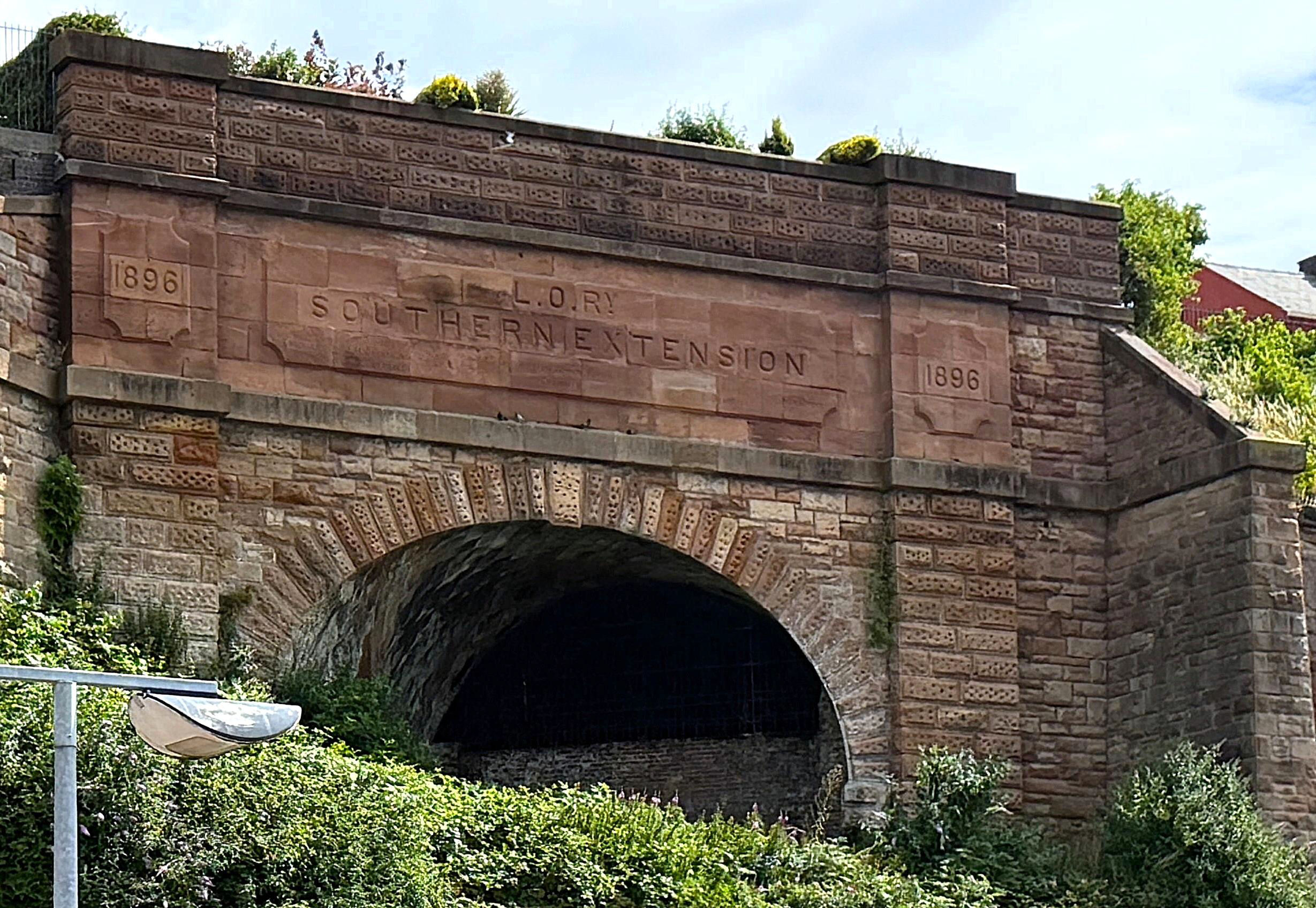
a close up of the tunnel portal at Herculaneum Dock.
[© Peter Plisner 2026]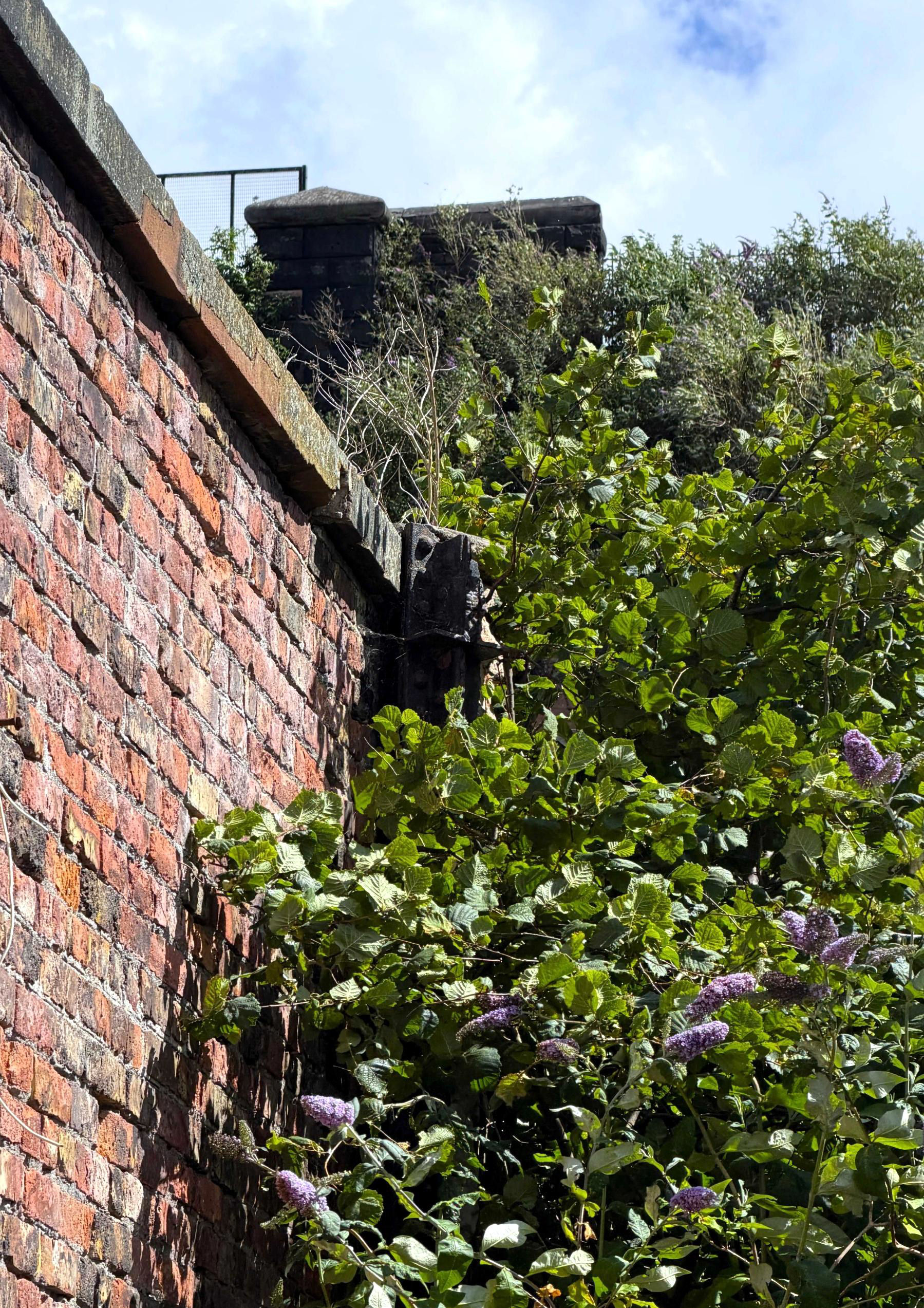
The remains of a (black) cast iron support bracket for the Liverpool Overhead Railway still attached to supporting walls, upper centre.
[© Peter Plisner 2026]According to historian Paul, it was the first to feature electric traction in the region, the first to have colour light signals and the first to install an escalator. Dismantled in 1958, after closing 30 Dec 1956, it was a popular service but, unlike other railways, it never became part of British Railways and was starved of funding. When serious corrosion of its structure was discovered, it was decided to close it.
So, what is left to see of the old railway. From the top deck of the bus, we saw plenty. First some of the old supports encased forever within a wall close to the docks. The tour also took in some of the old dock railways and goods yards, including the site of the old Riverside station (1895-1971) at Princes Dock, which served some transatlantic ships. Almost every railway company had a goods station in the City and there are many unused tracks to be seen amongst the modern buildings that have sprung up since the docks went into decline. Liverpool was an important place for the transfer of commodities in those days, a very profitable part of their business. It was handy being on the top deck of the bus as Paul pointed out the top of an old signal column while we headed for our next location. This was peaking above a wall close to a new building, not far from Princes Dock. The signal column could easily have been removed by the contractors but it remains, a reminder of the past. The tour continued with a look at the famous bascule bridge near Stanley Dock. There we saw yet more remnants of the LOR, including a cast iron base for one of the major supports. A maker's mark showed that it had been manufactured by Francis Morton & Co Ltd (Engineers and Contractors), based in Liverpool. Then close to the new Everton football stadium was more ironwork, clearly best left in place, when the line was dismantled.
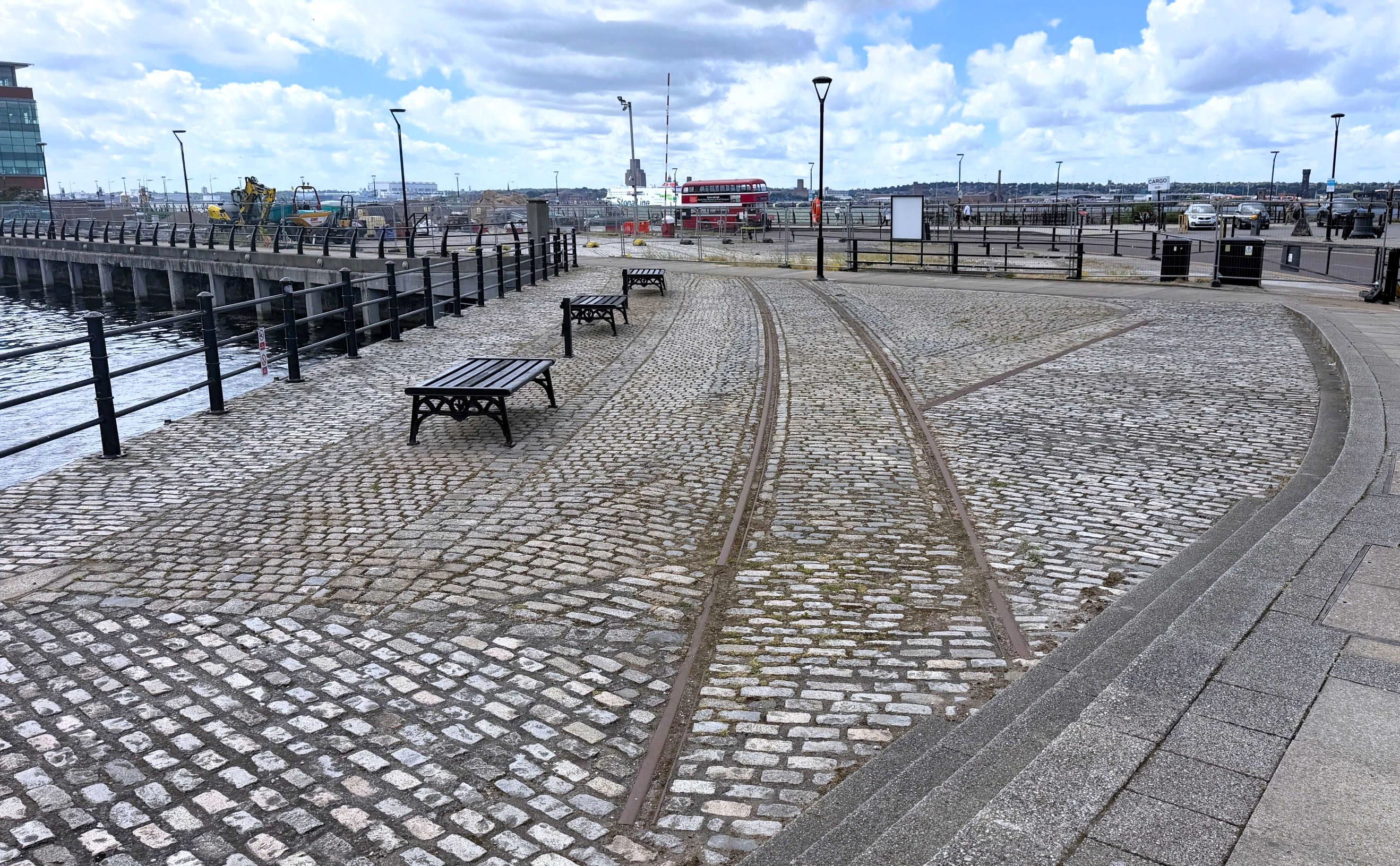
One of the many unused former dock lines retained amongst the modern development.
[© Peter Plisner 2026]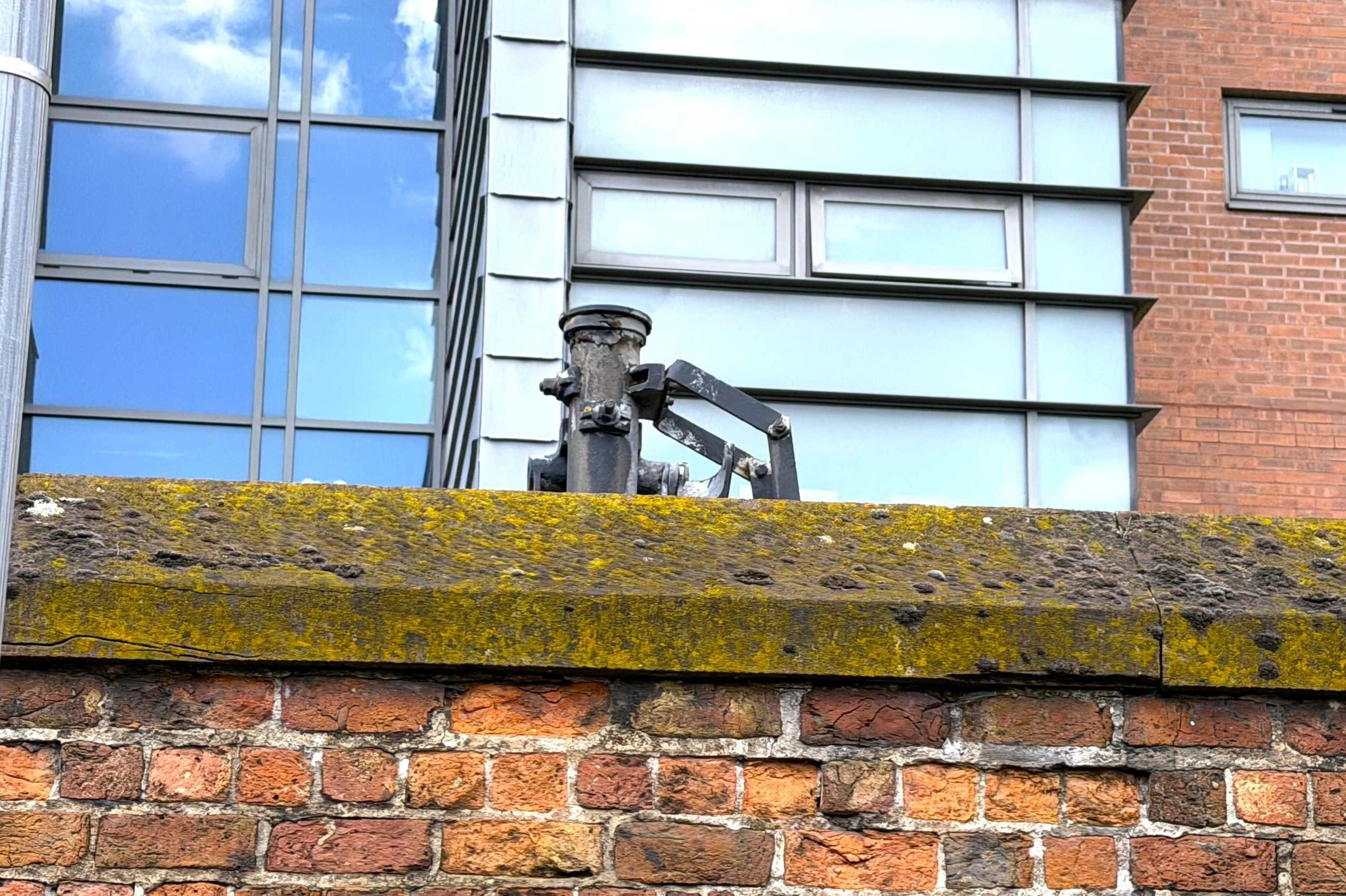
A former signal column sticking out above the wall, taken from the top deck of our vintage bus 'on tour'.
[© Peter Plisner 2026]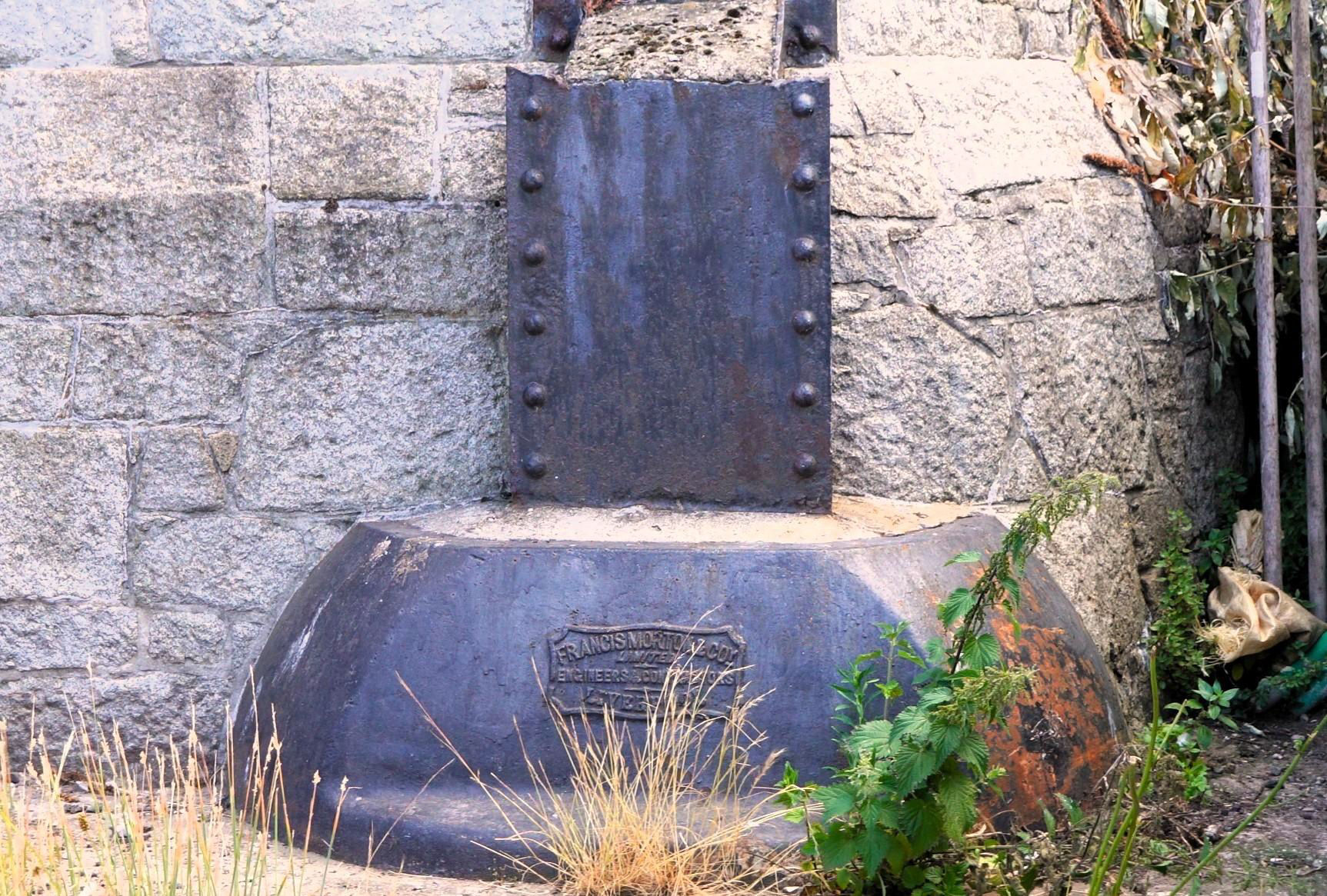
A cast iron base for one of the major Liverpool Overhead Railway supports, note the manufacturer's mark towards the bottom.
[© Peter Plisner 2026]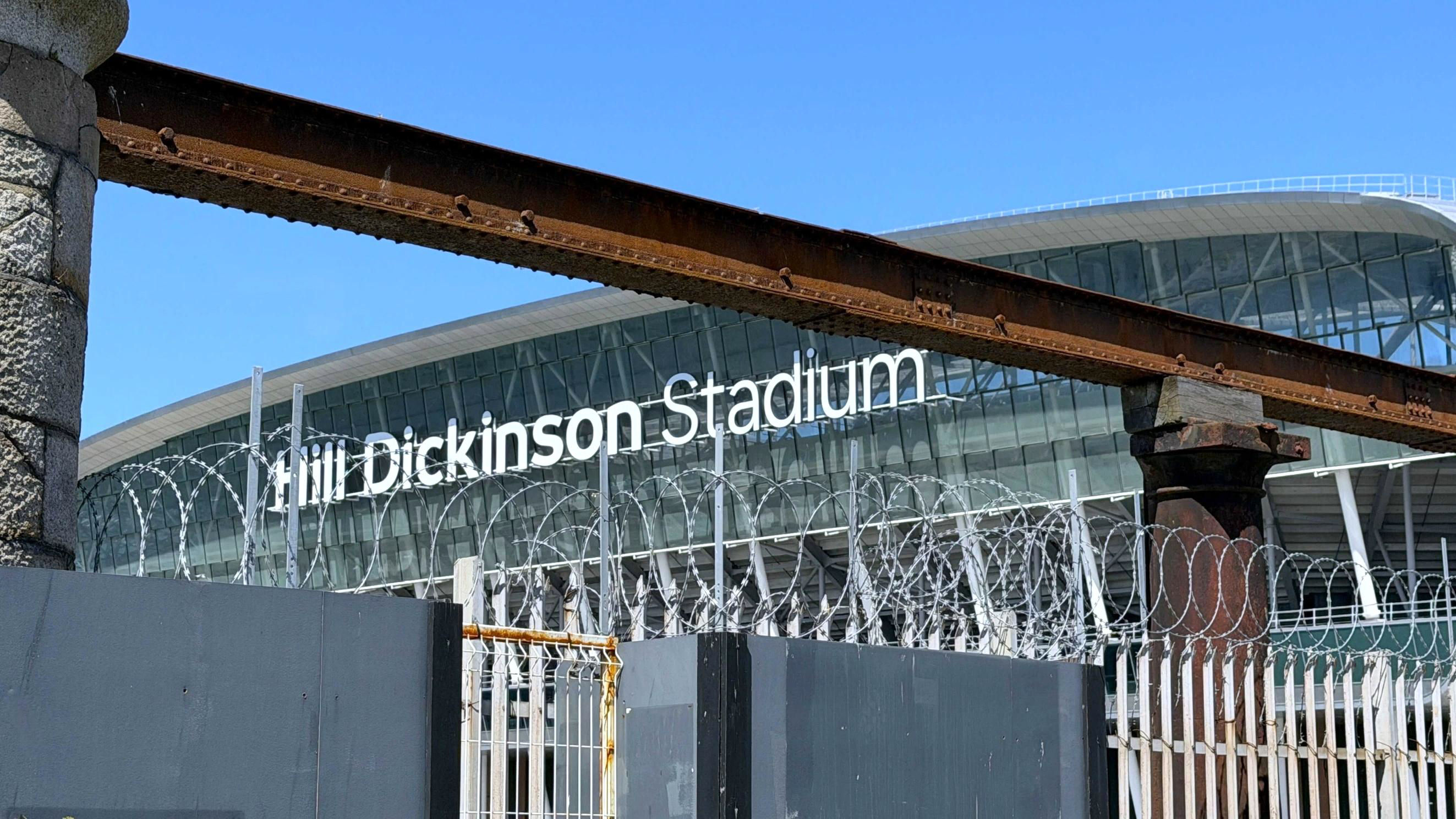
Near Everton's new football ground is some residual ironwork from the Overhead Railway which has been left in place at Nelson Dock.
[© Peter Plisner 2026]Having learnt much about the LOR, the next part of the tour allowed us to admire some other marvels of Liverpool's past. First stop was a flight of locks close to the old Tobacco Dock and the colossal but disused Tobacco Warehouse. The Grade II listed Stanley Lock Flight was stunning and the frequent passing yellow Class 777 modern trains on a viaduct over the canal was an added bonus. Next on the tour we had a quick look at the Hawkshaw Bridge, a stunning structure, part of the 852 yard Waterloo Goods tunnel, one of a series of underground city routes specifically design to access the docks area.
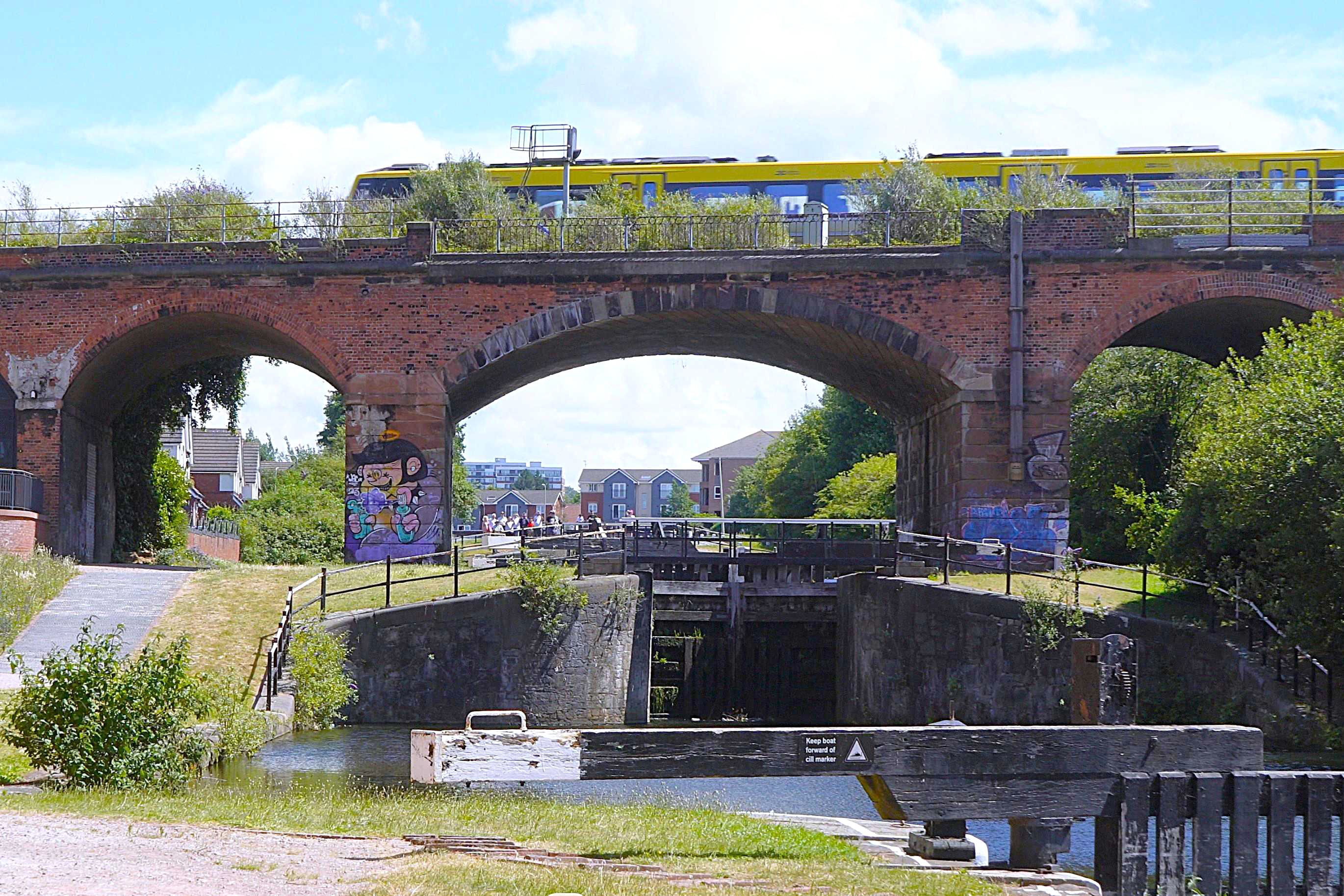
The Grade II listed Stanley Lock Flight links the Leeds & Liverpool Canal (ahead) with Stanley Dock and regulated water levels in the docks.
[© Peter Plisner 2026]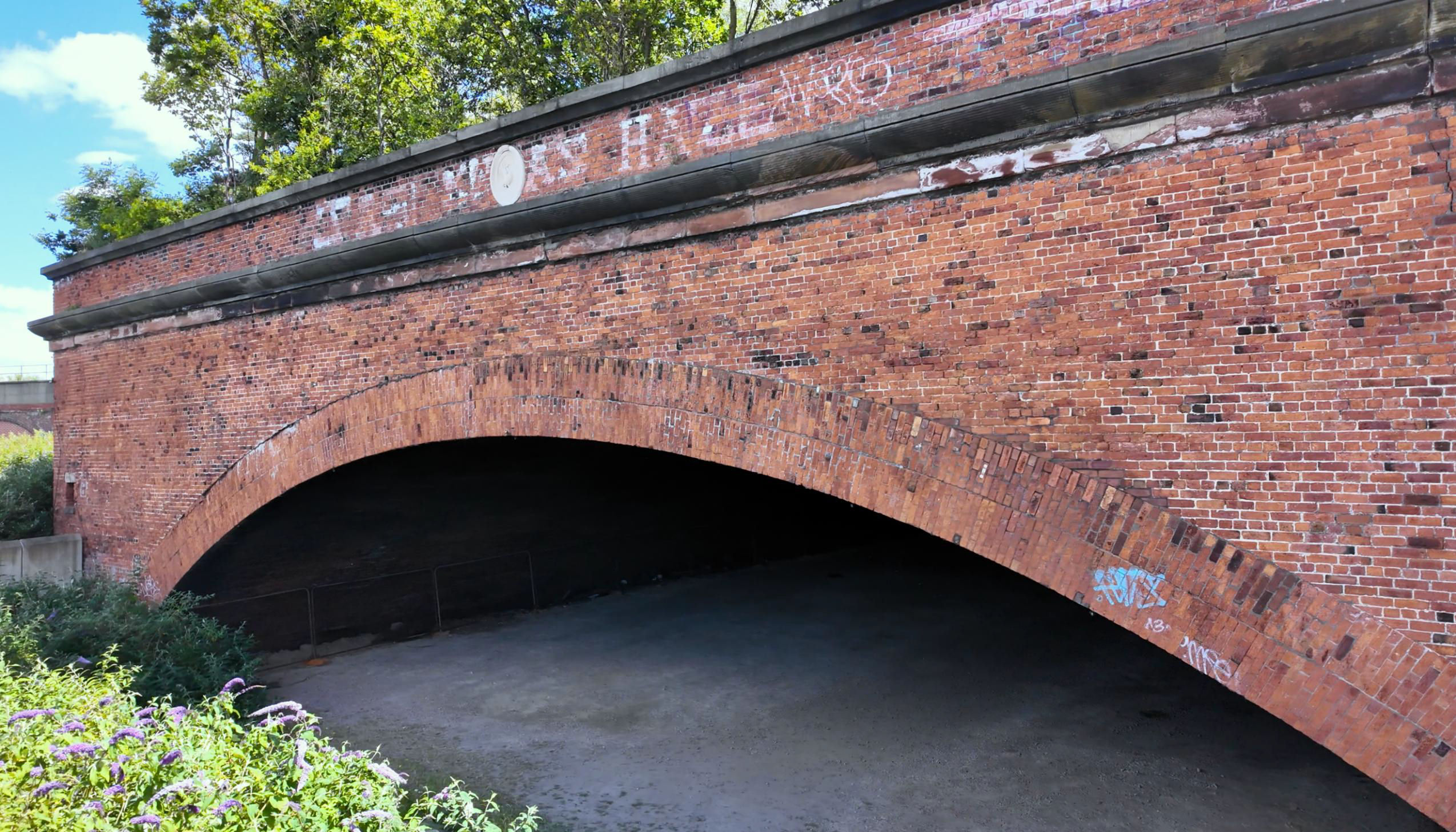
Hawkshaw Bridge, a stunning structure that formed part of the Waterloo Goods Tunnel, the former rail access to Waterloo Dock.
[© Peter Plisner 2026]Following this was the site of the old Exchange Station. The Lancashire & Yorkshire Railway (L&YR) and the East Lancashire Railway needed the station (opened 13 May 1850). The station, once the biggest in the region with ten platforms, suffered bomb damage during WWII and never really recovered. It closed from 30 Apr 1977 (replaced by Moorfields Low Level OP 2 May 1977). Where the train shed was is now a car park, with some signs of its past if you look carefully. However, walk around to the front of the old station and the façade still exists as part of an office development. The old station gates are still there too, as is a bust of John Pearson, a former Liverpool Town Mayor (1871-72) and Chairman of the L&YR.
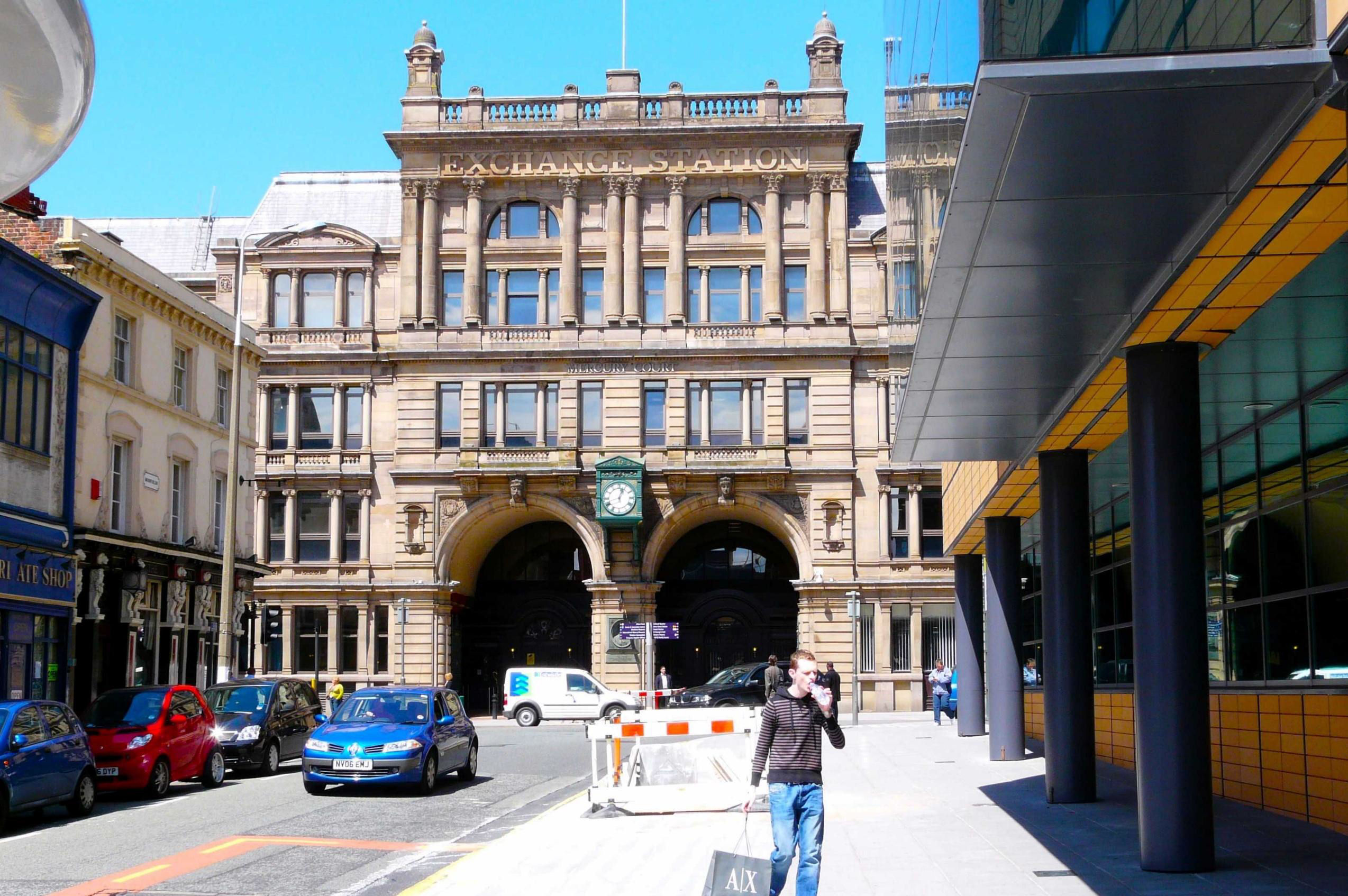
The frontage of Liverpool Exchange station (closed to passengers from 30 Apr 1977) taken on 20 Jun 2008.
[© Angus McDougall 2008]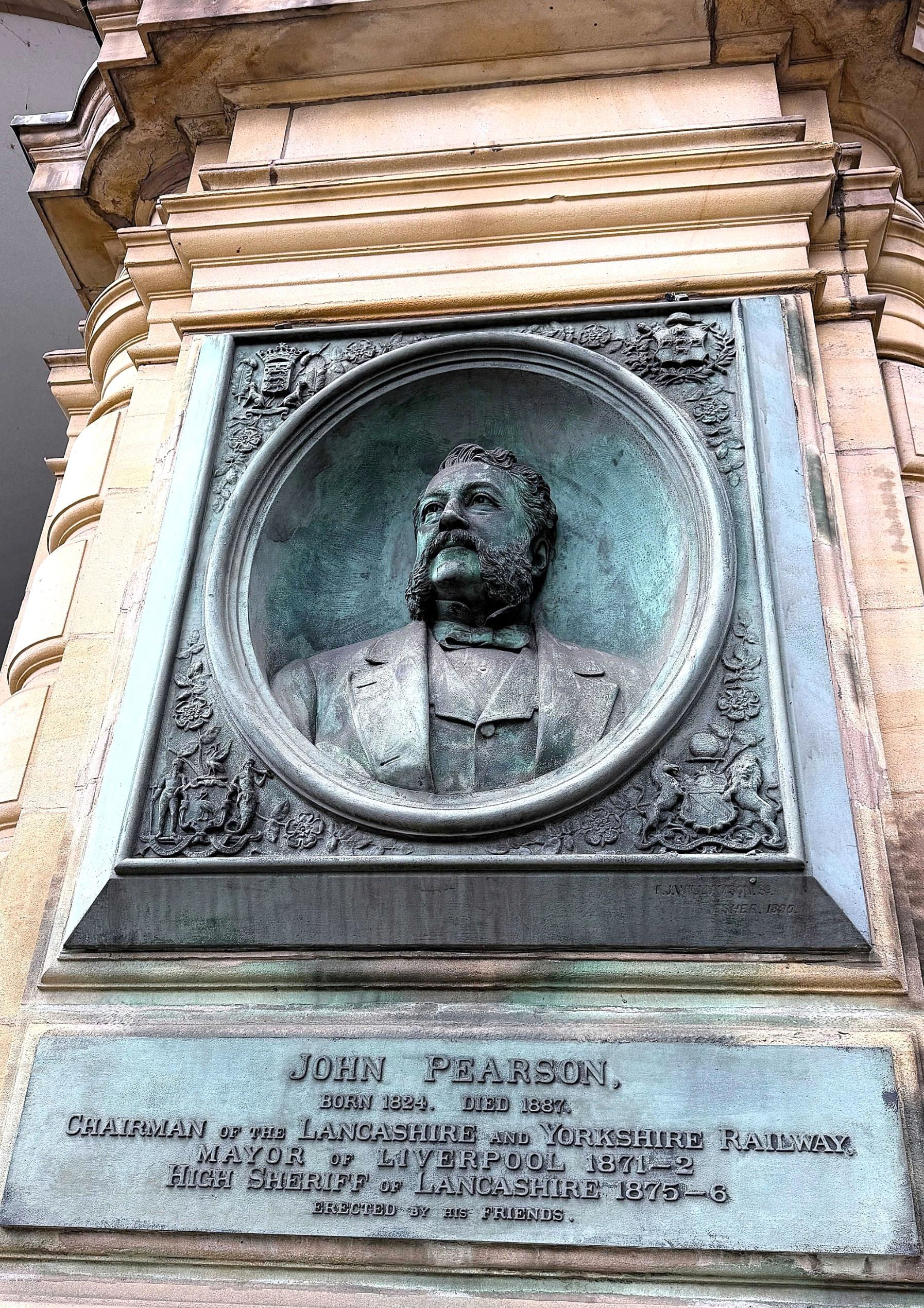
Liverpool Exchange; bust of John Pearson, once Chairman of the Lancashire & Yorkshire Railway and a Mayor of Liverpool (which became a City in 1880).
[© Peter Plisner 2026]With the vintage bus departed, we headed for the Merseyrail system, from Moorfields station going via Liverpool Central. Our next stop was Birkenhead Central station and a chance to view several wonders of the area's railway past, starting with the station itself, which was headquarters of the Mersey Railway. The company name still adorns the building. Around the corner were the sad remains of the Great Central Railway Birkenhead Grange Lane station, terminus of the Chester & Birkenhead Railway. It first appeared in Bradshaw in Jun 1855 and closed 7 Dec 1953. The building frontage survives but only just!
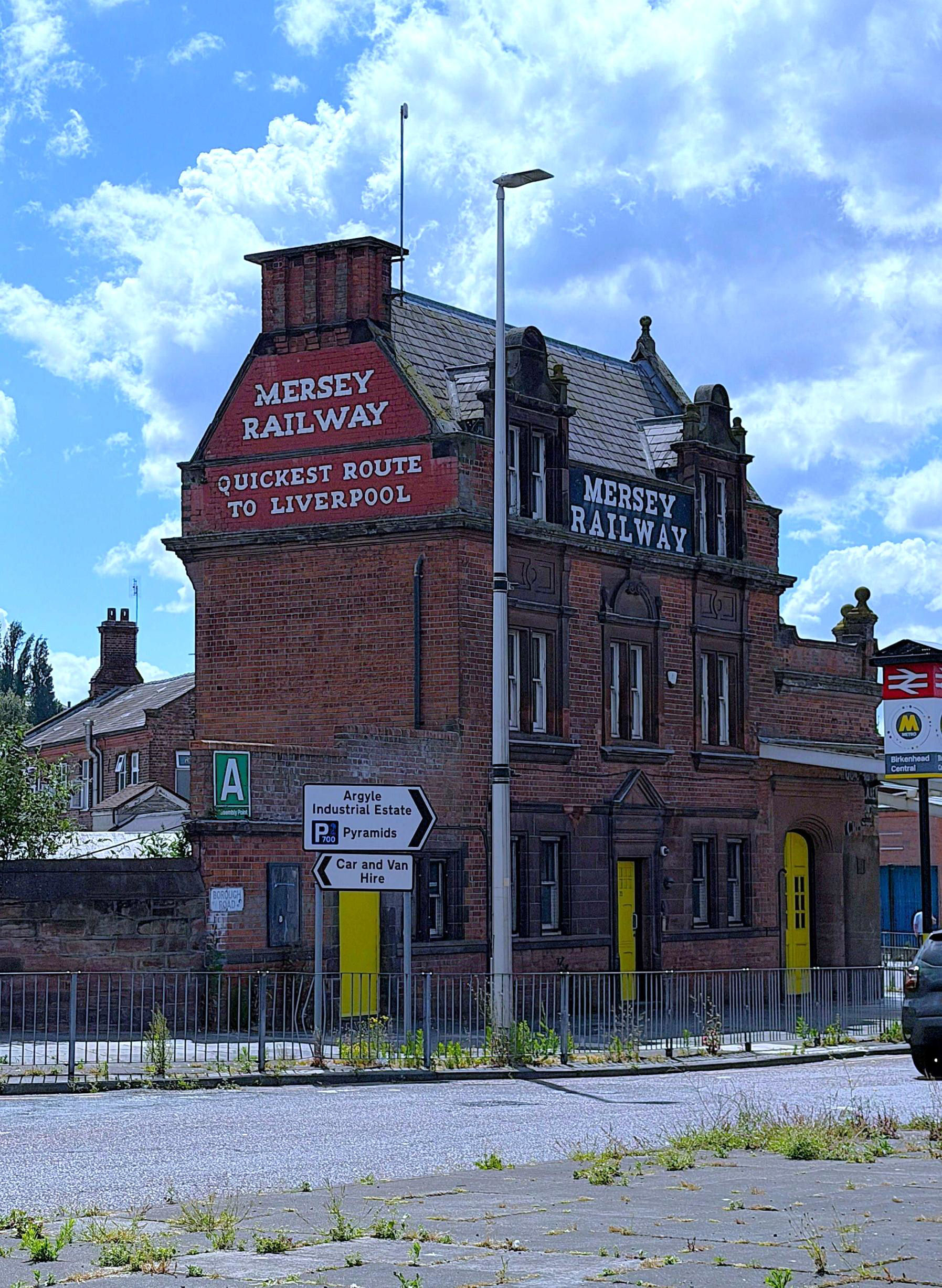
Birkenhead Central station, once the headquarters of the Mersey Railway.
[© Peter Plisner 2026]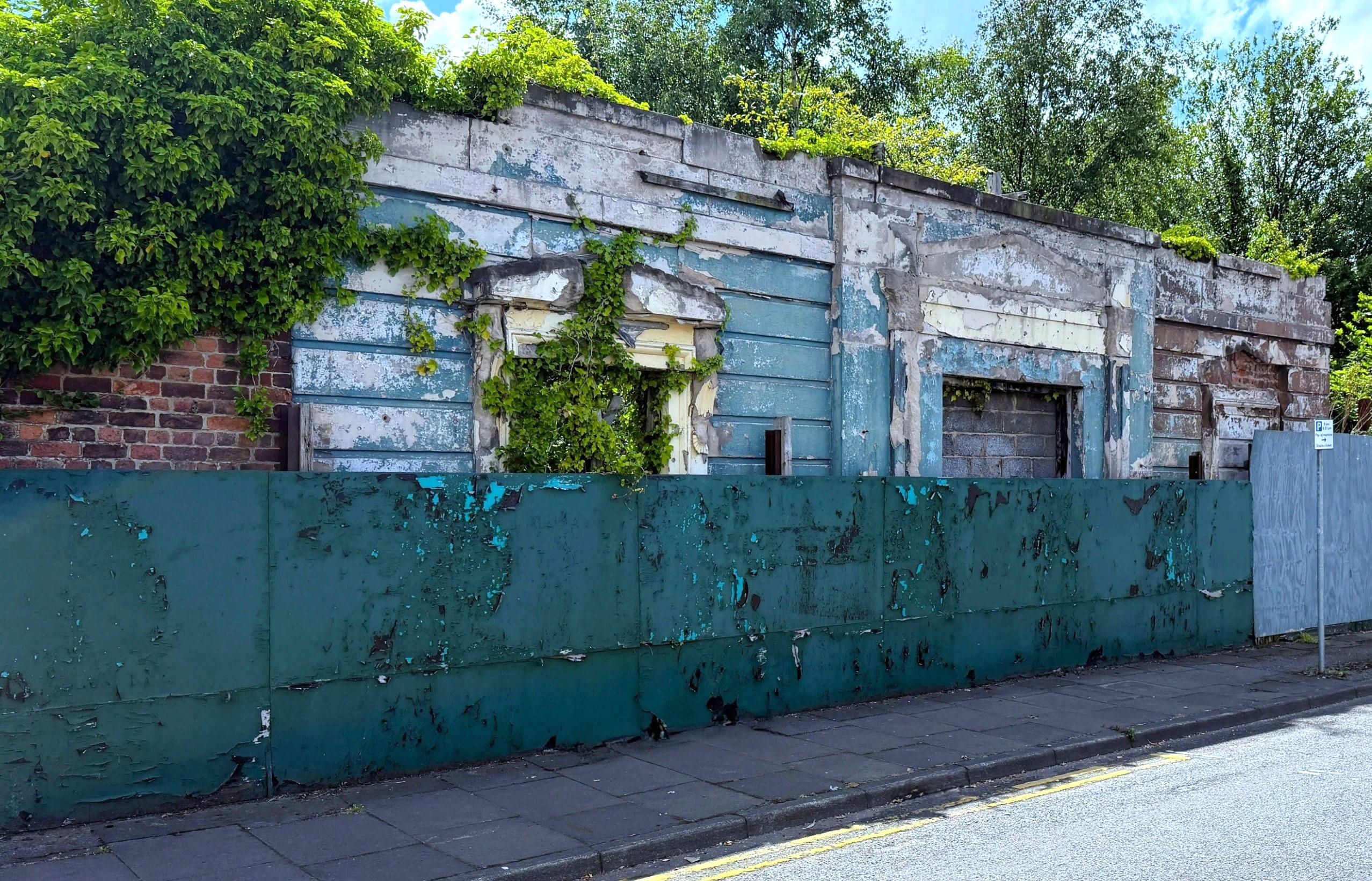
The sad remains of Grange Lane station (closed to passengers from 7 Dec 1953), the former terminus of the Chester & Birkenhead Railway.
[© Peter Plisner 2026]Next, it was back onto the trains to Birkenhead Hamilton Square station and its massive water tower, used to provide hydraulic power for the station lifts. However, that wasn't what we were there to see. Close by was another important station that has virtually disappeared. Birkenhead Woodside was a major mainline railway terminus and cross-Mersey travel hub that operated from 31 Mar 1878 until 5 Nov 1967. Apart from its old ornate wall cornices, you wouldn't know it used to be there. The bulk of the site now seems to be used as a holding area for buses adjacent to the ferry. The tour was almost at an end, aside from a quick look at two further old railway gems. The first related to the Mersey Railway Tunnel, part with 1:25 gradient, a pioneering underwater railway crossing connecting Liverpool and the Wirral Peninsula under the River Mersey. Opened in 1886, as you would expect for a tunnel under a river, water does enter it and, at either side, there are pumping stations. Both stations housed powerful marine pumping engines which remove around 10,000 gallons of water a minute from the tunnel. The buildings they are housed in are easy to find, especially on the Liverpool side. Its red brickwork is easy to spot but again, unless you know what it is, you might pass it, without giving it a second thought.
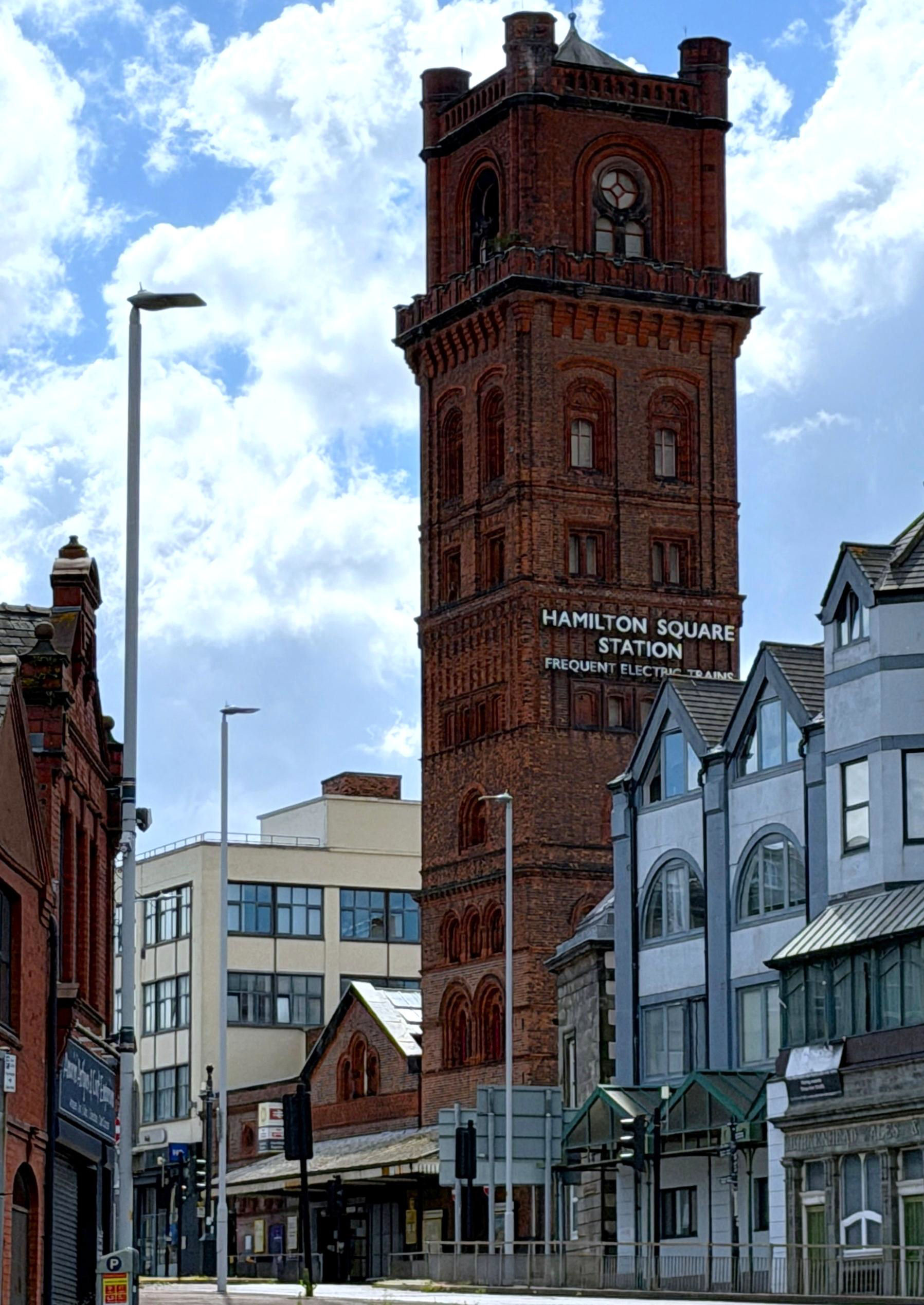
Hamilton Square station and its massive water tower, previously used to provide hydraulic power for the station lifts.
[© Peter Plisner 2026]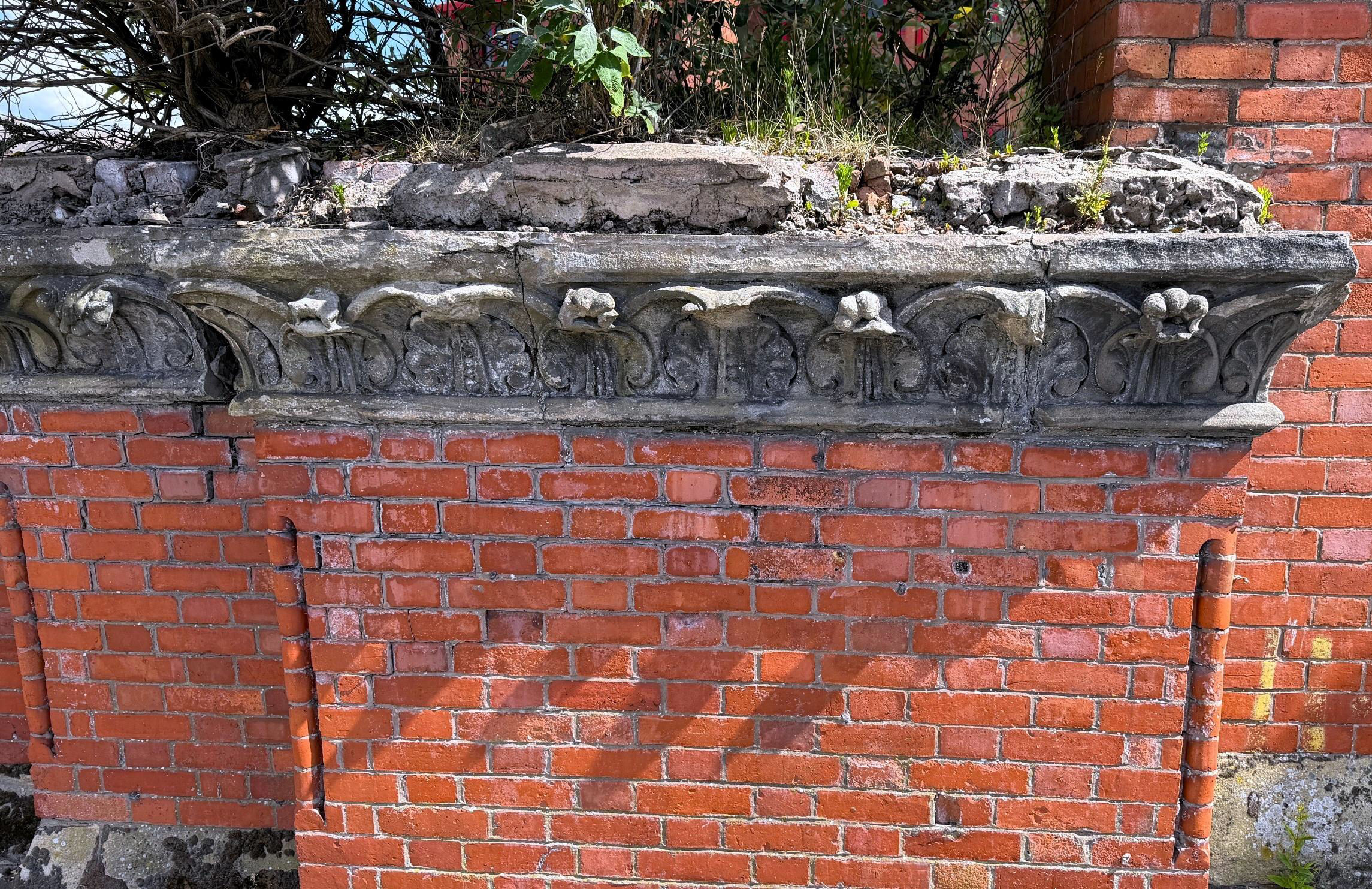
The only remains of the once important five platform Birkenhead Woodside terminus, these are ornate wall cornices.
[© Peter Plisner 2026]The final port of call (pardon the pun) was the old Great Western Railway warehouse in the Royal Albert Dock. It's an unusual building in that, although owned and operated by the Great Western Railway, that company didn't actually run trains to Liverpool. Before heading home, there was a chance to have a quick look at the 2021 bench commemorating the overhead railway in front of the Liver Building. It featured a map of the route and several old pictures of what it looked like. The bench also featured its nickname the 'Docker's Umbrella'. Everywhere you look in Liverpool, there is some of the City's railway heritage hiding in plain sight. It was a tour of discovery and one I am so pleased to have been a part of.
https://www.youtube.com/watch?v=2OFy5O4DLO0 is a 17 minute video of the Liverpool Overhead Railway operating.
https://www.youtube.com/watch?v=RFewg6Wv_28 is a different 36½ minute video of the Railway.
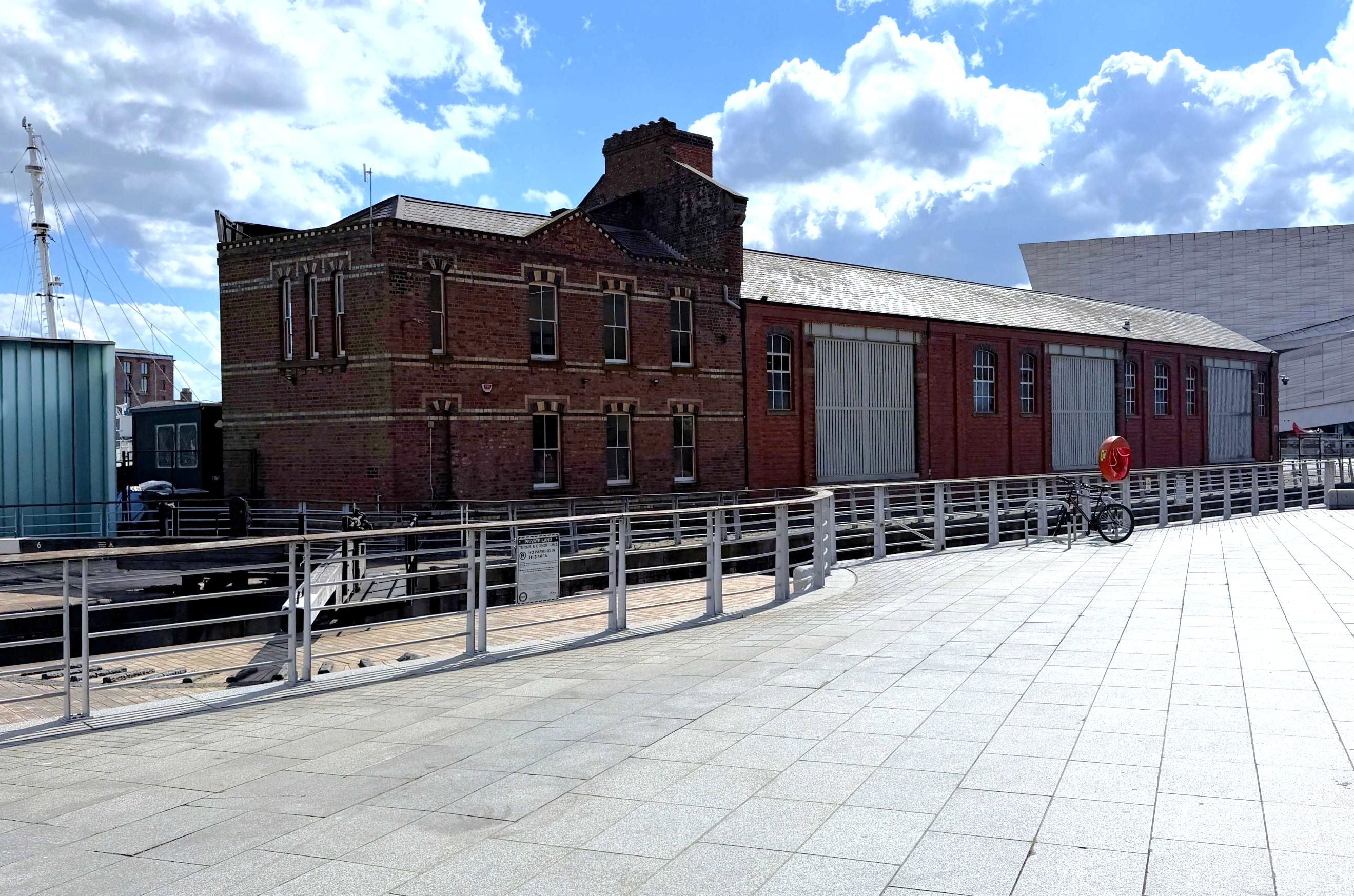
The former Great Western Railway warehouse in the Royal Albert Dock (the GWR didn't run trains to Liverpool).
[© Peter Plisner 2026]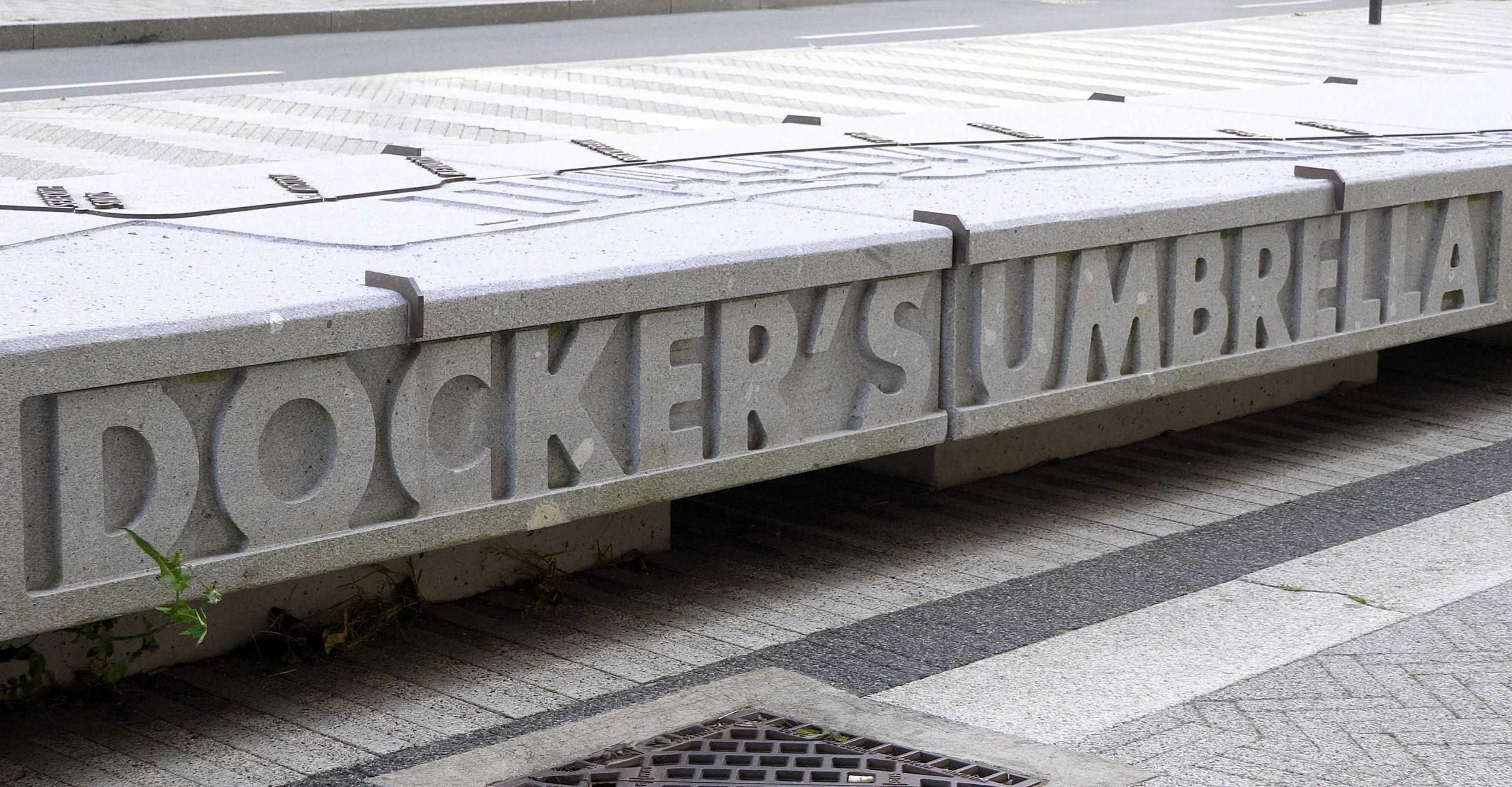
The bench, installed in 2021, commemorating the Liverpool Overhead Railway at the site of the Railway's Pierhead station.
[© Peter Plisner 2026]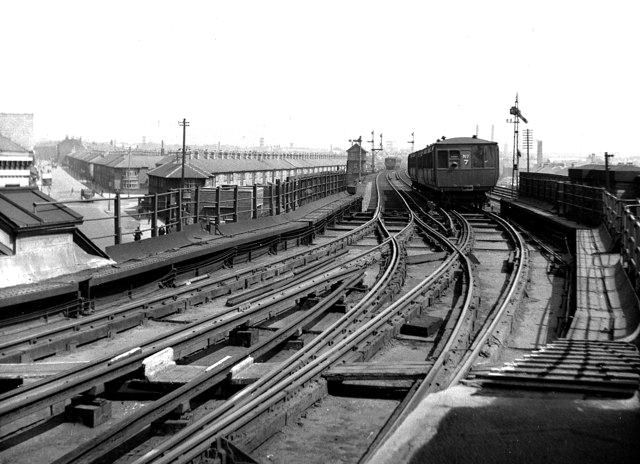
A southbound Liverpool Overhead Railway electric train approaches Seaforth Sands station in May 1951
[© Dr Neil Clifton 1951]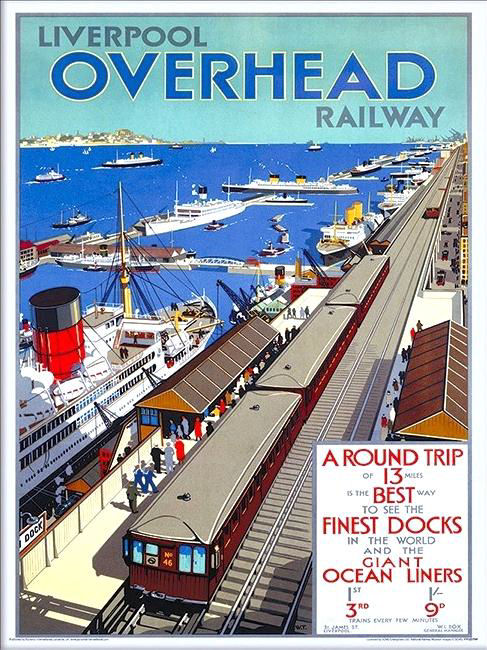
A 1923 poster; what they don't tell you is that Third Class has wooden seats. is a seven minute film of the tour on my YouTube 'Transport Matters' channel.
Other videos at
https://www.youtube.com/@transportmatters-ccl
Our tour raised £400.00 for the North West Museum of Road Transport which provided the very appropriate transport. Thanks to them, Adam Turner and Paul Wright for all the excellent arrangements.