Pecorama Visit
Friday 8th May 2026
Report by Michael Yardley
The Branch Line Society
Guest

It was hearing about the variety of fixtures, especially signal box visits, which prompted me to rejoin our Society a few years ago, many years after allowing my membership to lapse. Unfortunately, all the fixtures of interest have been on dates I couldn't manage, too far away to be practicable, or fully booked when I heard about them. So, the announcement of the visit to Pecorama, well under an hour from home, was most welcome. I had visited several times over the years with my children or, more recently, grandchildren and was dismayed to learn that it would not be opening to the public this year. However, I was encouraged during my drive over the hills to see a billboard advertising three Gala Weekends coming up (BLN 1494.1201).
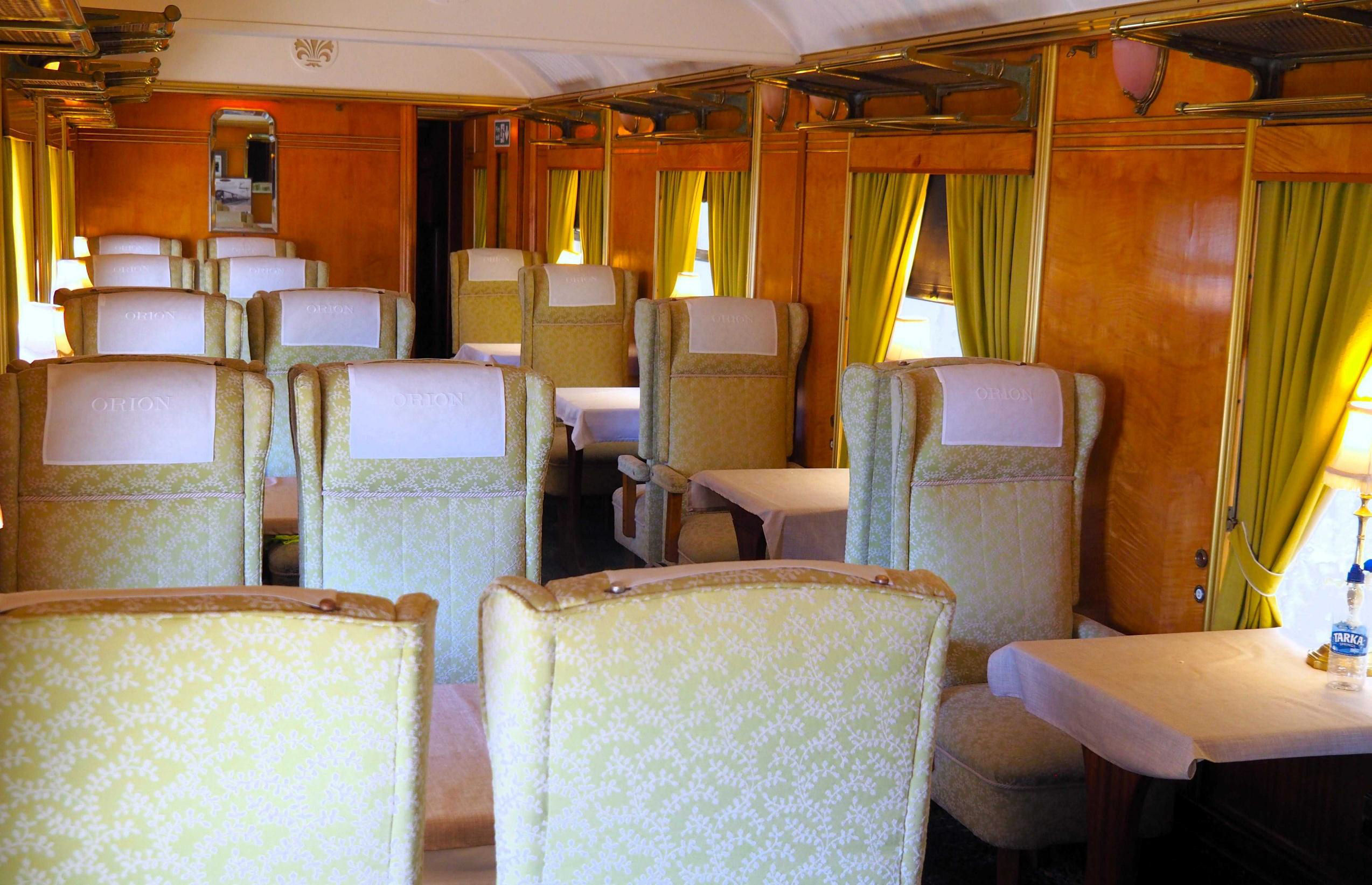
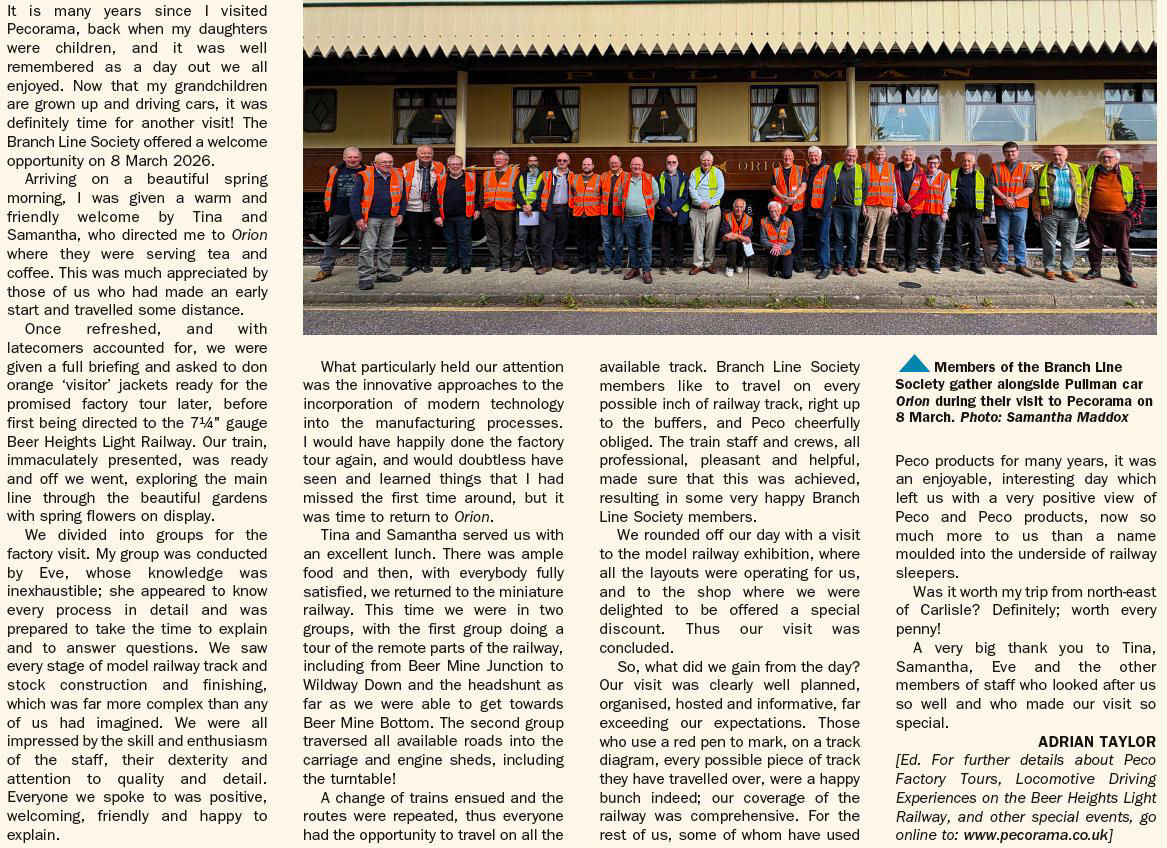
25 members presented themselves on a fine morning outside the Reception, to be ushered into 'Orion', a Pullman car formerly used on the Golden Arrow, where we were plied with hot beverages. We were presented with a disclaimer form to sign (relating to the tour, not the beverages) and issued with Hi-Vis vests. After a group photo outside 'Orion', we were invited to form four groups for the factory tours.
My group, distinguished by yellow Hi-Vis, was welcomed by Tim, Head of Manufacturing, who gave us a brief description of PECO. The name is from Pritchard Patent Product Co Ltd. Sydney Pritchard started it in 1946, just making couplings for model railways at his small cottage in Devon. It came as a surprise to most, if not all, of us to learn that the largest contribution to the economy of South West England is not tourism but manufacturing. With around 135 employees on the site, PECO is clearly a major employer in such a rural area, as well as supporting suppliers. Unusually these days, everything is made in England! Much of the production goes for export. Recruitment can be difficult, especially for toolmakers at present. There are bespoke machines for some of the work, most are designed and built in house.
We were taken round the different units in which the various aspects of production of track, buildings and rolling stock (but not locomotives) are carried out, including the former Soft Play Area. This was taken over during the Pandemic enforced public shutdown for assembly work for staff to socially distance. We saw different stages in the manufacture of track and pointwork, much of which is done by hand, requiring great dexterity in handling the tiny components, especially in the narrower gauges. The number of different moulds for the variety of point options for various gauges is impressive. It was noticeable how most of the workers were female (in general terms, more suited to the work, they said).
Rail to the variety of different specifications is currently supplied in large coils, formed from nickel-silver wire. The longstanding supplier recently decided to cease production of rail, so an interim supplier has had to be found but machinery to make rail onsite is about to be installed. We were shown the machines which straighten rail from the coils and cut it to length, as well as one which inserts rail on to the plastic injection-moulded sleepers for straight lengths.
Lengths of rail for items such as point blades are bent to shape in a hydraulic press using a large selection of templates, all constructed in house by their toolmaker (who is looking for apprentices).
In another area, we saw a rapid three dimensional laser printer which applies detail to items, in this case N-gauge 4-wheel carriage bodies. It is computer controlled and, with the programme running, can be left to get on with it. The principle is the same as computer printing, producing fine scale detail. We also saw the toolmakers' shop and some of the machine tools producing items like moulds but the toolmaker had a day off. All the staff we met were welcoming and happy to talk about their work. They came across as one big 'happy family'. They do not stay on the same task continuously but rotate to provide variety.
http://www.minorrailways.co.uk/trackplans/beerheights.pdf is Peter Scott's plan of the railway here.
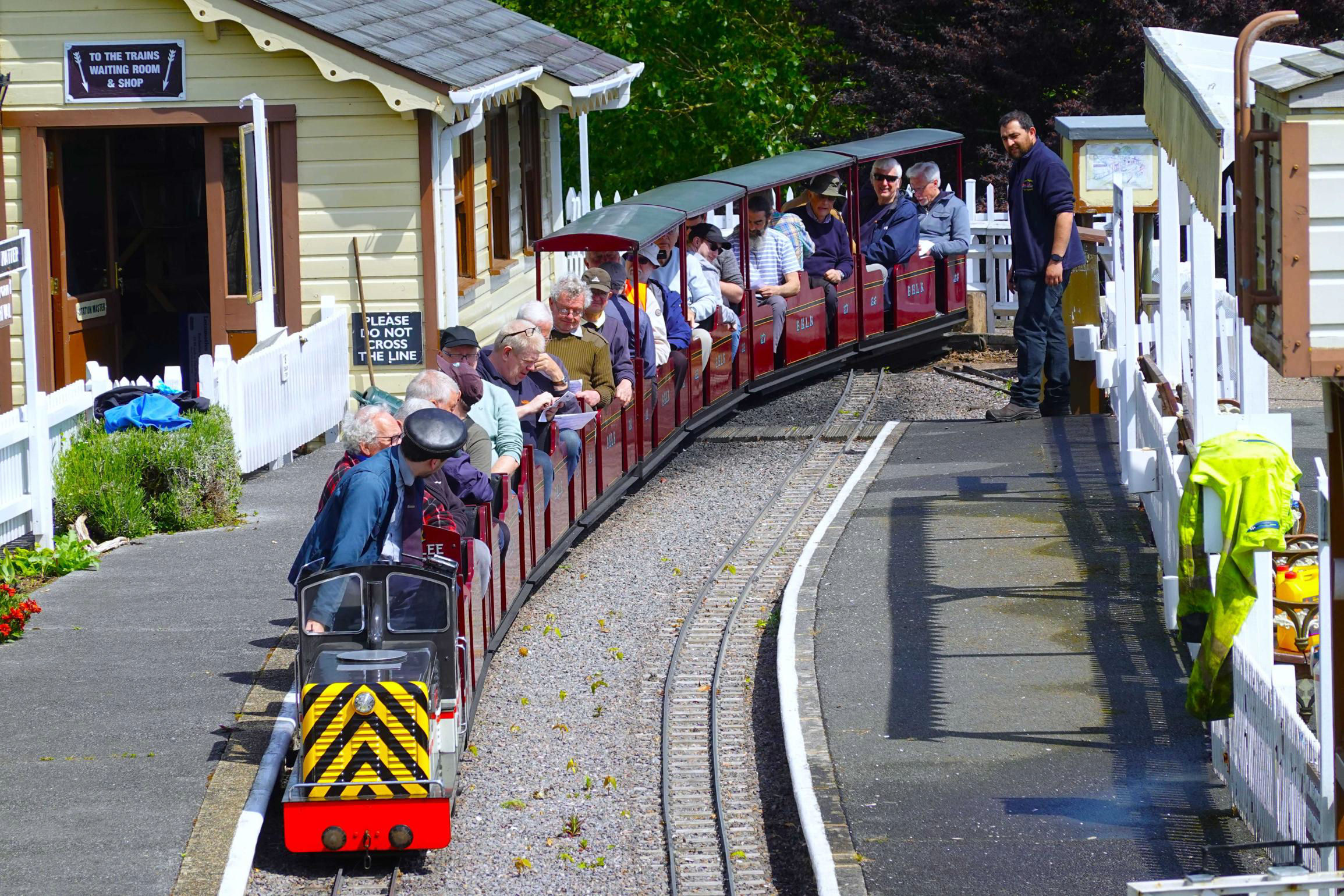
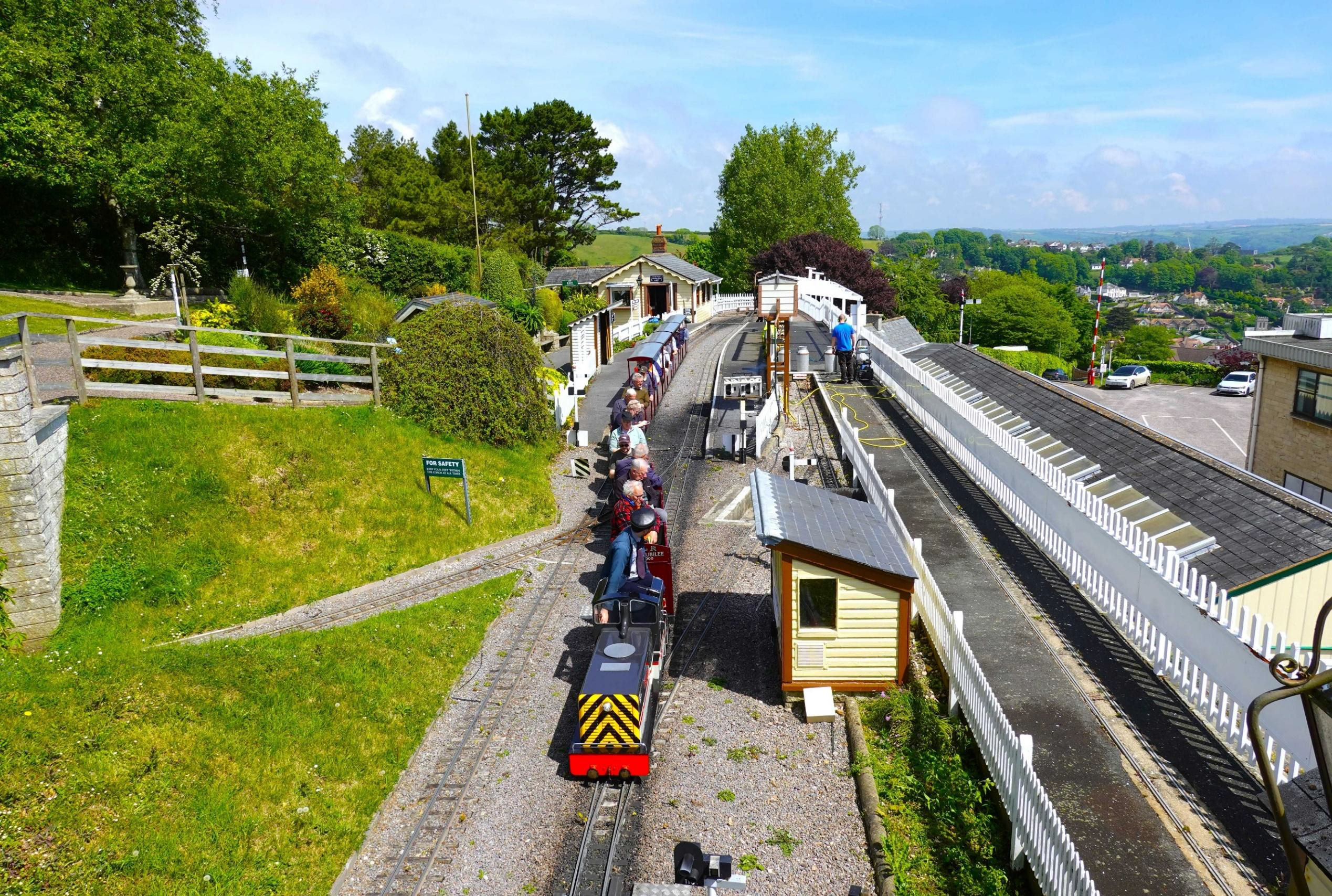
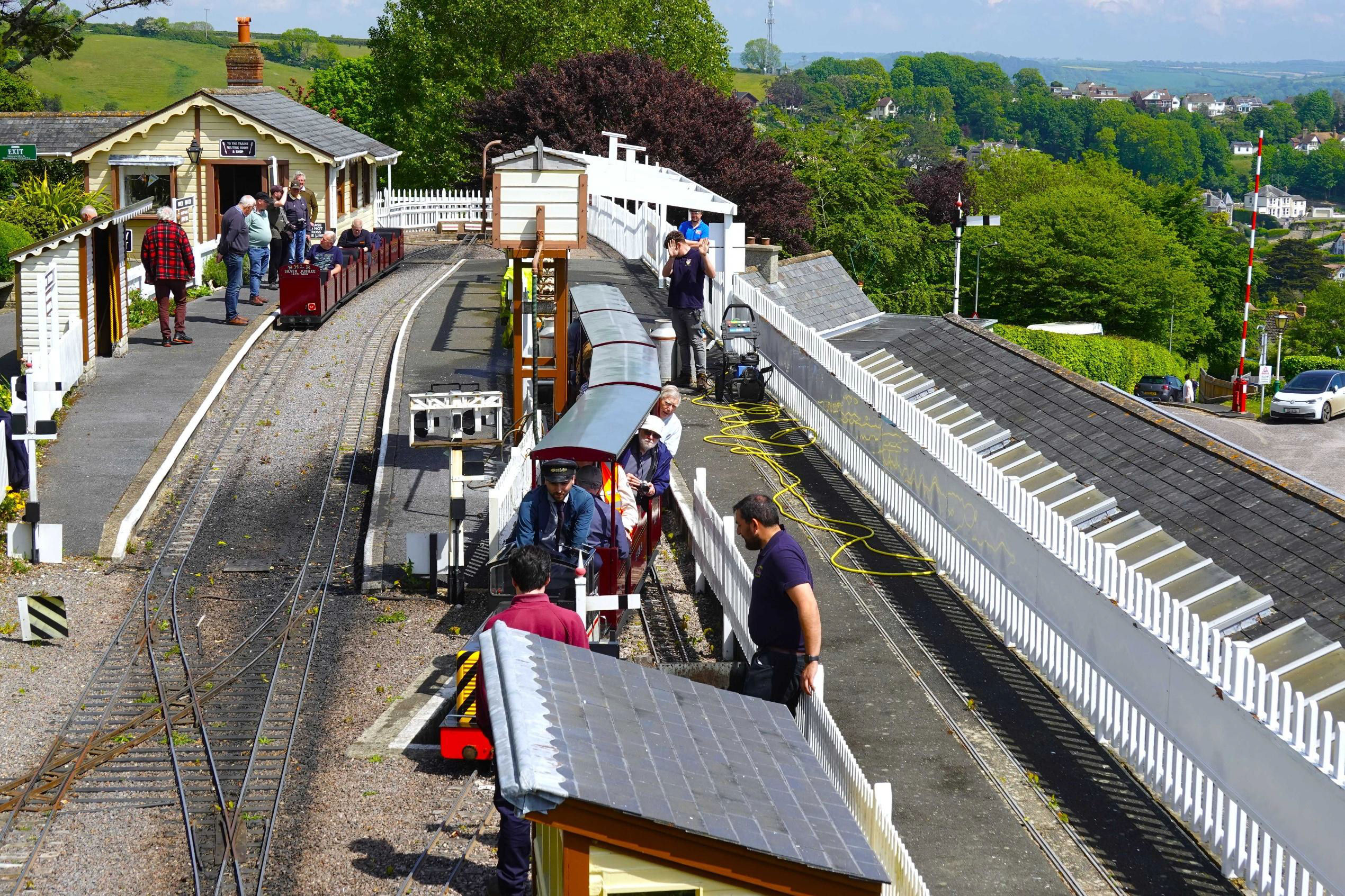
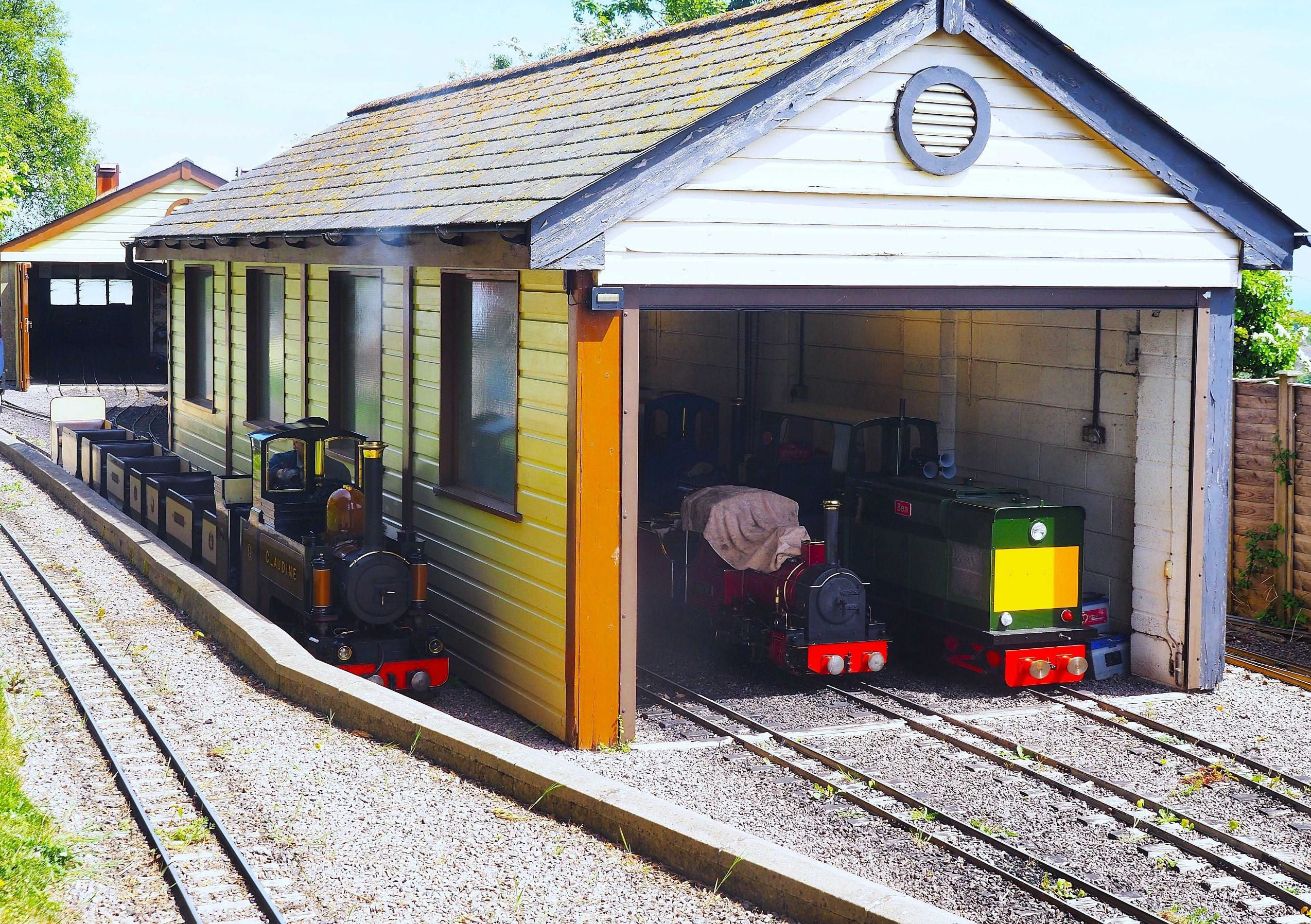
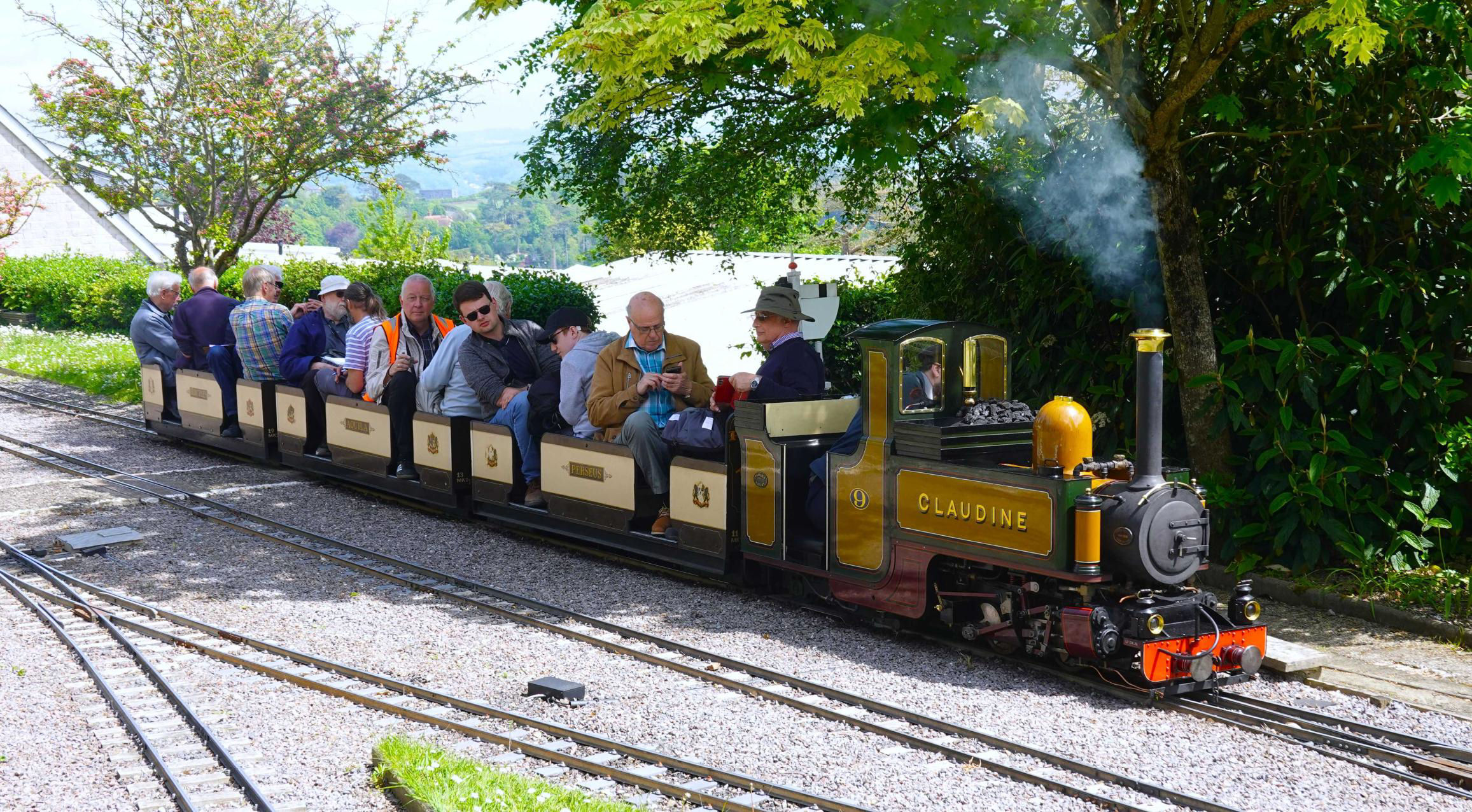
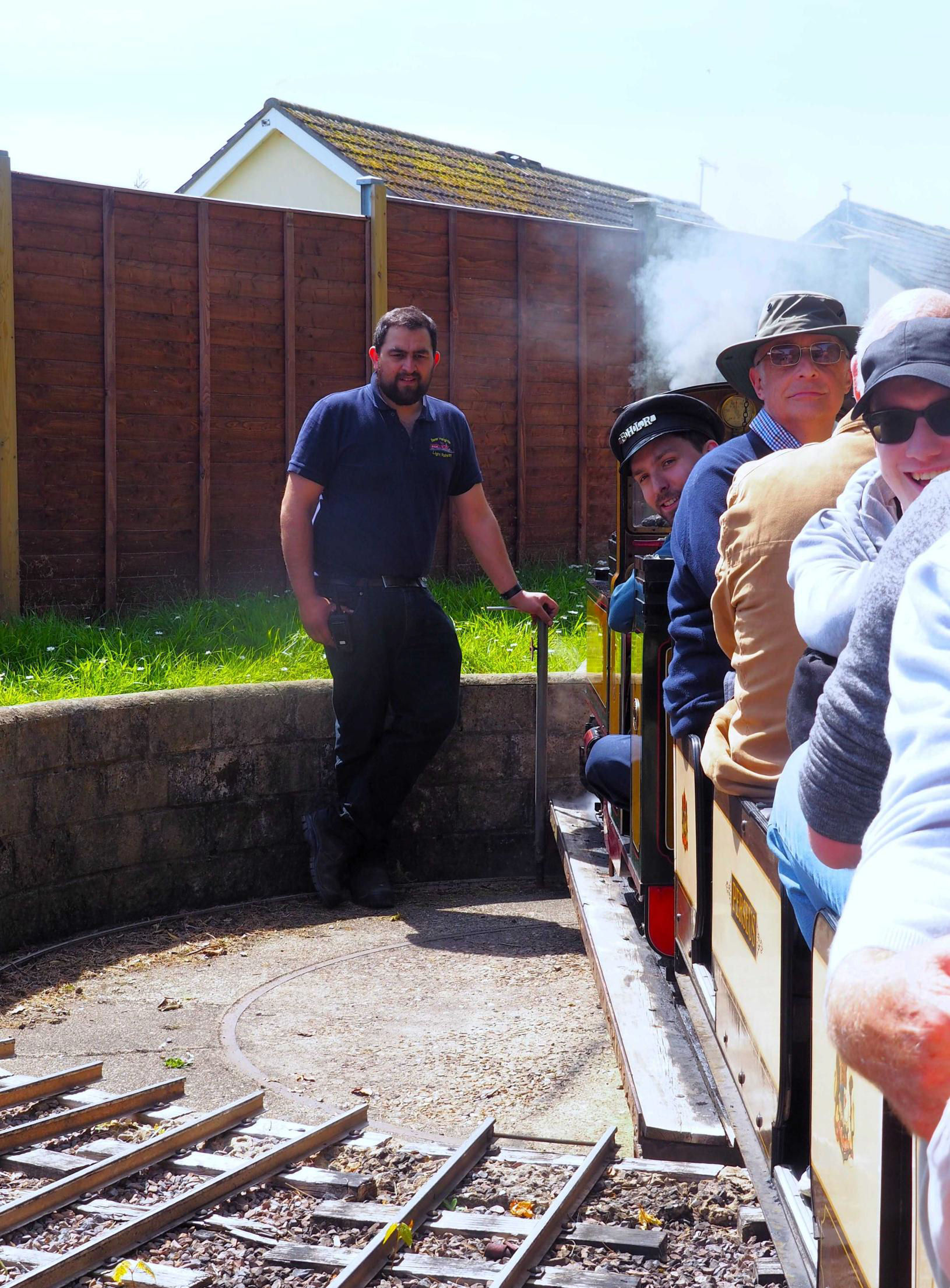
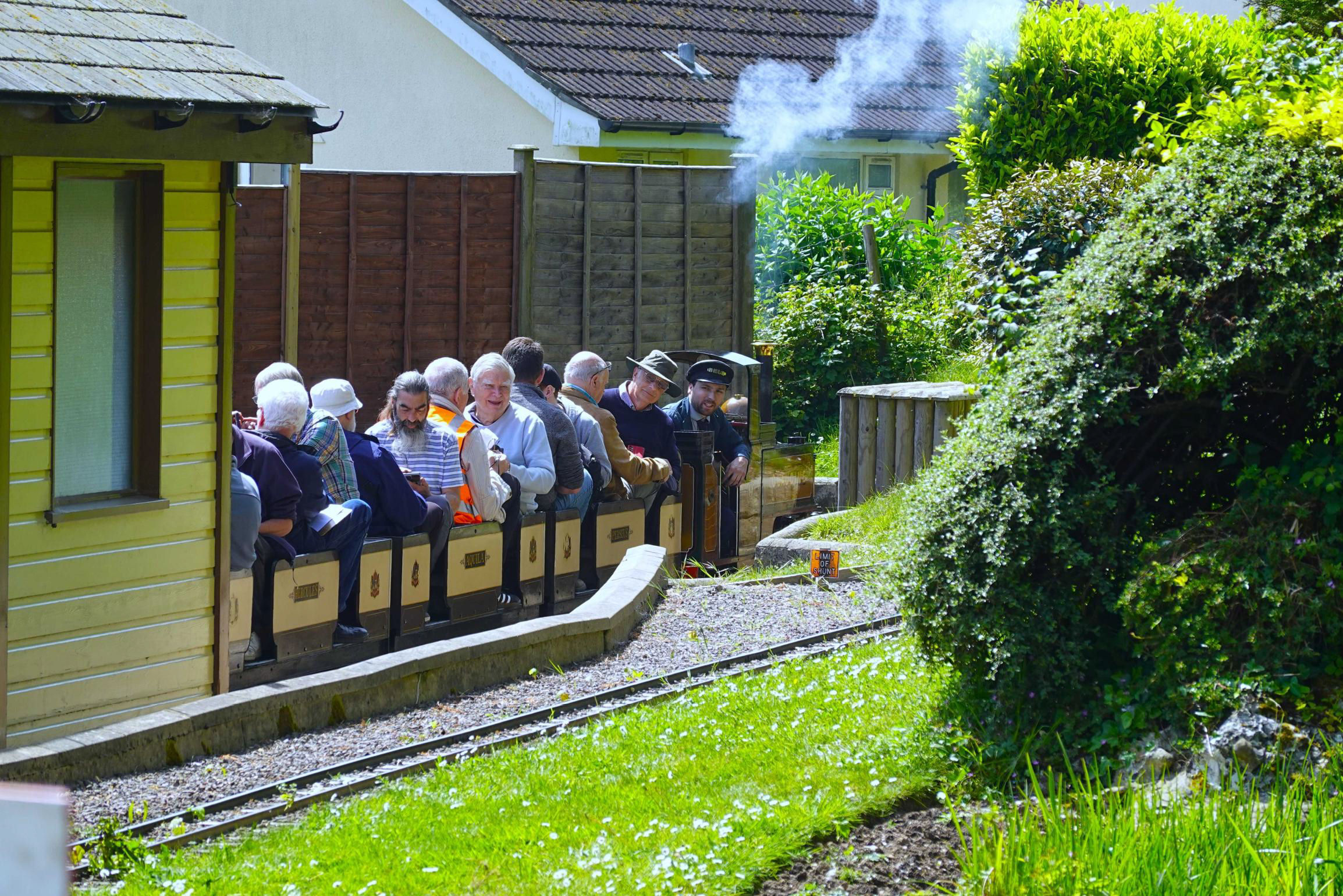
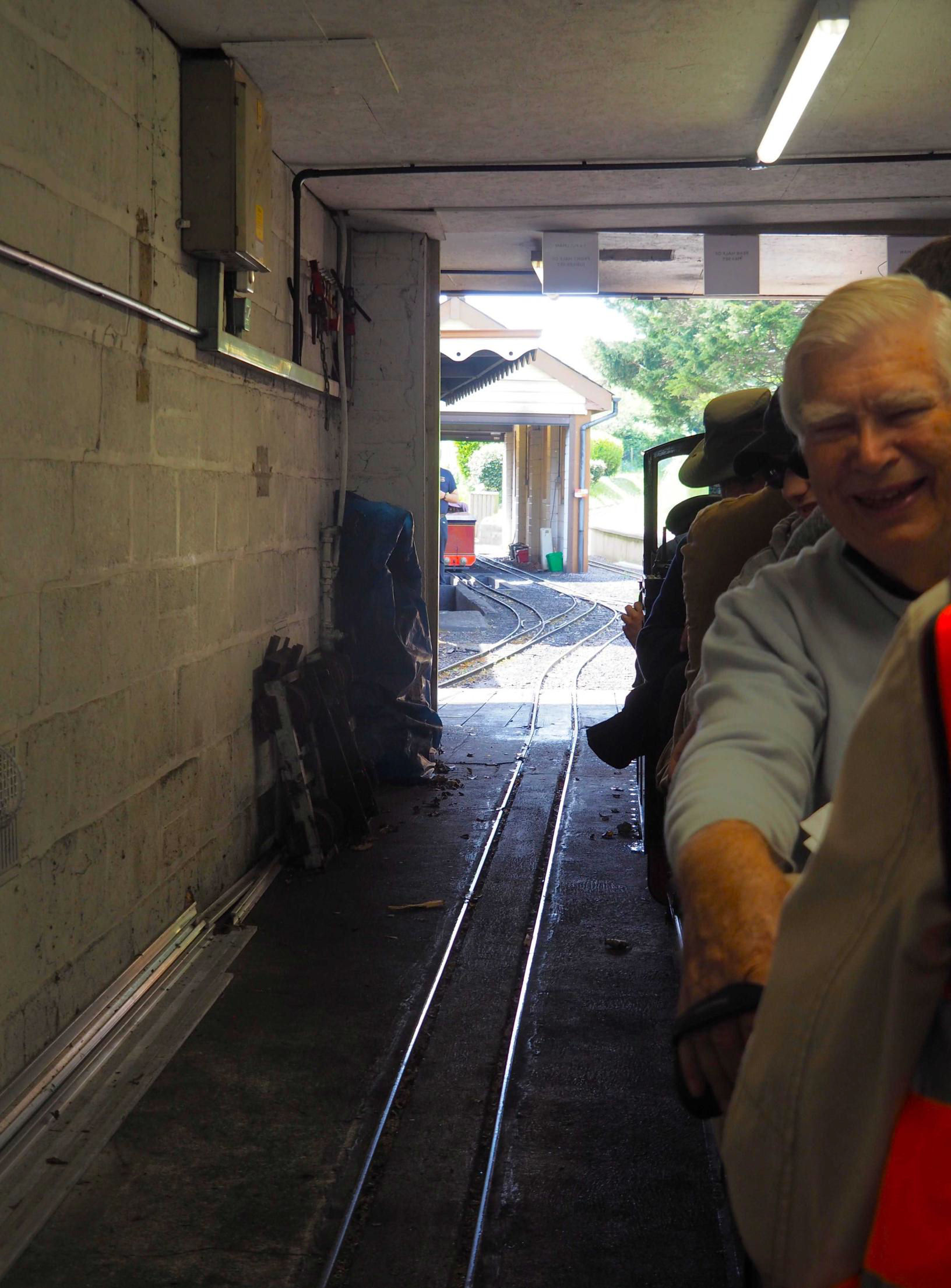
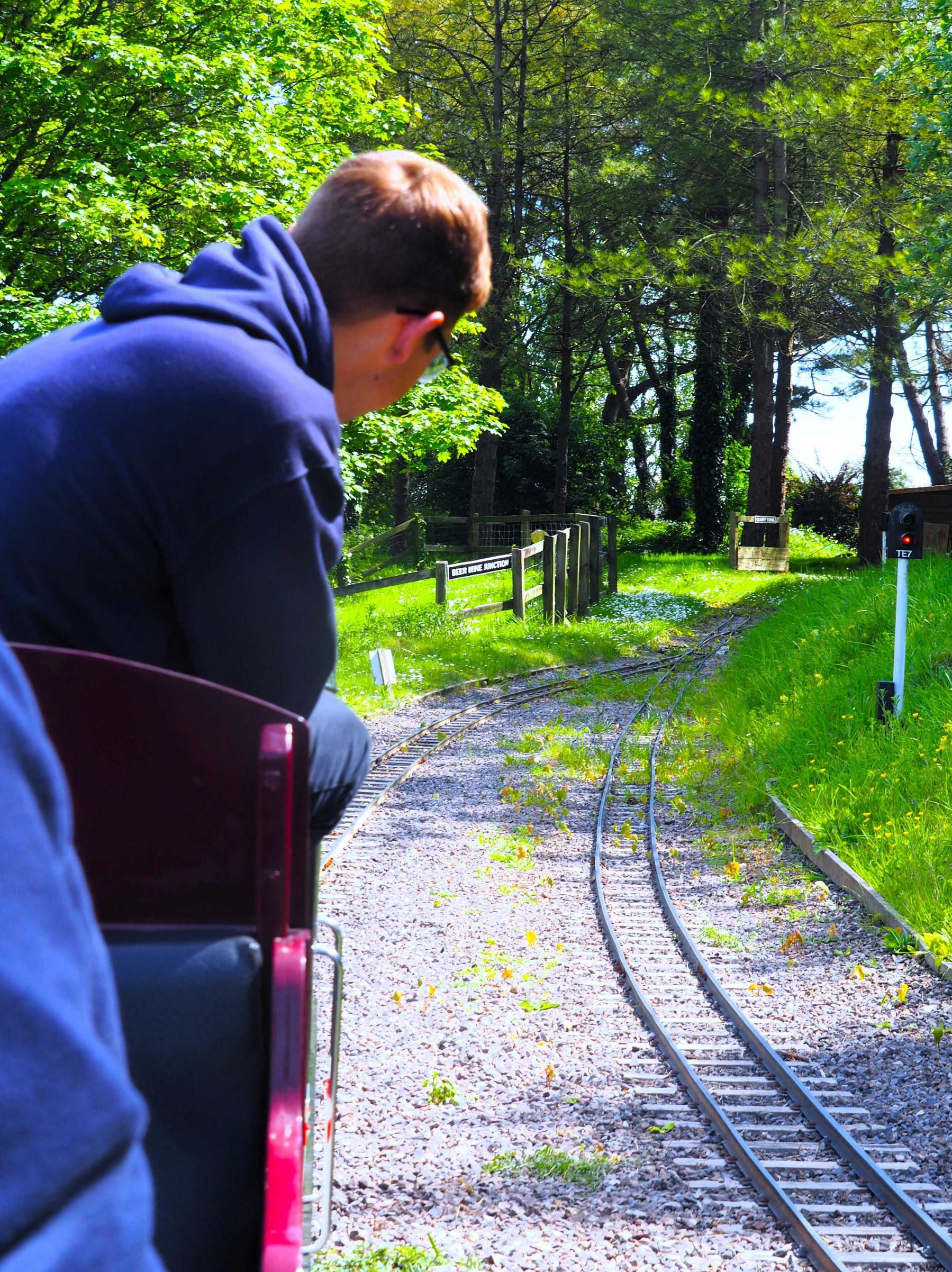
After completing the factory tour, we made our way to Much Natter station on the complex 7¼" gauge Beer Heights Light Railway. No9 'Claudine', a single Fairlie 2-4-4T in LB&SCR yellow ochre livery, famously known as Stroudley's 'Improved Engine Green', raising the question as to whether he had an unusual form of colour blindness. The locomotive, built in 2005, was waiting in P2 at the head of a rake of eight bogie coaches, four open and four covered with seats for all but most of us having to interlock knees. With all aboard, we set off round the sharp curve to the right (rare track immediately!), only accessible from P2 and through the tunnel for two circuits of the very complex layout, covering all the available running lines in the process. Arrival back in P1 was in time for lunch, served in 'Orion'.
The buffet lunch with rolls, chips, cake and drinks was much appreciated. The appearance of tasty fresh scones prompted a vigorous debate as to whether the cream or jam goes on first. A member from Cornwall advised that it is jam first in Cornwall with the cream on top and the wrong way round in Devon! Then there is the question of if they are a scone rhyming with 'cone' or scone rhyming with 'con'‽
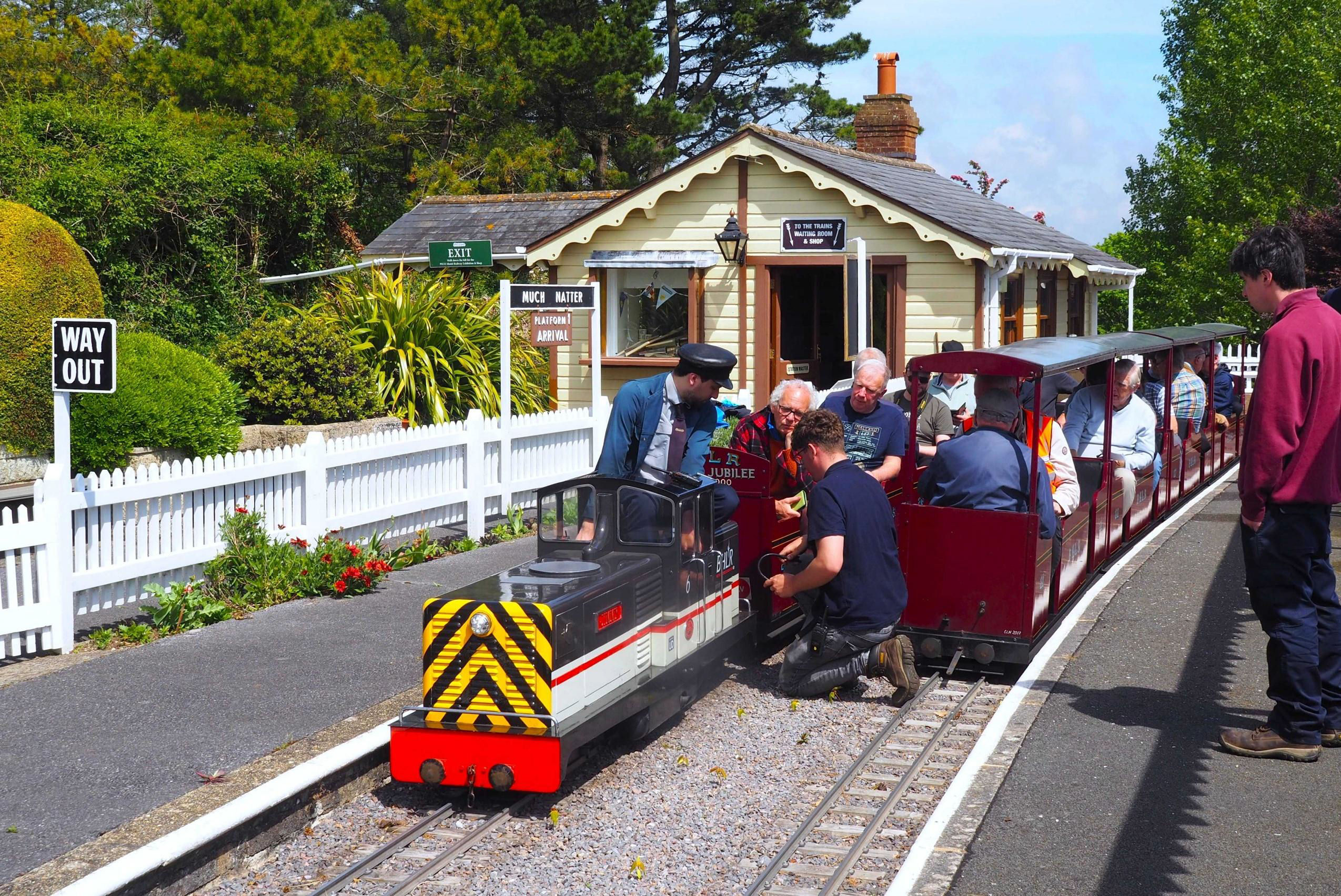
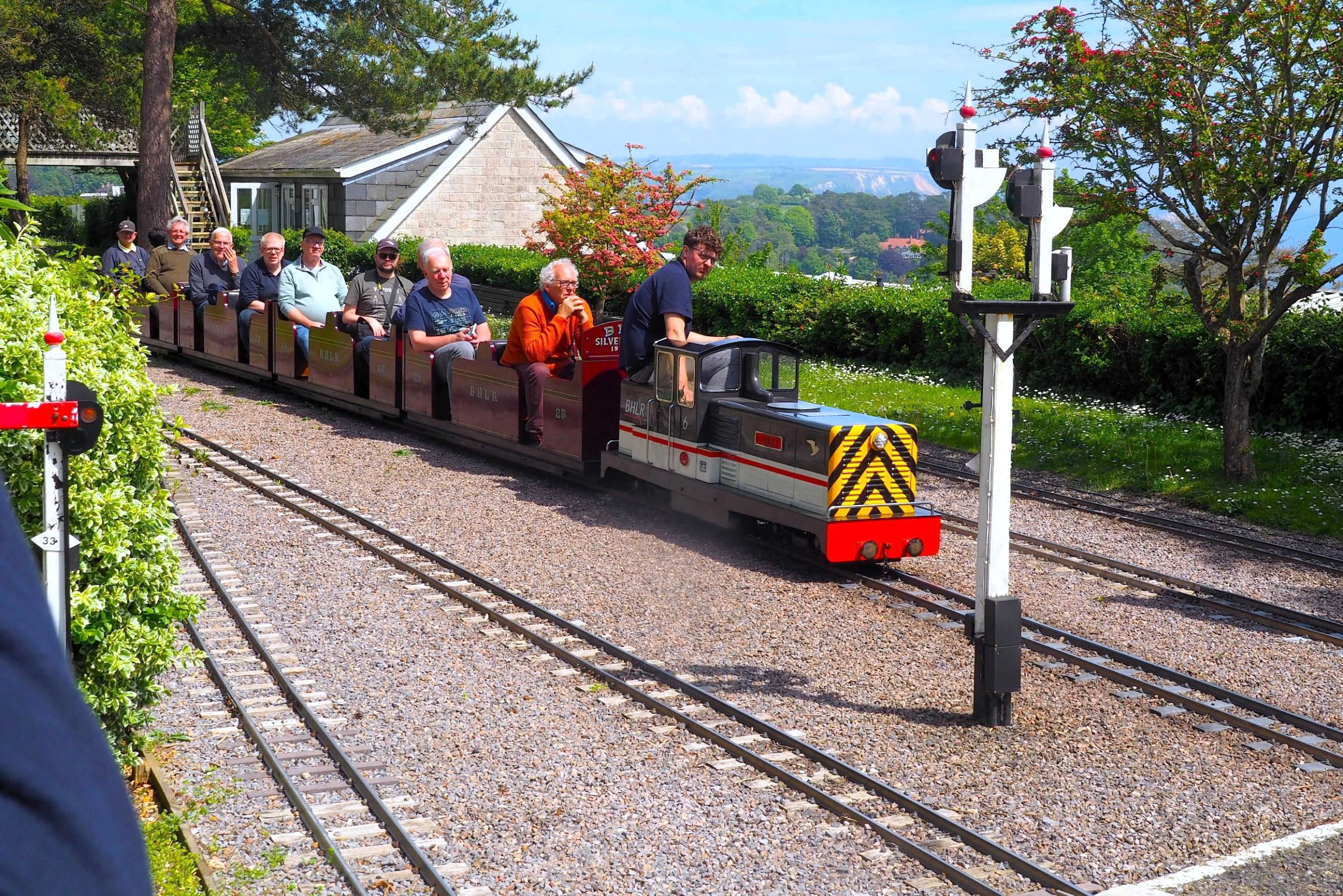
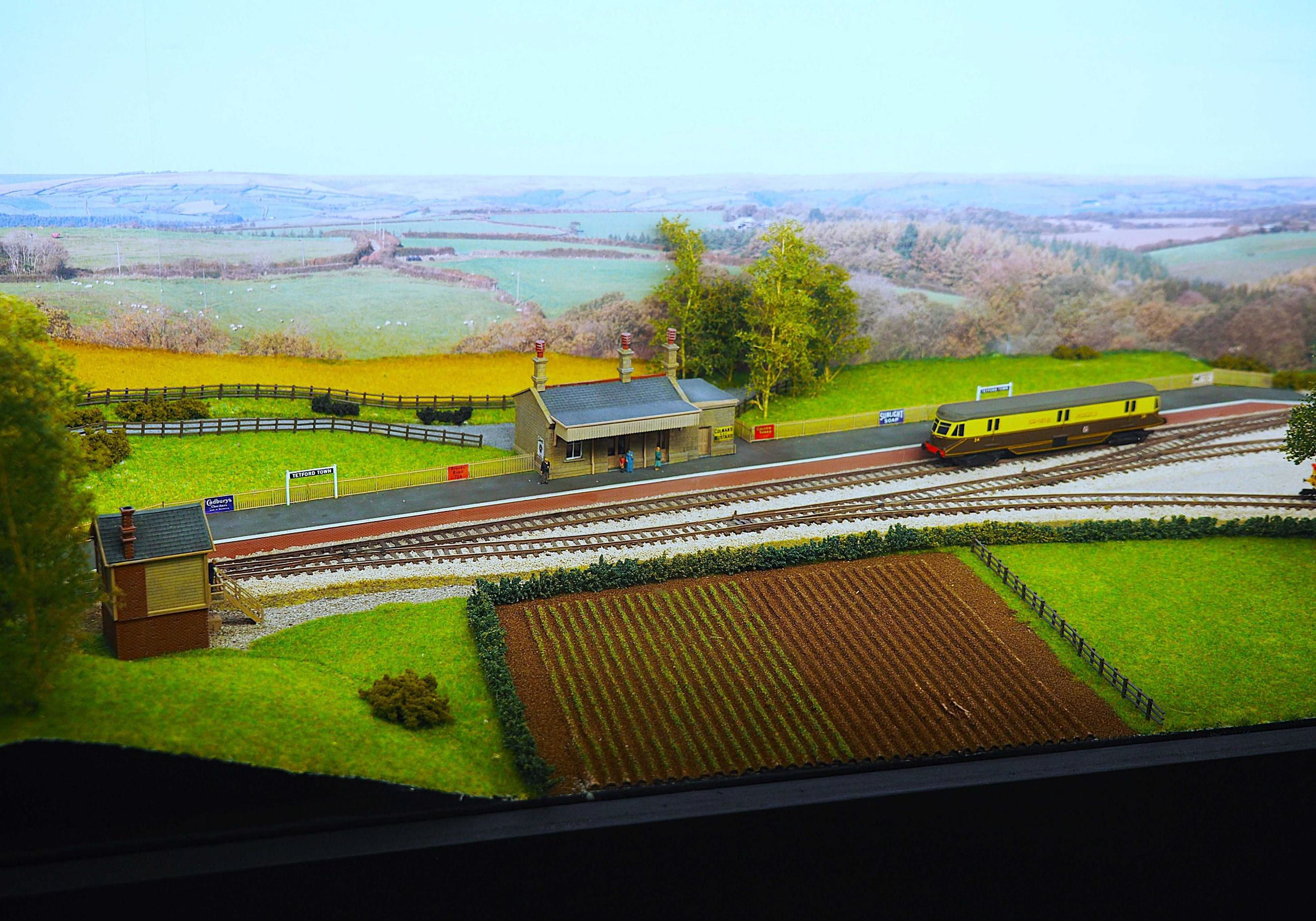
The inner man satisfied, we returned to the station for our train, still in P1 but now headed by No6 'Jimmy', a 4-4 wheel diesel hydraulic in InterCity livery, built by Severn Lamb in 1986. The first move was reversal onto the turntable to the end of line (your General Secretary and Editor, just happened to be at that far end of the train, quite by chance of course), then forward over the crossover, followed by reversal into P2. Here the train was divided, so that each 4-coach section could in turn be reversed on the line ahead then run into the bay platform, after which the train was reformed in P2 and moved forward, stopping alongside Upsan Downs Depot. The train was again split and the covered coaches, whose occupants had been asked to detrain, hand shunted on to another rake of coaches. We were invited to take our seats in three coaches from the 'Beer Belle' Pullman set, which were waiting outside the Depot behind 'Claudine'. The train proceeded to take us back and forth on to the turntable and through each of the available shed roads. Clearances through the doors were very tight! Meanwhile, 'Jimmy' had been exploring the rest of the system with the other half of the group, passing us for a final run through Devil's Gorge before reversing into the bay platform at Little Moore. There, the passengers detrained and we replaced them. Setting off again through the tunnel, a highlight was the start of track on the 'extension' which was never built and longer that it appears from the plan. We retraced our steps to just beyond Beer Mine Jn, where the train reversed carefully down the branch to Wildway Down station. The first group had been hauled part of the way along the branch toward the mine but had traction problems on the steep gradient returning, so the second group was not taken down there. Back at Much Natter, we were all invited to visit the exhibition and shop.
| Branch Line Society. A Company Limited by Guarantee - Company No 16743754. Registered in England and Wales. Registered address: 6th Floor, Derwent House, 150 Arundel Gate, SHEFFIELD S1 2FN |