I signed up for this tour mainly because it was something unique and close to home, although I wasn't sure what to expect. It turned out to be well worth it. Our fully booked group of 12 members met Adam Turner, who arranged and led the visit, at the Witton Road entrance to Witton station, one of the main stations for Villa Park. From there, it was just a short walk to the Birmingham Rail Resilience Hub in The Hub industrial estate. NR's building is one of the smaller facilities on the site but still impressively large and modern.
We were welcomed and introduced to the centre by Bryony Bellenie, a Security and Contingency Specialist at Network Rail. She guided us through the facility and expertly answered all our questions, including interesting anecdotes. The Birmingham Rail Resilience Hub officially opened on 10 Sep 2025.
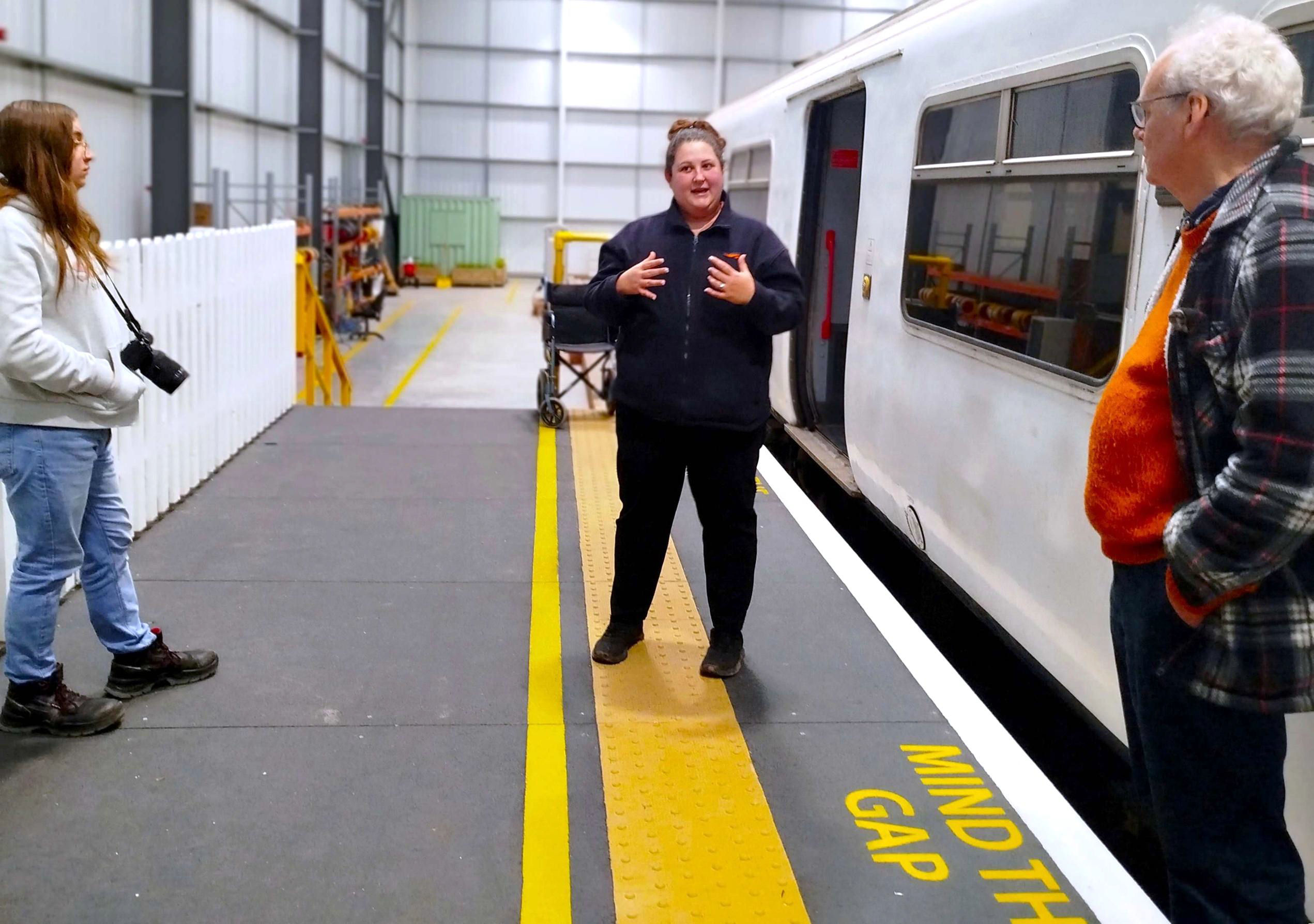
On the platform, Bryony Bellenie, a NR Security and Contingency Specialist, addresses participants.
[© Andrew Taylor 2026]It is operated by Network Rail Central Route but is available for use by all of Network Rail as well. The Central Route covers the Chiltern mainline from Marylebone to the West Midlands, the Snow Hill line from Stratford-upon-Avon to Worcester, the Cross City line through Birmingham and those to Wolverhampton, Coventry, Walsall and Oxford. There is a much larger resilience facility in London.
The facility is funded by Network Rail and there is no charge for emergency services who use it. This policy is designed to encourage emergency services, which may have limited budgets, to undertake vital rail environment response training. The hub is primarily used to train those who respond to railway incidents, including railway staff and emergency services, although other agencies are encouraged to use the facilities. It also serves as a base for a NR emergency intervention unit and stores other vehicles, trailers and specialist equipment NR may need to respond to an incident. Among the resources available are portable toilets, Starlink internet, tents that can accommodate up to 300 people and flood protection equipment - all ready for immediate deployment on the network.
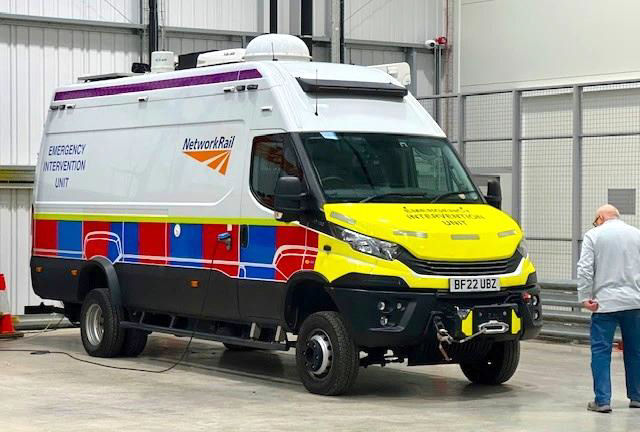
A Network Rail Emergency Invtervention Unit.
[© Keith Flinders 2026]Bryony explained that, when an incident occurs on the railway, NR staff have designated rôles, such as Rail Incident Officer (RIO), a Mobile Operations Manager (MOM) or a Mobile Incident Officer (MIO). All are strategically located around the network for rapid response. If the incident requires, they will also coordinate with the emergency services. The centre is designed to simulate a wide range of incidents, enabling responders to practice and refine their approach in realistic conditions. There is ample space to accommodate large teams and their vehicles within the building. There are three large doors, which are big enough to admit rolling stock on low loaders.
One side of the building has a stretch of double track railway, complete with two passenger carriages, a short platform and level crossing. There are plans to add OHLE equipment in the future. The carriages, sourced from Class 321 units, were chosen for their similarity to current rolling stock. When we visited, the training area included a car crushed under one of the carriages and an overturned van on the tracks.
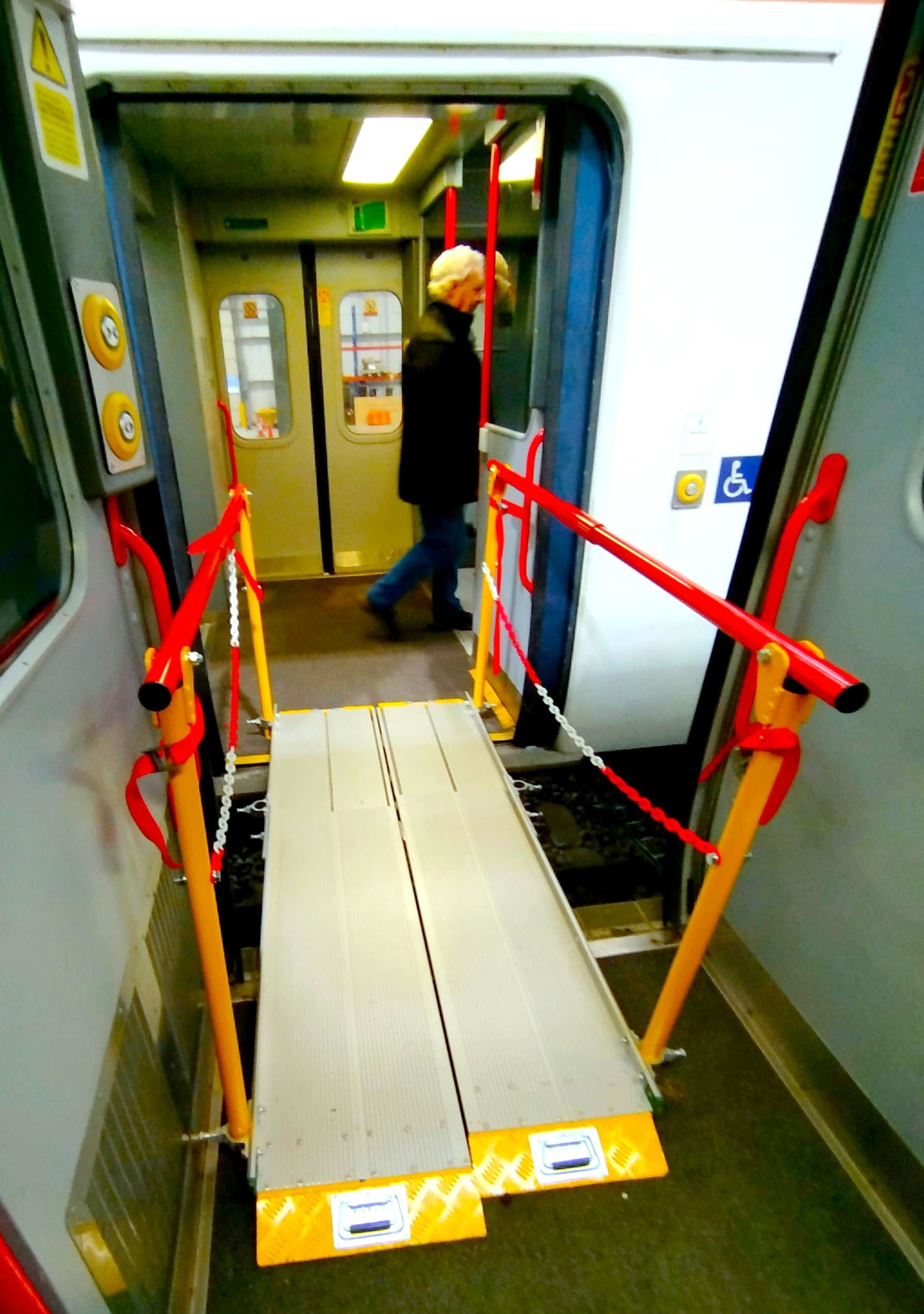
Side to side evacuation 'bridges'
[© Andrew Taylor 2026]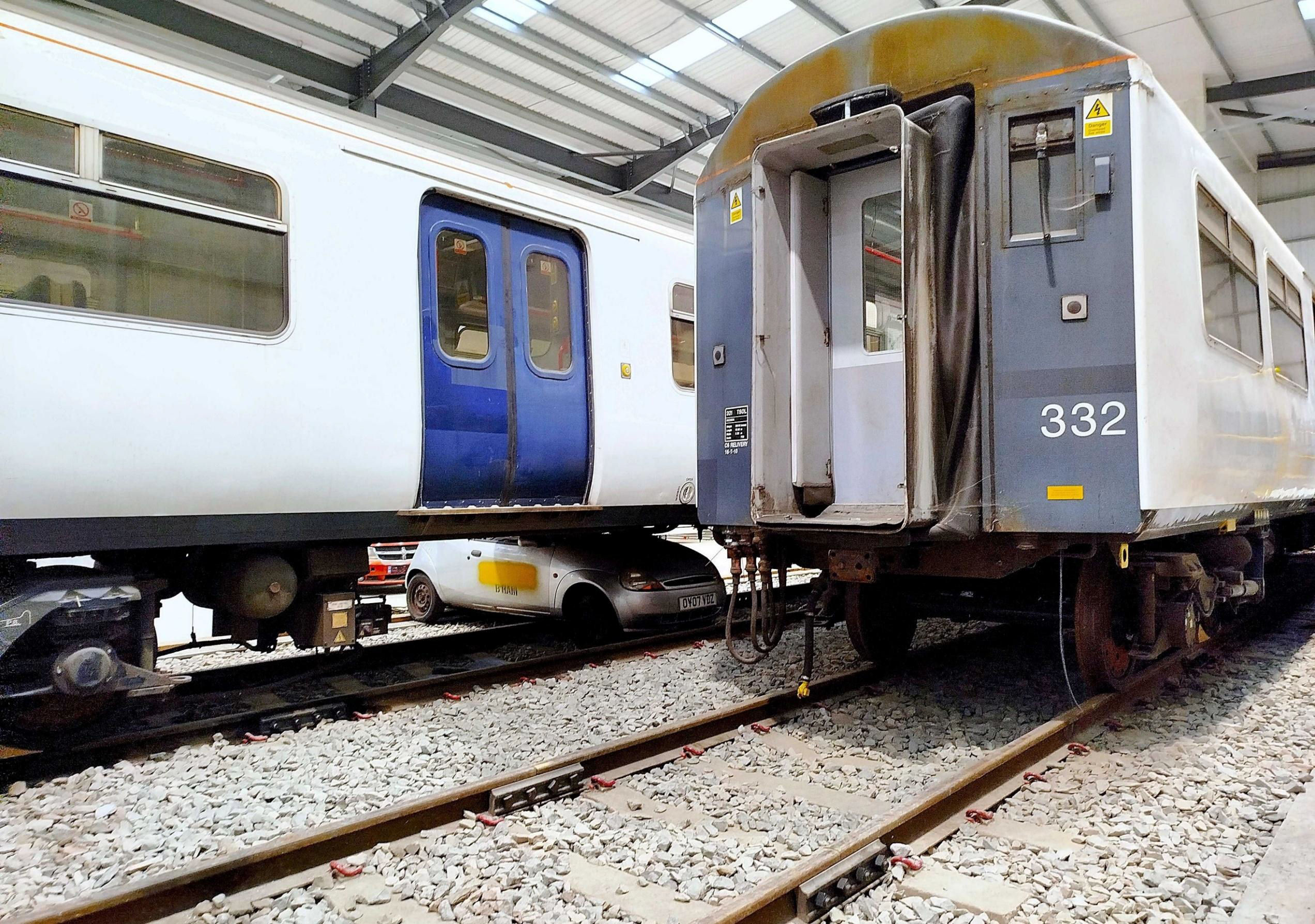
The car crushed under one of the carriages.
[© Andrew Taylor 2026]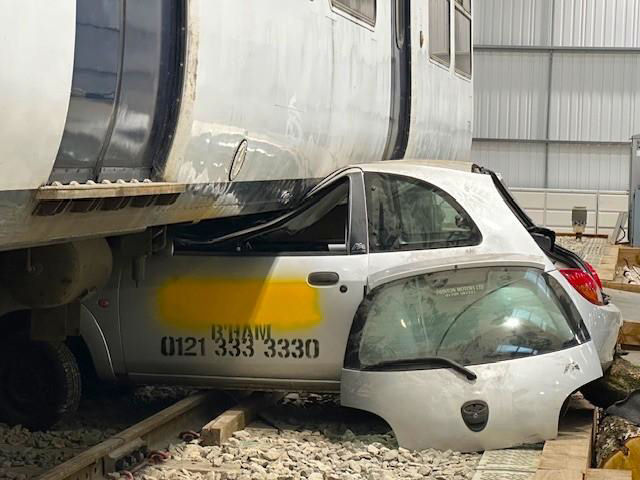
Another view of the car crushed under one of the carriages.
[© Keith Flinders 2026]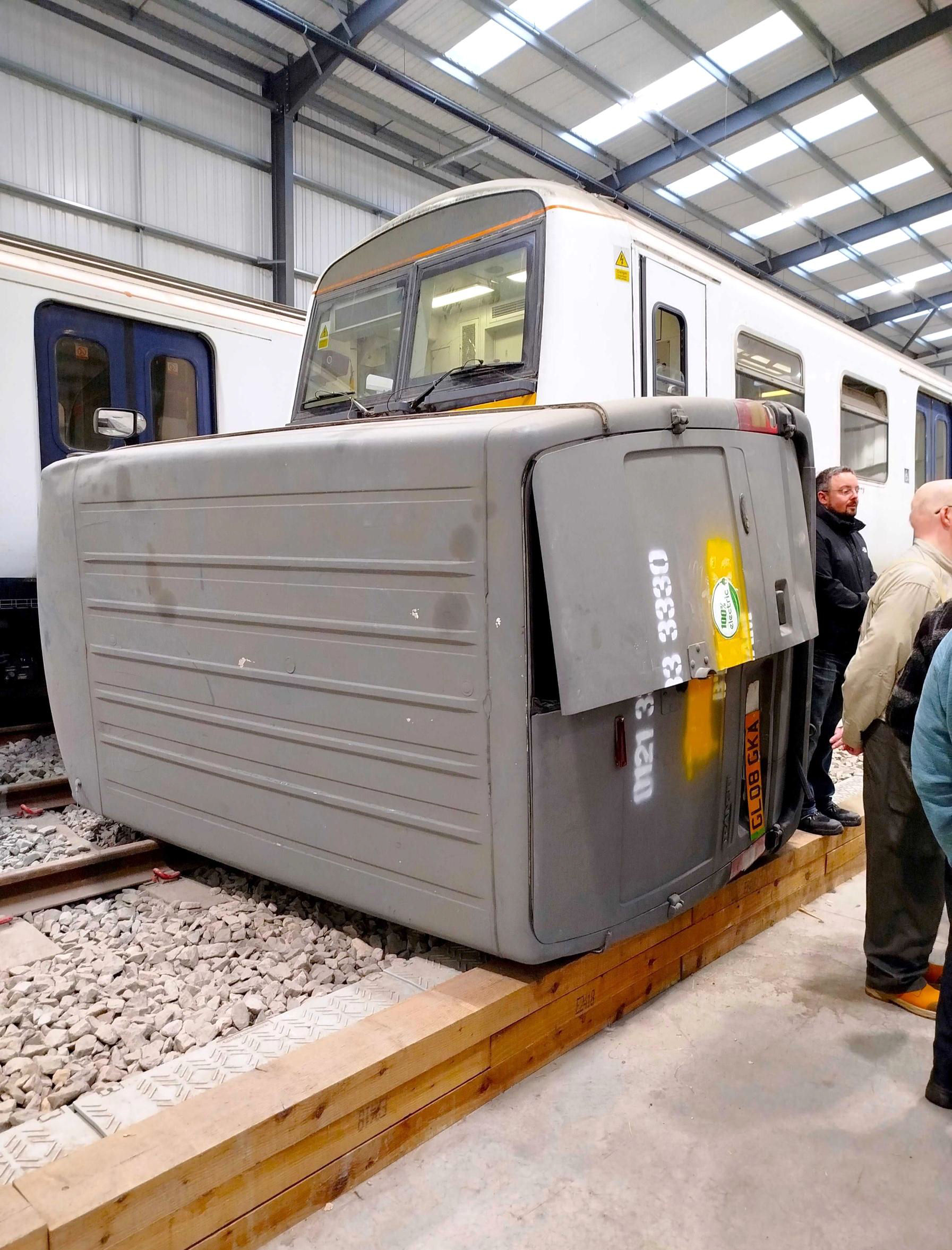
The overturned van on the tracks
[© Andrew Taylor 2026]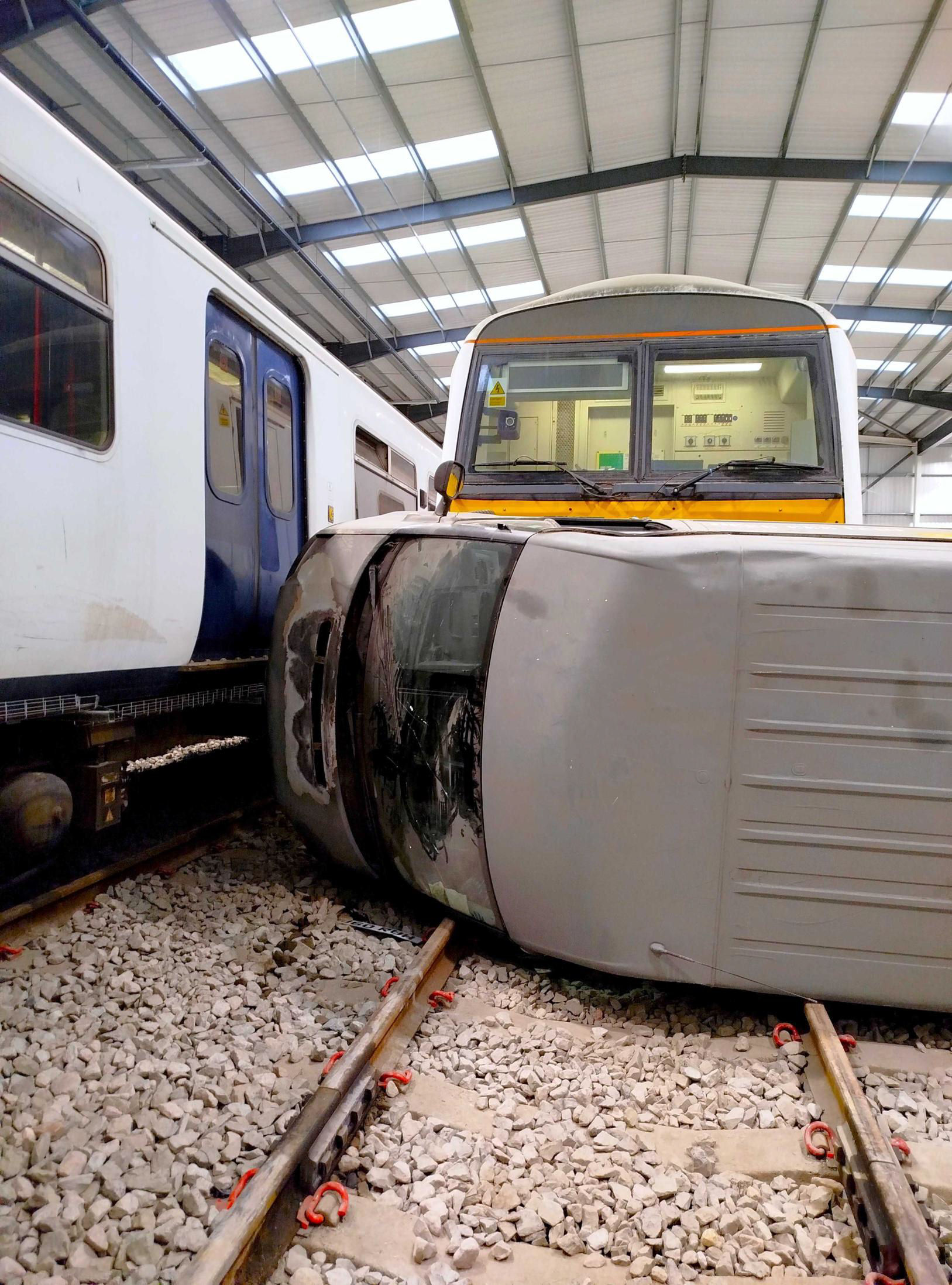
Another view of the overturned van on the tracks
[© Andrew Taylor 2026]Nearby, a storage area held heavy dummies representing passengers, as well as luggage, wheelchairs and other items typically found with passengers. Additional railway equipment, including cables and lights, was stored across the tracks. This set-up allows for a variety of very realistic scenarios to be created for both single-agency and multi-agency training exercises, all protected from the elements.
During our visit, a police unit was training at the hub, though they paused their exercises while we were there and no members were tasered! The training scenarios can be adapted as needed. For example, during one exercise, the fire service was initially tasked with removing a car from under a train but when that proved too straightforward, a tree trunk was added to increase the challenge! The facility has also hosted international visitors. Not long ago, police from Bermuda used the hub for dog training exercises. (Bermuda is a British overseas territory and operated a 21.7 mile railway from 1931 to 1948.)
Overall, the visit was both insightful and valuable, offering a close-up look at how railway and emergency services prepare for incidents in practical, hands-on ways. Thanks to Adam for yet another interesting and very different fixture, which resulted in a donation of £144 to Birmingham Hospice, a 'gross' amount.